Growing onions at home can give you a surprisingly useful harvest. Once the onions are ready, however, proper storage becomes important if I want to enjoy them for several weeks or even months. Knowing how to store onions after harvesting can help prevent softening, sprouting, mold, and unnecessary food waste.
In my experience, storing onions successfully starts before they even reach the storage area. Harvesting them at the right time, curing them properly, and keeping them in a dry and well ventilated place can make a big difference.
In this guide, I will explain the simple steps I would follow to store homegrown onions after harvesting.
Harvest Onions at the Right Time
The first step is knowing when onions are ready to harvest. Mature onions usually show clear signs that they are reaching the end of their growing period.
The green leaves may begin to turn yellow and fall over. The bulb itself should feel firm and well developed.
If I am growing onions specifically for long term storage, I prefer allowing them to mature fully rather than harvesting them too early.
Very young onions can be delicious, but mature onions generally have better storage potential.
Choose a Dry Day for Harvesting
Weather can affect the storage quality of onions.
I prefer harvesting onions on a dry day when the soil is not extremely wet. Wet conditions can leave excess moisture around the bulbs and make the curing process more difficult.
After loosening the soil, I carefully lift the onions rather than pulling aggressively on the leaves.
I handle them gently because bruises and cuts can become areas where decay starts later.
Do Not Wash the Onions
After harvesting, I do not wash onions that I plan to store for a long time.
Instead, I gently remove loose soil from the bulbs.
Washing adds moisture, and onions need to be properly dried before long term storage.
If some soil remains attached, I am not worried about removing every piece. It is more important to avoid damaging the outer skin.
Cure the Onions Properly
Curing is one of the most important parts of onion storage.
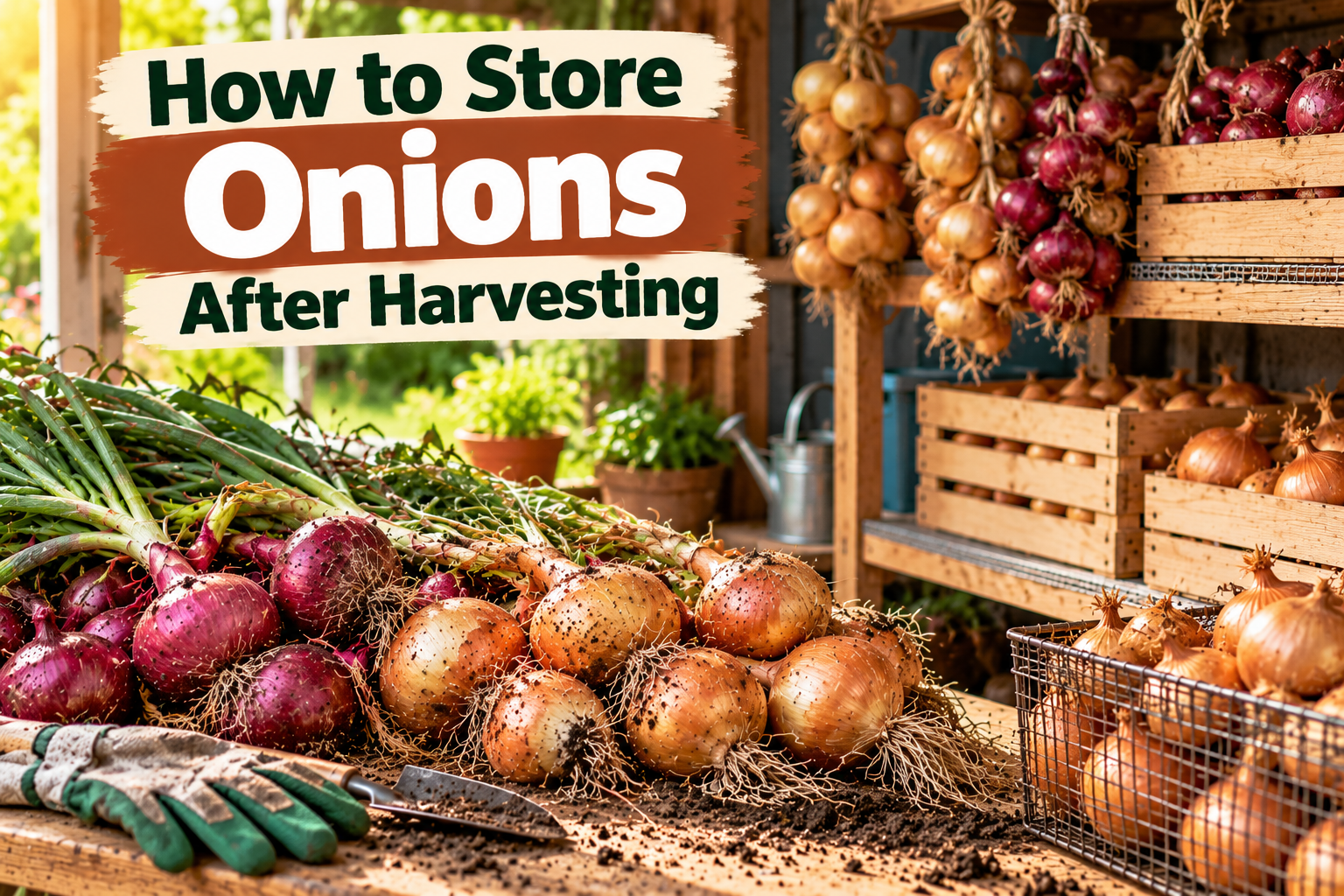
I place freshly harvested onions in a dry, shaded, and well ventilated location.
The onions need enough time for their outer layers and necks to dry properly.
Good airflow is important because trapped moisture can encourage mold and decay.
I avoid direct sunlight for extended periods and protect the onions from rain.
Check the Onion Necks
The neck of the onion is an important indicator during curing.
When the neck becomes dry and the outer skin feels papery, the onion is generally better prepared for storage.
If the neck still feels moist or soft, I give the onions more time to dry.
I do not rush this step because properly cured onions usually have a much better storage life.
Remove Damaged Onions
Before storing the onions, I sort them carefully.
Any onion with deep cuts, soft areas, mold, or significant bruising should be separated.
I prefer using damaged onions first rather than placing them together with healthy bulbs.
Healthy onions with firm bulbs and dry outer skins are the best candidates for long term storage.
Choose a Dry Storage Area
The storage location should be dry, dark, and well ventilated.
A pantry, cupboard, storage room, or another suitable area can work.
I avoid areas with high humidity because moisture can encourage mold.
I also avoid placing onions near sinks, damp walls, or other sources of moisture.
Use Breathable Containers
Good airflow is essential when storing onions.
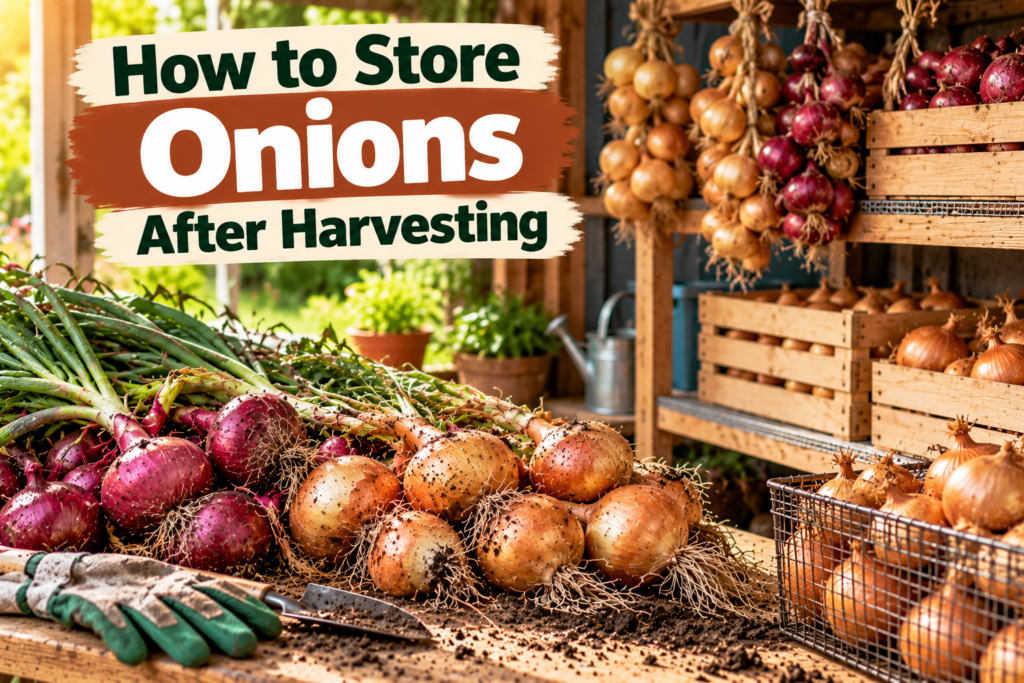
I prefer mesh bags, baskets, netting, or other breathable containers.
Paper bags with ventilation can also work.
I avoid completely sealed plastic bags because they can trap moisture around the onions.
If I have a large harvest, I use several smaller containers rather than putting everything into one deep pile.
Keep Onions Away From Potatoes
I prefer storing onions and potatoes separately.
Both vegetables have different storage requirements, and storing them together is not ideal for long term storage.
Separate containers also make it easier to inspect each crop and maintain suitable conditions.
Check Stored Onions Regularly
Even properly cured onions need occasional checking.
Every so often, I inspect the bulbs for soft spots, mold, sprouting, or unusual smells.
If one onion begins to spoil, I remove it immediately.
This helps prevent the problem from spreading to other onions.
Common Onion Storage Mistakes
One common mistake is storing onions before they have cured properly.
Another is washing onions before storage.
Storing them in plastic bags can also trap moisture.
Keeping onions in a damp basement or near a sink is another problem.
I also avoid storing badly damaged onions with healthy ones.
Final Thoughts
Learning how to store onions after harvesting is mostly about keeping the bulbs dry, cured, cool enough, and well ventilated.
I focus on harvesting mature onions carefully, allowing them to cure properly, removing damaged bulbs, and using breathable storage containers.
With these simple steps, homegrown onions can remain useful for a long time after harvest and provide a steady supply for everyday cooking.