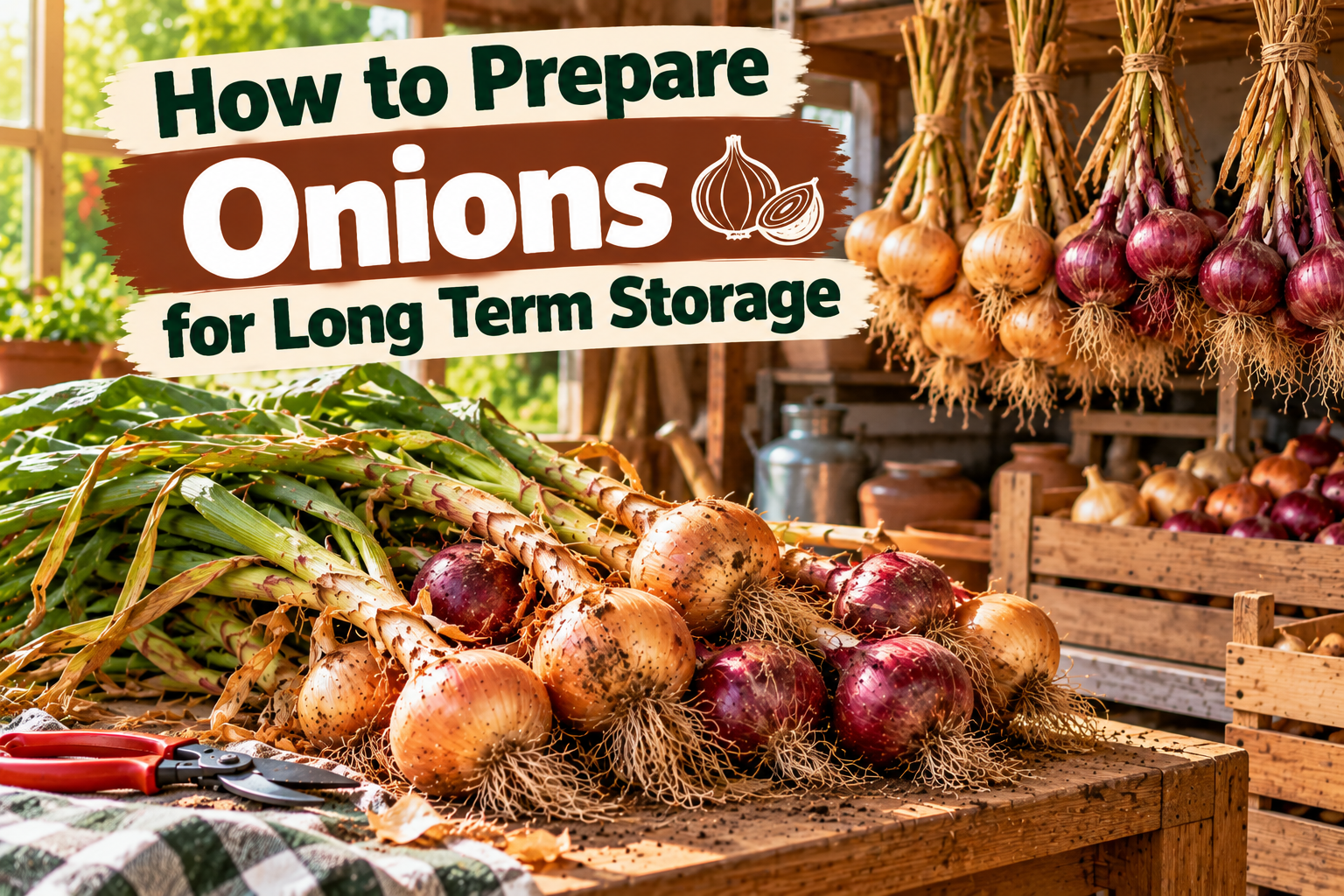
A good onion harvest can last for a surprisingly long time when the bulbs are prepared correctly. However, onions should not simply be placed into a cupboard immediately after digging them from the soil.
Learning how to prepare onions for long term storage helps protect the bulbs from moisture, mold, softening, and sprouting.
Harvest Mature Onions
I begin by waiting until the onions are mature.
The green leaves usually begin to yellow and fall over when the bulbs are approaching maturity.
Mature onions generally have stronger outer skins, which provide better protection during storage.
Harvest During Dry Weather
Whenever possible, I choose a dry day for harvesting.
Wet soil can leave the bulbs covered in moisture.
I gently loosen the soil and lift the onions carefully.
I avoid throwing them into containers because bruises can affect storage quality.
Remove Loose Soil
After harvesting, I gently remove loose soil.
I do not scrub aggressively.
I also avoid washing onions intended for long term storage.
The main goal is to keep the bulbs dry while preserving their outer protective layers.
Cure the Onions
Curing is one of the most important preparation steps.
I place the onions in a dry, shaded, well ventilated area.
They need enough time for the outer skin and neck to become completely dry.
Proper airflow is important because moisture trapped around the bulbs can encourage decay.
Inspect the Neck
Before storage, I check the neck of each onion.
A properly cured onion should have a dry neck rather than a soft, moist one.
If the neck is still damp, I allow more curing time.
I do not rush this stage because good curing can greatly improve storage quality.
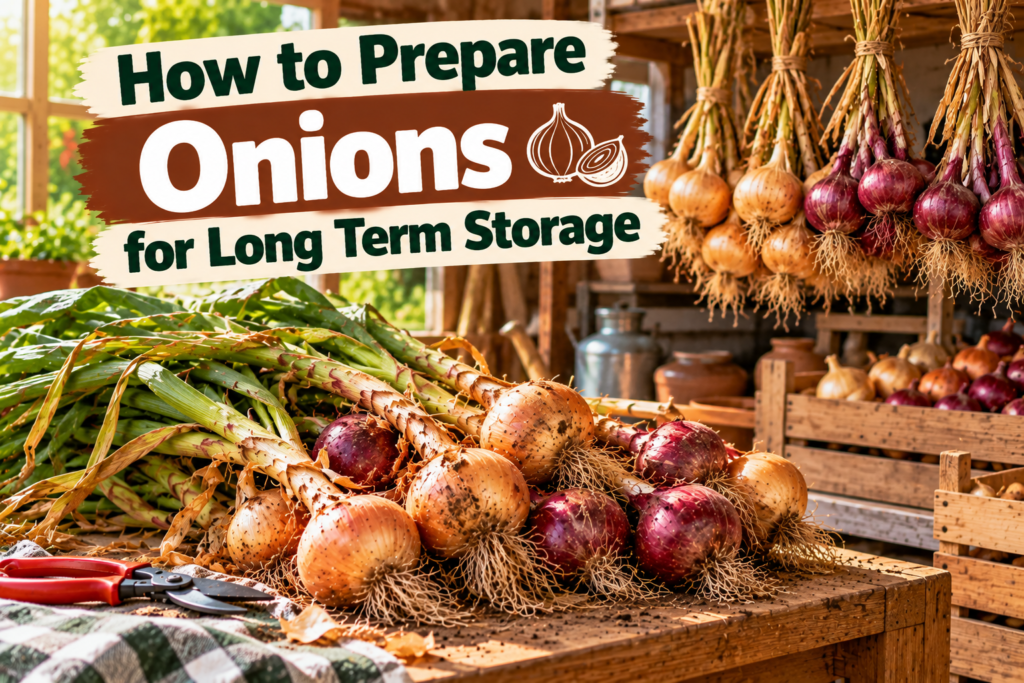
Sort the Bulbs
I separate onions with cuts, bruises, soft areas, or mold.
Healthy onions are saved for long term storage.
Damaged onions are better used first.
This simple sorting process helps protect the entire harvest.
Trim the Roots
After curing, the dried roots can be trimmed.
I avoid cutting deeply into the bulb.
If I want to braid onions, I may leave more of the stem intact.
Choose the Right Container
Breathable containers are best for onions.
Mesh bags, baskets, and ventilated paper bags can work well.
I avoid sealed plastic containers because they can trap moisture.
Store in a Dry Location
The storage area should be dry and reasonably cool.
I keep onions away from sinks, damp areas, heaters, and direct sunlight.
Good ventilation is also important.
Check the Onions
I inspect stored onions regularly.
If one becomes soft or moldy, I remove it immediately.
I also check whether the storage area has become too humid.
Final Thoughts
Preparing onions for long term storage is not complicated.
I focus on harvesting mature bulbs carefully, keeping them dry, curing them properly, sorting the harvest, and storing the healthy bulbs in breathable containers.
These simple steps can help homegrown onions remain useful for a long time.