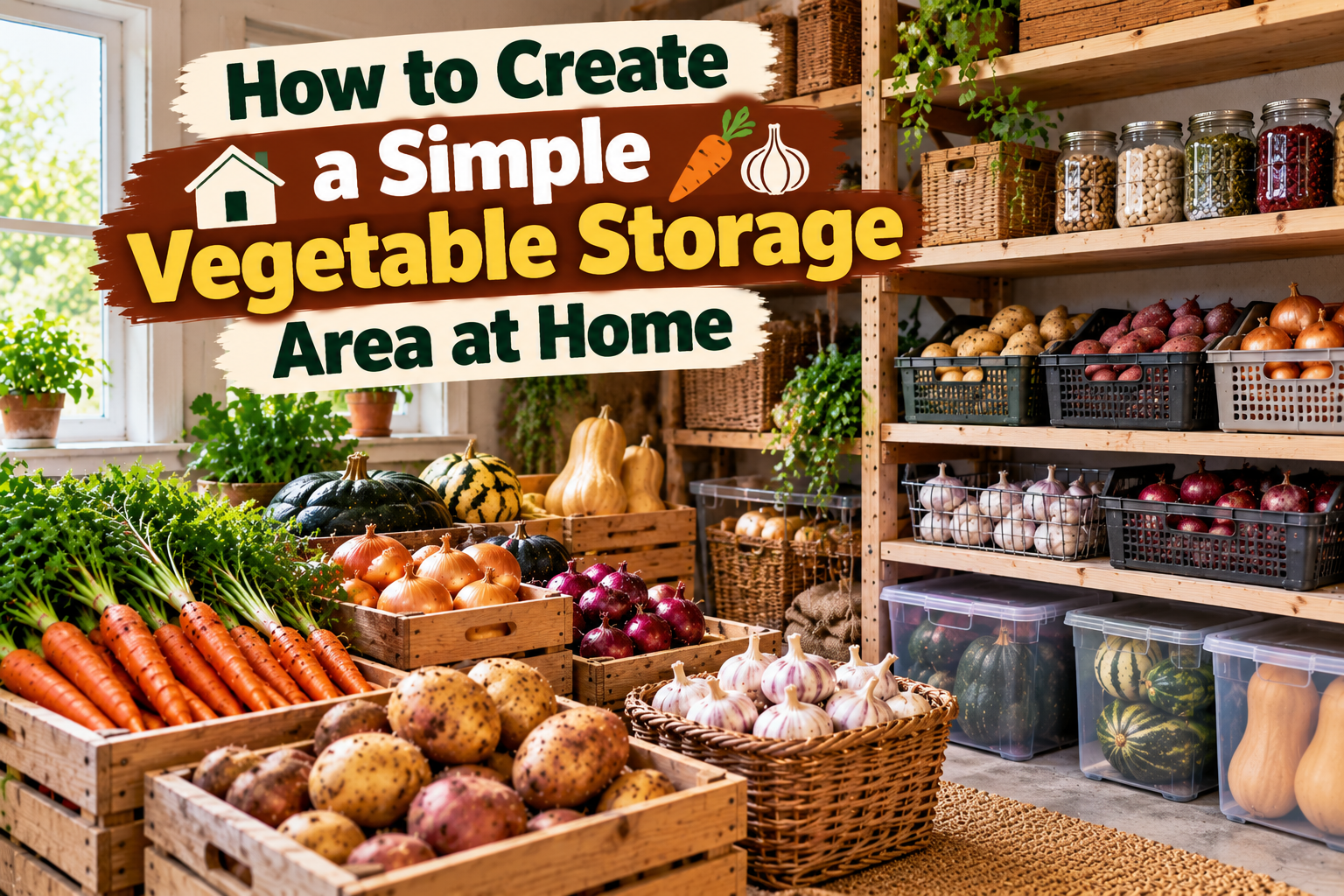
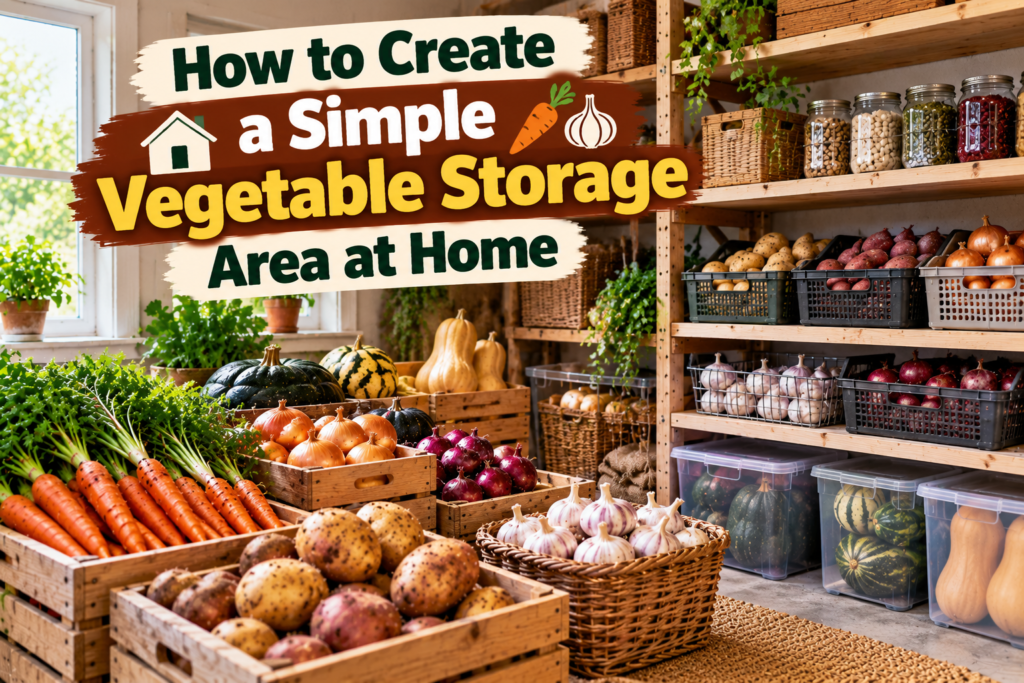
Having a dedicated vegetable storage area can make a big difference when I grow a large garden. I do not need a basement or expensive equipment to create one. With a little planning, I can turn a pantry, cupboard, spare corner, or small storage room into a useful vegetable storage area.
Learning how to create a simple vegetable storage area at home starts with understanding the basic needs of stored vegetables.
Choose the Right Location
The first thing I look for is a location away from direct sunlight.
The area should be reasonably cool, dry, and ventilated.
I avoid places next to ovens, heaters, or other heat producing appliances.
Keep Different Vegetables Separate
I prefer using separate containers for different crops.
Potatoes, onions, garlic, carrots, and sweet potatoes have different storage requirements.
Separate containers also make inspection easier.
Use Shelves
Simple shelves can make the storage area much more organized.
Instead of placing containers directly on the floor, I can keep them on shelves.
This improves airflow and makes it easier to see the vegetables.
Use Breathable Containers
I can use baskets, mesh bags, paper bags, cardboard boxes, or ventilated crates.
The container should match the vegetable.
For example, dry stored onions and garlic benefit from good airflow.
Keep the Area Dark
If possible, I choose a location without strong sunlight.
I can also use covered containers to protect vegetables from light.
Darkness is particularly important for stored potatoes.
Monitor Moisture
I regularly check the storage area for moisture.
Condensation, damp walls, or wet floors can create problems.
If the area is too humid, I improve ventilation or move vegetables to a more suitable location.
Keep the Area Clean
A clean storage area is easier to manage.
I remove spoiled vegetables quickly and clean up loose plant material.
This reduces the chance of storage problems spreading.
Label Containers
Labels can make organization much easier.
I can write the vegetable name and storage date on each container.
This helps me know which vegetables should be used first.
Check the Storage Area Regularly
I inspect the vegetables at regular intervals.
I look for mold, soft spots, sprouting, and unusual odors.
Regular inspection is one of the simplest ways to prevent food waste.
Final Thoughts
Creating a simple vegetable storage area at home does not require a large budget.
A cool, dark, dry, and ventilated corner can be transformed into a useful storage space using shelves and breathable containers.
The most important thing is matching the storage conditions to the vegetables.
With good organization, even a small home can provide a practical place for storing a garden harvest.