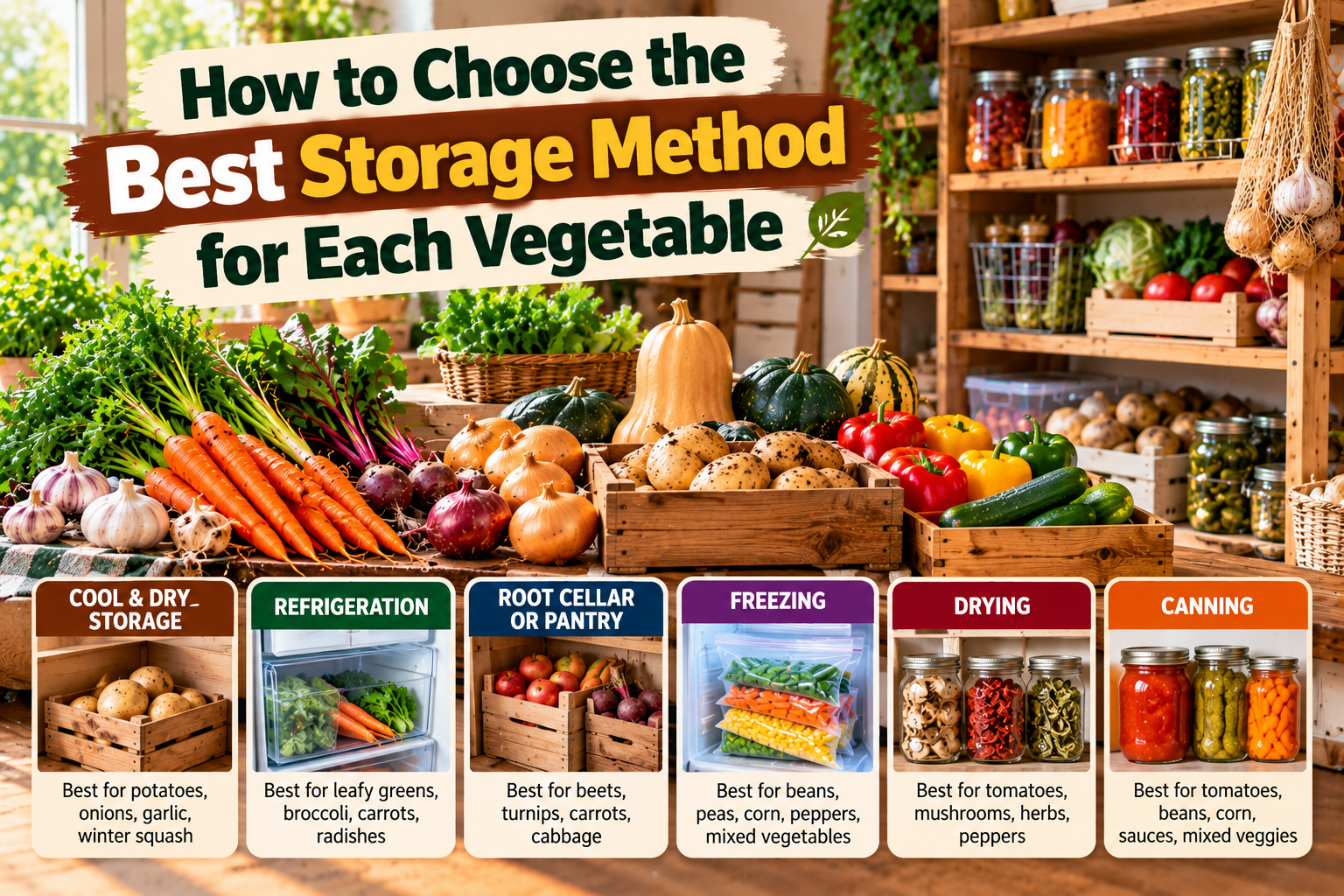
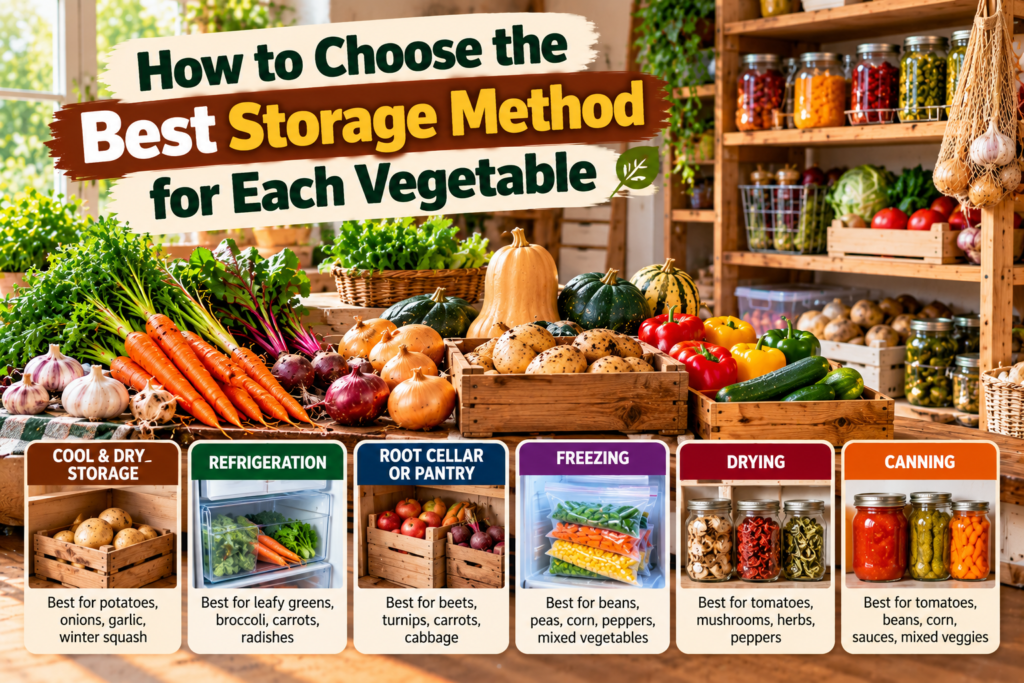
When I grow several types of vegetables in my garden, I quickly realize that they cannot all be stored in exactly the same way. Some vegetables prefer cold and humid conditions, while others need a dry environment. Some need curing before storage, while others are best preserved by freezing or drying.
Understanding how to choose the best storage method for each vegetable can help reduce food waste and keep a garden harvest useful for much longer.
Carrots
Carrots generally benefit from cool and humid storage.
For a smaller harvest, I usually prefer the refrigerator.
I remove the green tops first because they can continue drawing moisture from the roots.
For larger quantities, carrots can also be stored using traditional methods such as slightly moist sand in a cool location.
Beets
Beets can also benefit from cool and humid conditions.
I remove their green tops before storage and gently remove loose soil.
For household quantities, refrigerator storage is usually convenient.
Radishes
Radishes are generally best for shorter storage.
I remove the green tops and keep the roots cool.
The refrigerator is usually my preferred option.
Because radishes can lose quality faster than some other root vegetables, I try to use them relatively soon after harvest.
Potatoes
Potatoes prefer cool, dark, and dry storage.
I avoid washing them before long term storage.
I also use breathable containers and keep them away from sunlight.
A dark pantry or suitable storage room can work well.
Sweet Potatoes
Sweet potatoes have different requirements from regular potatoes.
They should be cured before long term storage.
After curing, they generally benefit from a warmer, dry, dark, and well ventilated environment.
I avoid storing whole sweet potatoes in the refrigerator for long periods.
Onions
Onions need dry and well ventilated storage.
I cure them before storage and use breathable containers.
A mesh bag or basket can work well.
I avoid damp areas because moisture can cause mold and decay.
Garlic
Garlic also benefits from proper curing.
Once cured, I store it in a dry, well ventilated location.
I prefer keeping whole bulbs intact until I am ready to use them.
Winter Squash
Winter squash should be mature and properly cured before long term storage.
I keep it in a dry and ventilated location away from direct sunlight.
I also avoid stacking squash in a way that causes excessive pressure or bruising.
Leafy Vegetables
Leafy greens generally have a much shorter storage life than root vegetables.
I prefer storing them in the refrigerator with suitable humidity.
For a longer supply, freezing or another appropriate preservation method may be more practical.
Green Beans
Fresh green beans can be stored in the refrigerator for short term use.
If I have a large harvest, freezing can be a useful option for longer storage.
Preparing them in advance makes winter use more convenient.
Tomatoes
Tomatoes can be used fresh, frozen, dried, or safely preserved using suitable processing methods.
The best option depends on how I plan to use them later.
Herbs
Fresh herbs have several preservation options.
Some can be dried, while others can be frozen.
I choose the method based on the herb and the way I want to use it during winter.
Consider Your Available Space
The best storage method also depends on the space available at home.
If I have a refrigerator but no basement, I focus on crops that can be refrigerated or preserved.
If I have a cool pantry, I can store onions, garlic, potatoes, and other suitable crops there.
Consider How Quickly You Will Use the Food
I also think about how quickly I plan to eat the vegetables.
There is no reason to use complicated long term storage for a small harvest that I will finish within a week or two.
For larger harvests, preservation or long term storage becomes more useful.
Final Thoughts
Learning how to choose the best storage method for each vegetable starts with understanding that every crop has different needs.
Carrots and beets generally prefer cool and humid conditions. Potatoes need dark and dry storage. Onions and garlic need proper curing and dry airflow. Sweet potatoes require warmer storage, while winter squash benefits from curing and a dry environment.
When I match each vegetable with the right storage method, I can protect more of my harvest and enjoy homegrown food for much longer.
The goal is not to find one perfect storage method for every vegetable. The goal is to understand what each crop needs and create the simplest suitable environment at home.