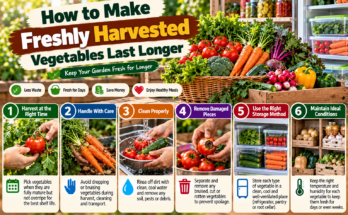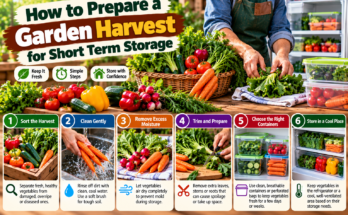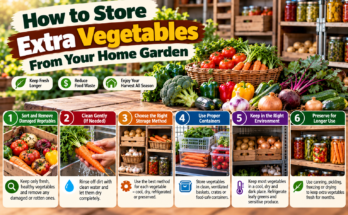
Cleaning vegetables after harvesting sounds simple, but the right approach depends on how long I plan to store them. Some vegetables can benefit from being cleaned before short term storage, while others are better left relatively dry for long term storage.
Learning how to clean garden vegetables before storage can help me prepare the harvest without creating unnecessary moisture or damage.
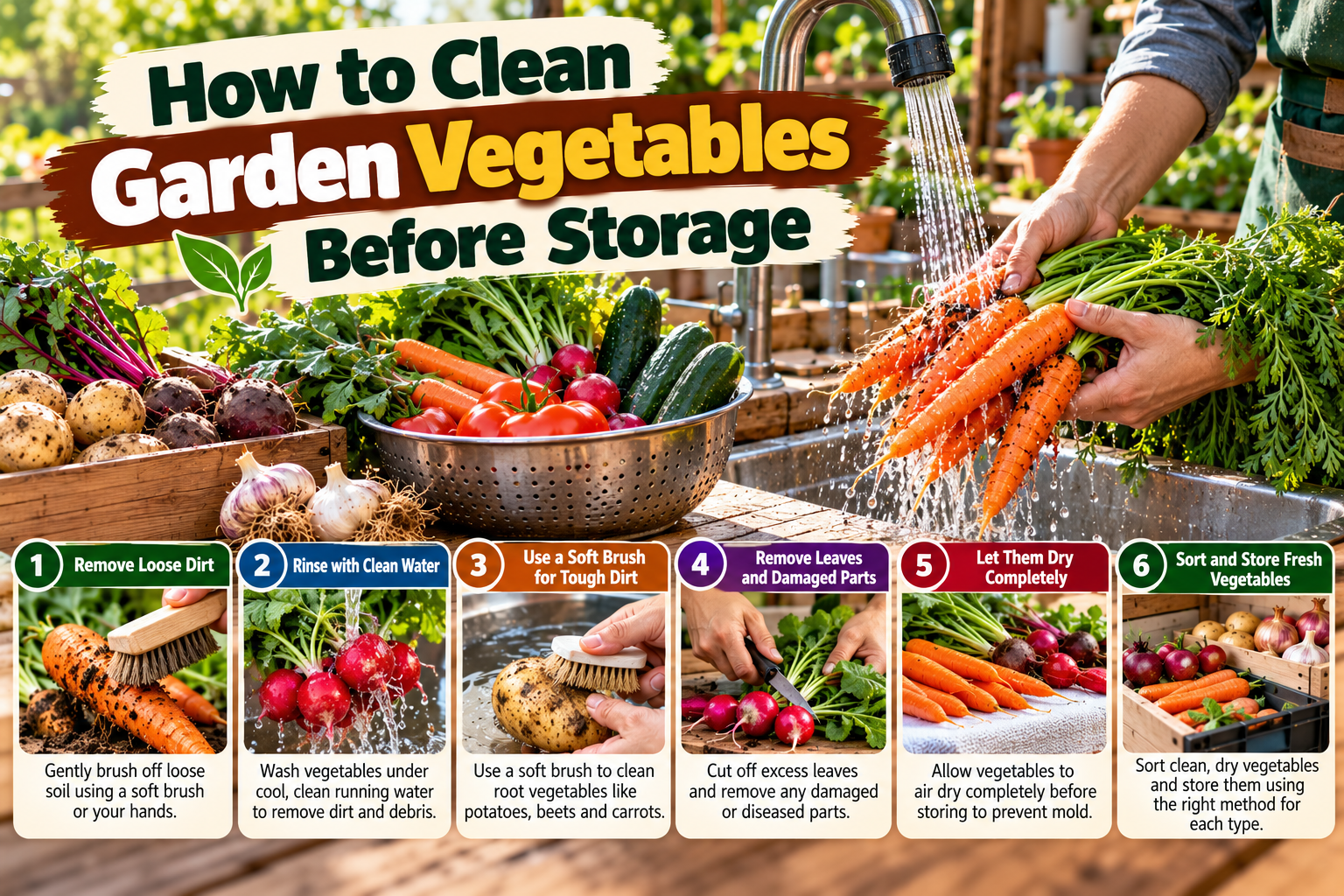
Remove Loose Soil First
When vegetables come directly from the garden, they often have soil attached.
My first step is usually removing loose soil gently with my hands.
I avoid aggressive scrubbing because the outer surface protects the vegetable.
For storage vegetables such as potatoes, onions, and garlic, I generally do not try to make them perfectly clean.
Avoid Washing Long Term Storage Crops
For many vegetables intended for long term storage, I prefer not to wash them immediately.
Potatoes, onions, garlic, carrots, and beets can often be stored more successfully when excess surface moisture is avoided.
I remove loose soil and allow the vegetables to dry naturally.
Wash Vegetables for Short Term Use
If I plan to use the vegetables within a short period, washing may be more convenient.
After washing, I make sure the vegetables are drained properly before placing them into the refrigerator.
I avoid storing freshly washed vegetables while they are dripping wet.
Dry Vegetables Properly
After washing vegetables that are going into short term storage, I allow excess water to drain.
For some produce, I gently dry the surface using a clean towel.
The goal is to reduce standing water without damaging the vegetable.
Be Careful With Delicate Produce
Some vegetables have delicate skins.
I avoid scrubbing them aggressively.
If soil is difficult to remove, I prefer leaving some of it rather than damaging the outer surface.
Remove Damaged Areas
Cleaning is also a good opportunity to inspect the harvest.
If I notice a vegetable with a deep cut, soft area, or obvious spoilage, I separate it from healthy produce.
Damaged vegetables should usually be used sooner.
Clean Storage Containers
It is not enough to clean the vegetables.
The containers should also be clean and dry.
Dirty containers can introduce unwanted moisture and debris into the storage environment.
I make sure storage boxes, baskets, and other containers are suitable before using them.
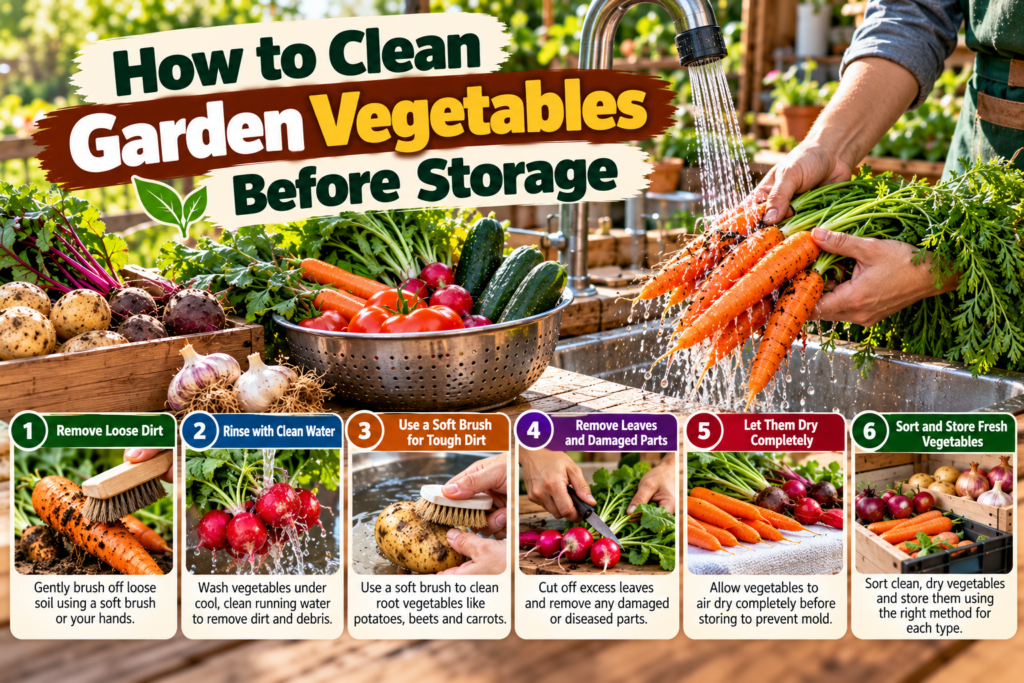
Do Not Store Wet Vegetables
One of the biggest mistakes is putting wet vegetables into a closed storage container.
Water can collect around the produce and encourage mold.
If vegetables are wet after harvesting, I give them enough time to dry naturally before long term storage.
Final Thoughts
Learning how to clean garden vegetables before storage is mostly about knowing when cleaning is helpful and when it can create problems.
For long term storage, I usually remove loose soil without washing storage crops.
For vegetables intended for short term refrigerator storage, washing can be convenient as long as the produce is properly drained and dried.
The most important goal is keeping vegetables clean without creating unnecessary moisture or damage.