A productive home garden can give me more vegetables than I can eat in a few days. Instead of allowing the extra produce to spoil, I prefer organizing it according to the best storage method.
Learning how to store extra vegetables from your home garden can help extend the harvest and reduce food waste.
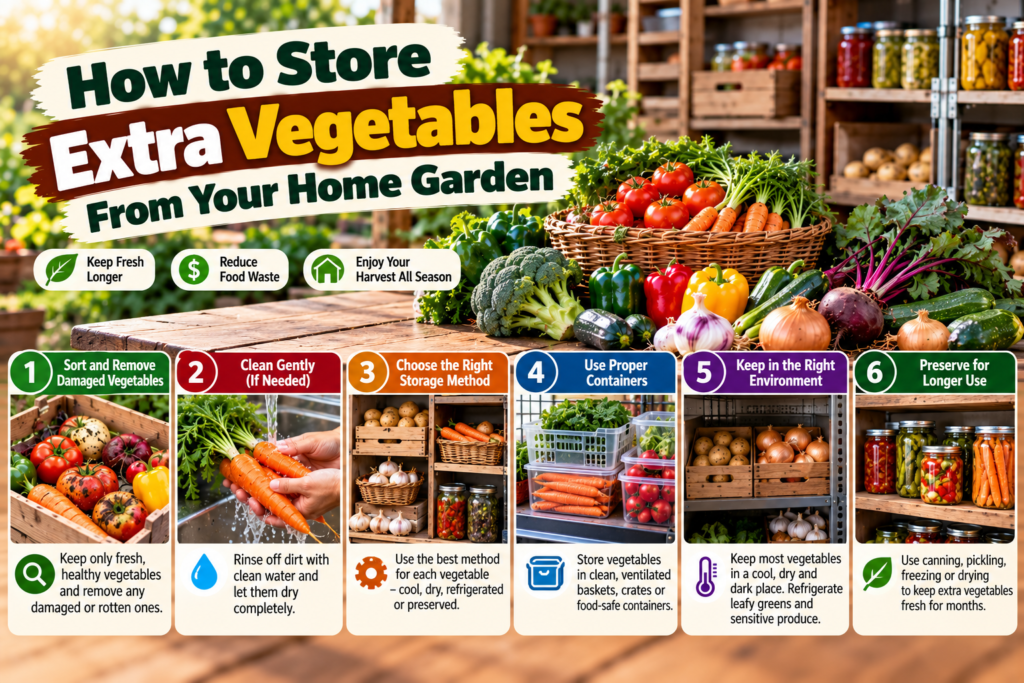
Start by Sorting Everything
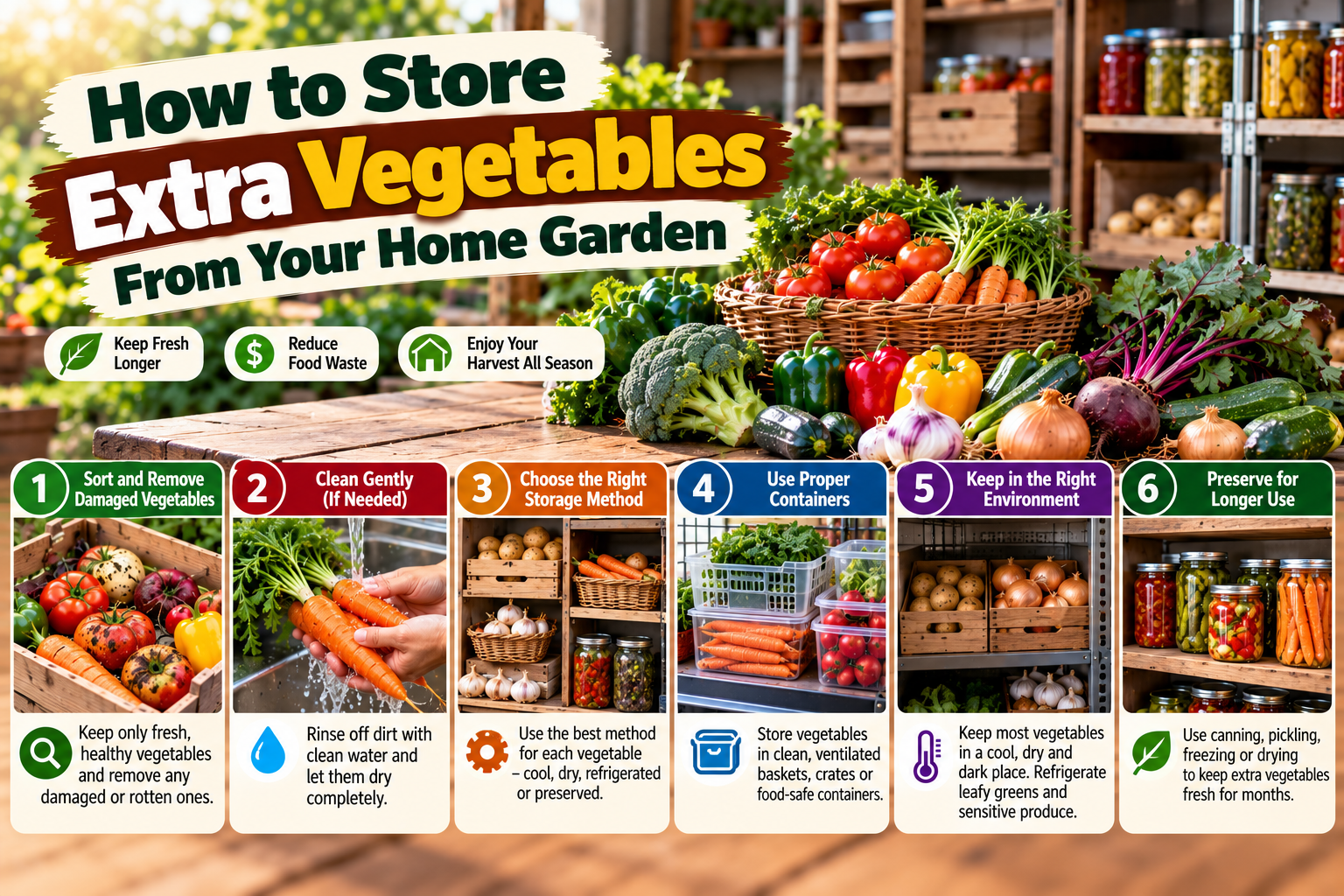
The first thing I do after a large harvest is sort the vegetables.
Healthy vegetables are separated from damaged or soft ones.
I use damaged vegetables first and reserve the healthiest produce for longer storage.
Identify Short Term Vegetables
Some vegetables are better for short term storage.
Leafy greens, radishes, and some fresh vegetables are usually best kept in the refrigerator.
I do not expect them to last as long as potatoes or onions.
Identify Long Term Storage Crops
Potatoes, onions, garlic, carrots, beets, and winter squash can often be stored for longer periods.
However, each one needs different conditions.
I prepare and store them according to their individual requirements.
Use the Refrigerator
The refrigerator is useful when I have a smaller harvest.
I use the vegetable drawer for suitable produce and make sure vegetables are not stored while excessively wet.
Cure Storage Vegetables
Some vegetables benefit from curing before long term storage.
Potatoes, onions, garlic, and winter squash can require different curing processes.
I never skip this step when the crop needs it.
Use Breathable Containers
For dry storage crops, I prefer breathable containers.
Paper bags, baskets, mesh bags, and ventilated boxes can all be useful.
I avoid sealed plastic when it can trap unwanted moisture.
Label Your Storage
If I have a large harvest, I label containers with the vegetable name and storage date.
This helps me know what I have available and what should be used first.
Check Everything Regularly
I inspect the stored vegetables from time to time.
If I notice mold, soft areas, or sprouting, I deal with the problem immediately.
This can prevent a small issue from affecting a larger portion of the harvest.
Preserve What Cannot Be Stored Fresh
If I have more vegetables than my storage space can handle, I consider freezing, drying, pickling, or another suitable preservation method.
This gives me more ways to use the harvest.
Final Thoughts
Learning how to store extra vegetables from your home garden starts with sorting the harvest and understanding the needs of each crop.
Some vegetables belong in the refrigerator, while others need dry storage or curing.
By matching the storage method to the vegetable, I can keep more of my garden harvest fresh and reduce unnecessary waste.