Having a small refrigerator does not mean that home gardeners cannot store fresh vegetables successfully. In fact, with good organization and a simple storage routine, even limited refrigerator space can be used efficiently.
In my experience, the biggest problem with a small refrigerator is not always the amount of food. It is poor organization. When vegetables are placed randomly into limited space, some produce gets crushed, some gets forgotten, and some does not receive suitable storage conditions.
I have found that organizing vegetables by type, using containers carefully, and using older produce first can make a small refrigerator much more practical.
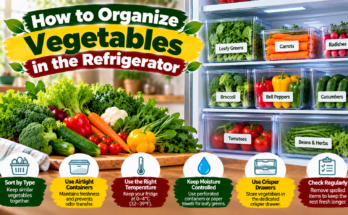
Sort Vegetables Before Storage
Before putting vegetables into my refrigerator, I sort them.
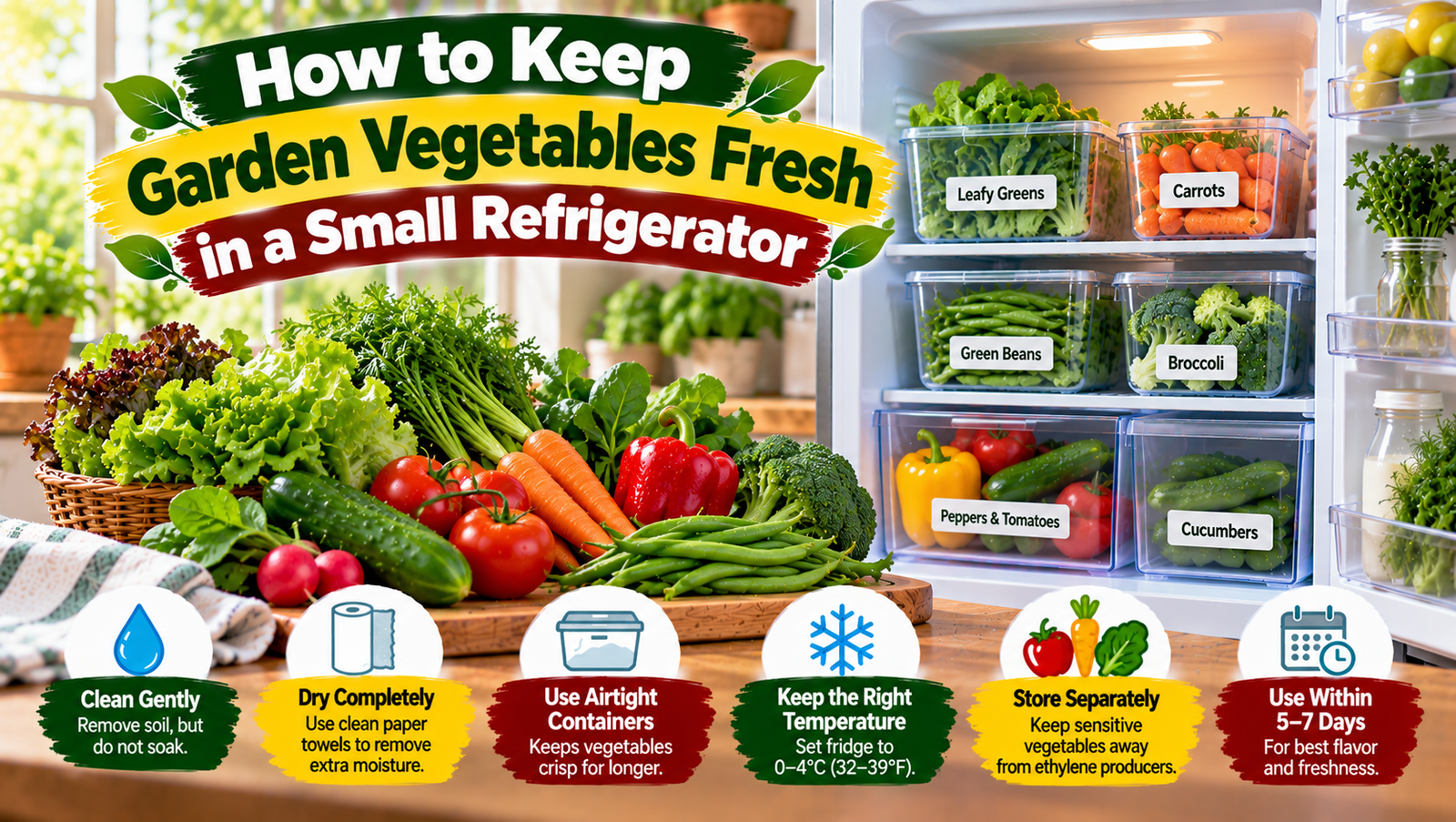
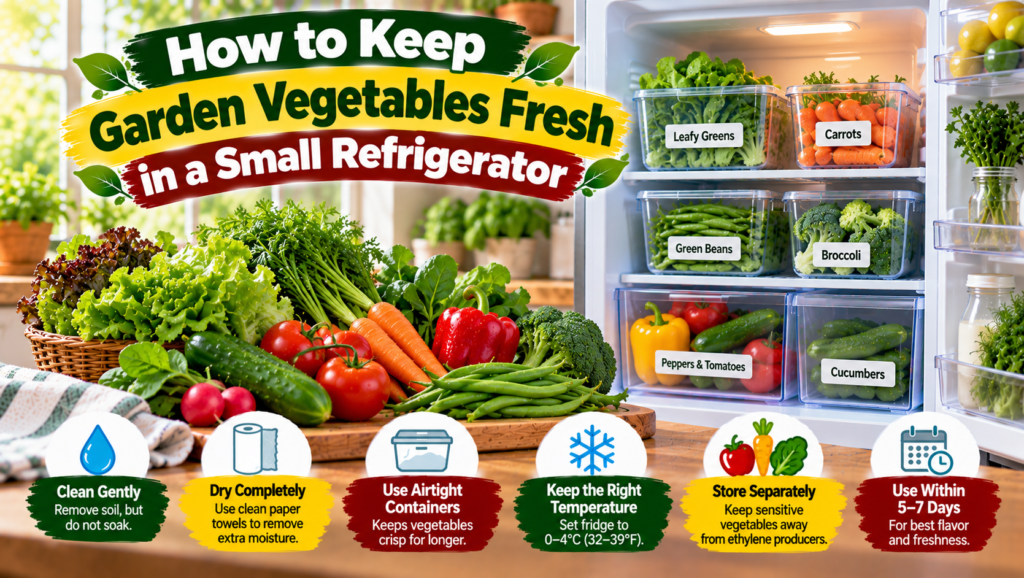
I separate leafy greens, root vegetables, peppers, cucumbers, broccoli, green beans, and other produce according to their storage needs.
This helps me decide where each vegetable should go.
I also separate damaged vegetables so they can be used first.
Do Not Put Everything in the Refrigerator
One important lesson I have learned is that not every vegetable needs refrigerator storage.
Some vegetables have different storage requirements and may be better kept in another suitable location.
Before filling a small refrigerator, I consider which vegetables actually need refrigeration.
This saves valuable space for produce that benefits most from the cooler environment.
Use Containers Efficiently
Storage containers can help organize a small refrigerator, but too many containers can also waste space.
I prefer containers that fit the available shelves and drawers without leaving large empty areas.
I use them to separate vegetables and prevent delicate produce from being crushed.
I also avoid filling containers so tightly that vegetables become difficult to remove.
Keep Leafy Greens Together
I usually organize leafy greens in one refrigerator area.
Spinach, lettuce, and similar vegetables can be placed in suitable bags or containers.
I make sure excess water is controlled and damaged leaves are removed before storage.
Keeping greens together makes it easier to check them and plan meals around them.
Store Firm Vegetables Separately
Firm vegetables such as carrots and bell peppers can usually be easier to organize than delicate greens.
I keep them in a separate section when possible.
This reduces the chance of heavy vegetables crushing delicate produce.
It also makes the refrigerator easier to manage.
Use Vertical Space
A small refrigerator often has more usable space than it first appears to have.
I try to use shelf height efficiently without overcrowding the refrigerator.
Stackable containers can sometimes help, provided they do not block airflow or place excessive weight on delicate vegetables.
The key is to create an organized system rather than simply filling every available space.
Label Storage Containers
When I have many vegetables, simple labels can be helpful.
I can mark containers with the type of vegetable or the approximate harvest date.
This is especially useful when several containers look similar.
A simple label can prevent vegetables from being forgotten.
Follow First In, First Out
This is one of the most useful systems for a small refrigerator.
I use older vegetables before newer vegetables.
When I harvest a new batch, I place it behind the older batch.
This prevents older produce from being buried underneath fresh vegetables.
Avoid Overcrowding
A small refrigerator can easily become overcrowded.
I avoid filling every corner with vegetables because this makes it difficult to see what I have.
Overcrowding can also make it harder to maintain suitable conditions.
If the refrigerator is too full, I prioritize vegetables that need refrigeration and find suitable alternative storage for other produce when appropriate.
Check Vegetables Regularly
I check my refrigerator regularly.
I remove vegetables that are no longer usable and separate those that need to be eaten soon.
This prevents one damaged vegetable from being forgotten and taking up valuable space.
It also helps me understand which storage methods work best for my refrigerator.
Plan Meals Around Your Harvest
When refrigerator space is limited, meal planning becomes especially useful.
If I know I have a large amount of spinach, carrots, peppers, or broccoli, I plan meals that use those vegetables.
This reduces the amount of time produce needs to remain in storage.
It also gives me more room for the next harvest.
Final Thoughts
Keeping garden vegetables fresh in a small refrigerator is mainly a matter of organization.
I sort vegetables before storage, avoid refrigerating produce unnecessarily, use suitable containers, protect delicate vegetables, and make use of available space without overcrowding.
I also follow a first in, first out system and check vegetables regularly.
A small refrigerator can work very well for home gardeners when it is organized thoughtfully. The goal is not to store everything at once but to use the available space wisely and keep vegetables in suitable conditions.