Root vegetables are some of the most useful crops for a home garden because many of them can be stored after harvesting. Carrots, beets, turnips, radishes, potatoes, and sweet potatoes can all be kept for different periods when the conditions are suitable.
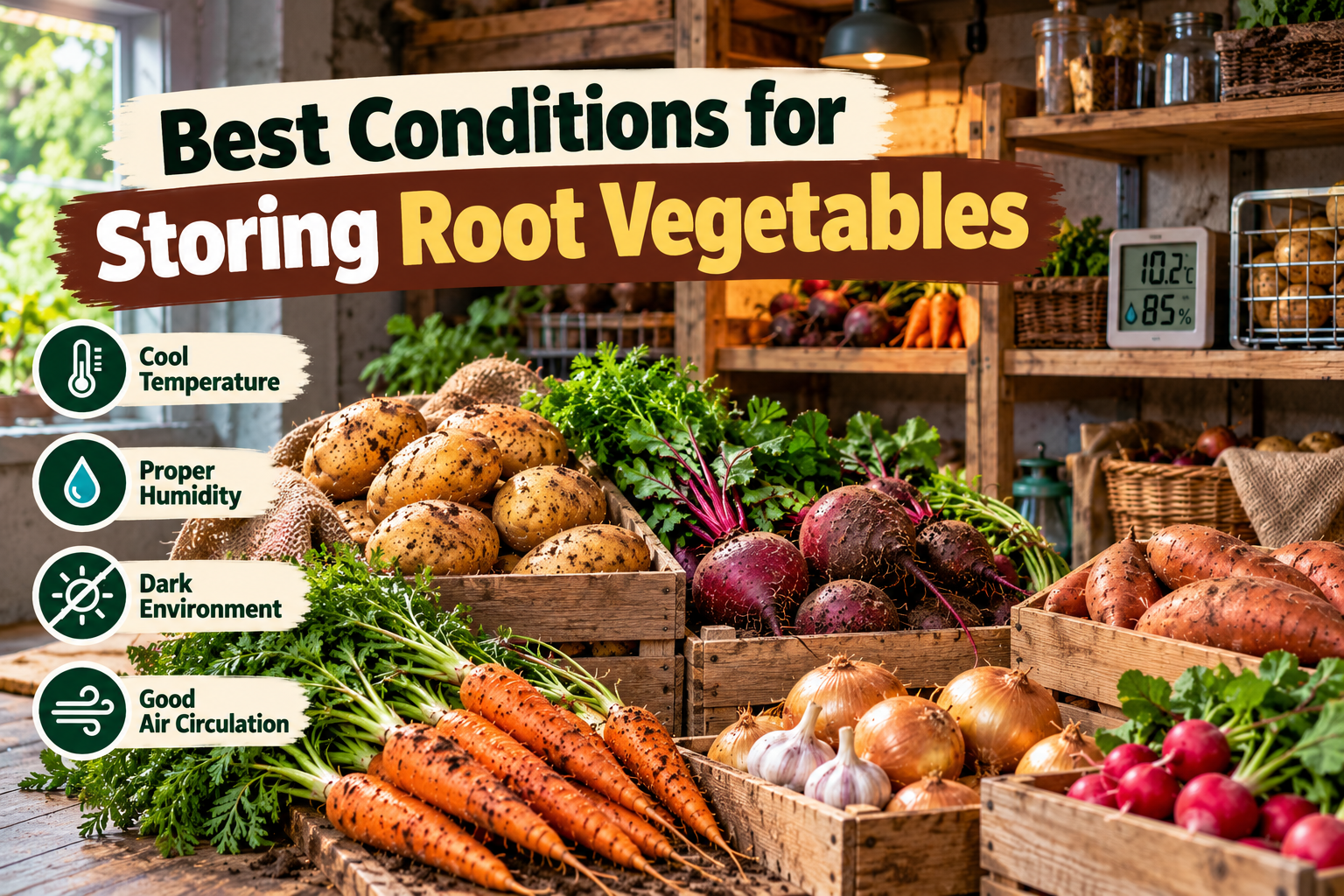
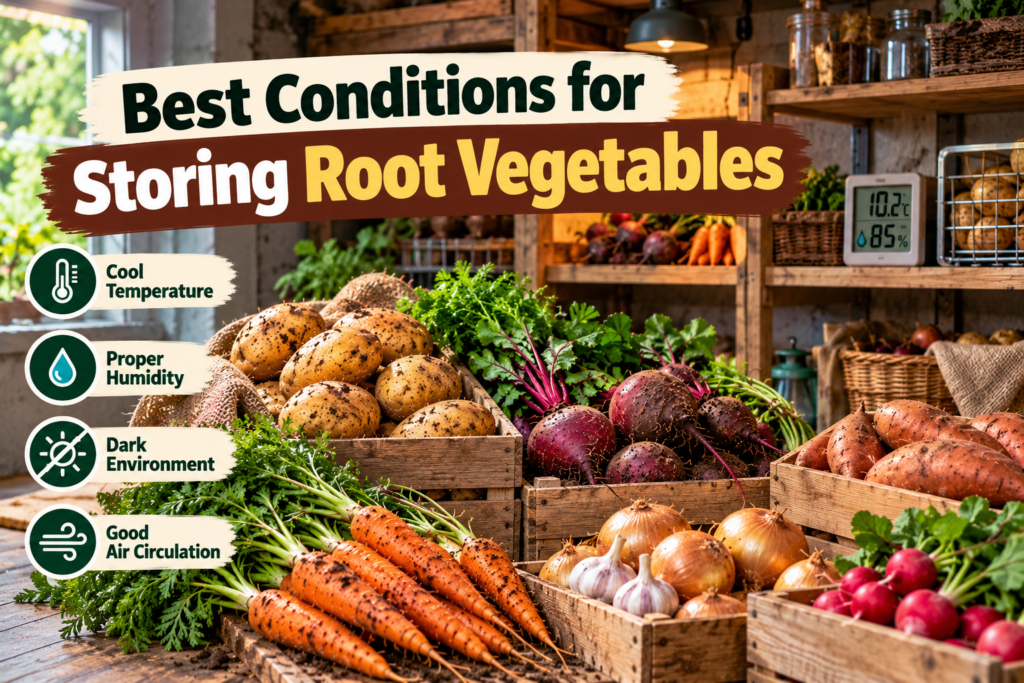
Understanding the best conditions for storing root vegetables is important because every vegetable has slightly different needs. In my experience, temperature, humidity, darkness, airflow, and cleanliness are the main factors that determine how well root vegetables store.
Start With Healthy Vegetables
The storage environment matters, but it cannot completely fix poor quality vegetables.
I always start by sorting the harvest.
Roots that are healthy, firm, and free from major damage are the best candidates for long term storage.
Damaged, soft, cracked, or diseased vegetables should be separated and used first.
Keep the Right Temperature
Temperature is one of the most important storage factors.
Many cool season root vegetables such as carrots and beets prefer cool conditions.
Potatoes also benefit from cool storage, while sweet potatoes generally require warmer conditions and proper curing.
This means there is no single temperature that works perfectly for every root vegetable.
I always consider the specific vegetable before choosing a storage location.
Control Humidity
Humidity is another important factor.
Carrots and beets can lose moisture and become soft if stored in extremely dry conditions.
However, too much moisture can encourage mold and rot.
The goal is to create a balanced environment.
For some root vegetables, slightly humid storage conditions can help maintain firmness. For potatoes, a dry environment is generally more suitable.
Keep Root Vegetables in the Dark
Many root vegetables benefit from dark storage.
Potatoes especially should be protected from light because exposure can cause green areas to develop.
I also prefer keeping carrots, beets, and other root vegetables away from direct sunlight because sunlight can heat the storage area.
A dark pantry, cellar, basement, or suitable storage container can help.
Provide Good Airflow
Ventilation is important because trapped moisture can create storage problems.
I prefer using breathable bags, baskets, cardboard boxes with ventilation, or suitable storage crates.
Completely sealed containers can trap moisture around the vegetables.
At the same time, excessive airflow can dry certain root vegetables.
Good storage requires balance rather than simply maximizing ventilation.
Keep the Storage Area Clean
Before placing vegetables into storage, I make sure the area is clean.
Old vegetables, plant debris, and standing moisture can encourage problems.
I also inspect storage containers before using them.
A clean environment makes it easier to identify and remove spoiled vegetables.
Remove Green Tops
For root vegetables such as carrots and beets, removing the green tops is an important preparation step.
The leaves can continue drawing moisture from the roots after harvesting.
I cut the tops away while leaving a small amount of stem attached.
This can help the roots maintain their quality for longer.
Avoid Unnecessary Washing
For long term storage, I generally avoid washing root vegetables immediately after harvesting.
Instead, I gently remove loose soil and allow the vegetables to dry if they are wet.
Washing can introduce additional moisture, which may create problems in storage.
The vegetables can be washed thoroughly before cooking.
Use Suitable Containers
Different root vegetables can benefit from different containers.
Paper bags, breathable boxes, baskets, and ventilated crates can all be useful.
For carrots and beets, traditional storage in slightly moist sand can also work well when conditions are suitable.
The container should protect the vegetables while still allowing the right amount of airflow.
Check Vegetables Regularly
I never recommend storing a large harvest and forgetting about it.
I check the vegetables periodically.
If I find a soft, moldy, or rotten vegetable, I remove it immediately.
Regular inspection helps prevent one damaged vegetable from affecting the rest.
Avoid Extreme Conditions
Freezing temperatures can damage many root vegetables.
Extremely hot temperatures can encourage sprouting and spoilage.
Very dry conditions can cause roots to lose moisture.
Very wet conditions can encourage mold.
The best storage environment is stable rather than extreme.
Different Vegetables Need Different Conditions
It is important to remember that root vegetables are not all the same.
Carrots and beets generally prefer cool and humid conditions.
Potatoes prefer cool, dark, and relatively dry storage.
Sweet potatoes need warmer conditions and should be cured before storage.
Radishes are usually better suited to shorter refrigerator storage.
Understanding these differences can make home vegetable storage much more successful.
Final Thoughts
The best conditions for storing root vegetables depend on the individual vegetable, but the basic principles are simple.
Start with healthy produce, remove unnecessary leaves, avoid excess moisture, provide appropriate temperature and humidity, protect vegetables from light, and maintain good ventilation.
I also believe regular inspection is just as important as the initial preparation.
With a little attention to storage conditions, home gardeners can reduce waste and enjoy their harvest for much longer.