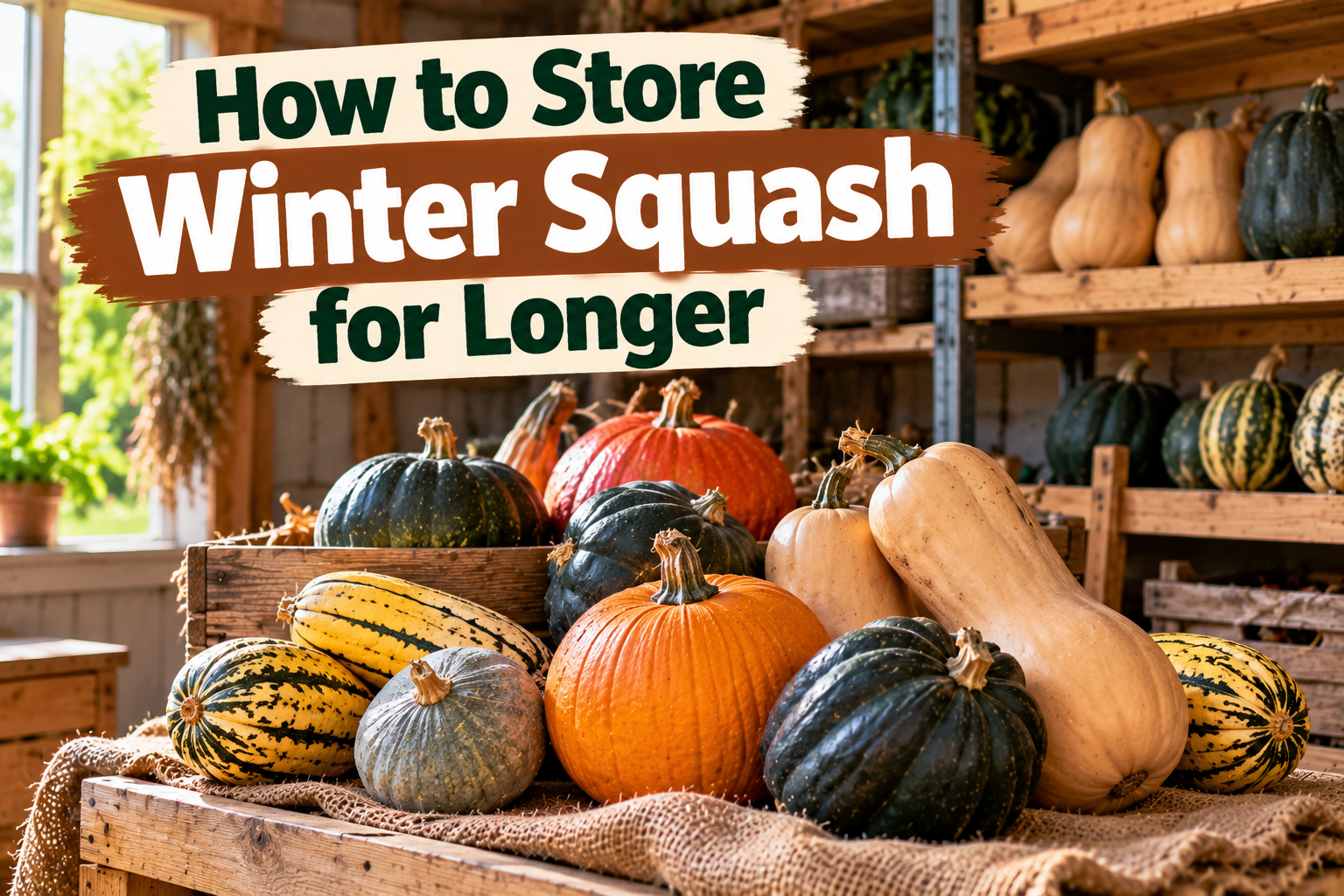
Winter squash can be one of the most rewarding crops to grow at home because a good harvest can provide food for a long time after the growing season. But if I want my squash to last, I need to pay attention to harvesting and storage.
Learning how to store winter squash for longer is mainly about choosing mature, healthy fruits and keeping them in the right environment.
Harvest Mature Squash
Winter squash should be mature before storage.
I look for a hard outer skin and a stem that has started to dry.
When harvesting, I cut the squash from the plant rather than pulling it away.
I also leave part of the stem attached because a healthy stem can help protect the fruit during handling and storage.
Avoid Damaging the Skin
Cuts and bruises can significantly reduce storage life.
I handle winter squash carefully and avoid dropping them onto hard surfaces.
Before storage, I inspect every squash.
Any fruit with deep cuts or soft areas is usually better used first.
Cure Winter Squash
Curing is an important step for many types of winter squash.
I place harvested squash in a warm, dry, and well ventilated location for a suitable period.
Curing helps strengthen the skin and can improve storage quality.
The exact curing conditions depend on the type of squash, so I always consider the variety I am growing.
Choose a Suitable Storage Location
After curing, I move the squash to a dry, dark, and well ventilated storage area.
A pantry, cupboard, dry room, or similar location can work.
I avoid damp areas because moisture can encourage mold.
I also keep squash away from direct sunlight and extreme temperatures.
Do Not Store Squash on a Wet Floor
I prefer placing winter squash on a shelf, cardboard, or another dry surface.
Direct contact with a damp floor can increase the chance of moisture related problems.
Leaving some space between individual squash also improves airflow.
Keep Squash Away From Damaged Produce
If one squash starts to rot, I remove it quickly.
I do not want a spoiled fruit sitting next to healthy ones.
Regular inspection is particularly important during long term storage.
Avoid Excessive Handling
After placing squash into storage, I try not to move it unnecessarily.
Repeated handling can cause small bruises that may not be immediately visible.
I simply check the squash visually and move only the ones that need attention.
Monitor the Storage Area
I occasionally check whether the storage area is becoming too humid or warm.
Stable conditions are better than dramatic changes.
If I notice condensation, mold, or soft spots, I adjust the storage environment.
How Long Can Winter Squash Last?
Storage life depends on the variety and condition of the squash.
Some types naturally store longer than others.
Proper maturity, curing, careful handling, and suitable storage conditions all contribute to longer storage.
I never assume every squash will last exactly the same amount of time.
Common Storage Mistakes
Some common mistakes include harvesting immature squash, damaging the skin, skipping curing, and storing squash in damp conditions.
Another mistake is stacking squash too tightly.
I also avoid storing damaged fruit for long periods.
Final Thoughts
Knowing how to store winter squash for longer can help you get much more value from your garden.
I focus on harvesting mature squash carefully, keeping the skin intact, curing the fruit properly, and storing it in a dry and well ventilated location.
With these simple steps, winter squash can remain an excellent homegrown food well beyond the harvest season.