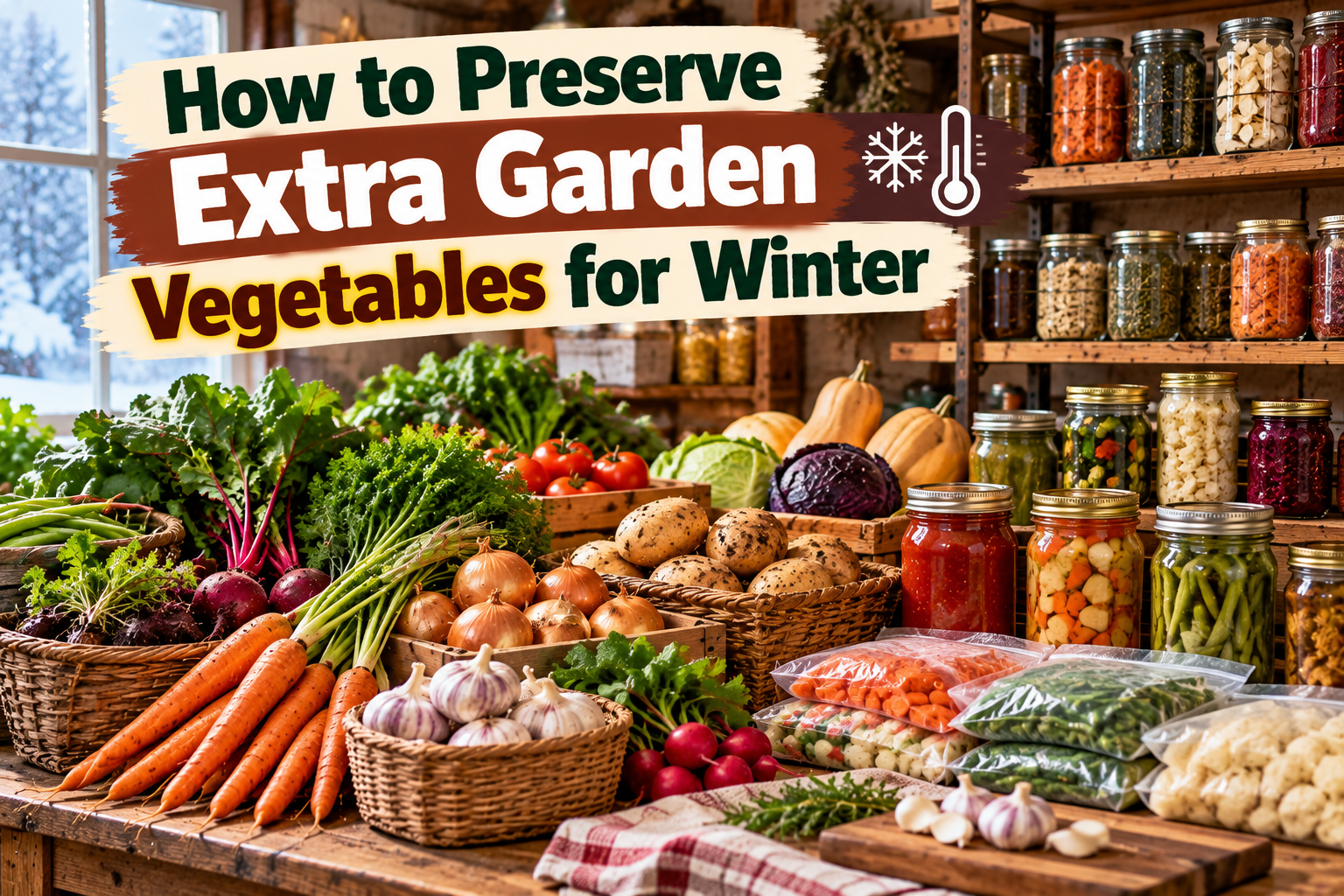
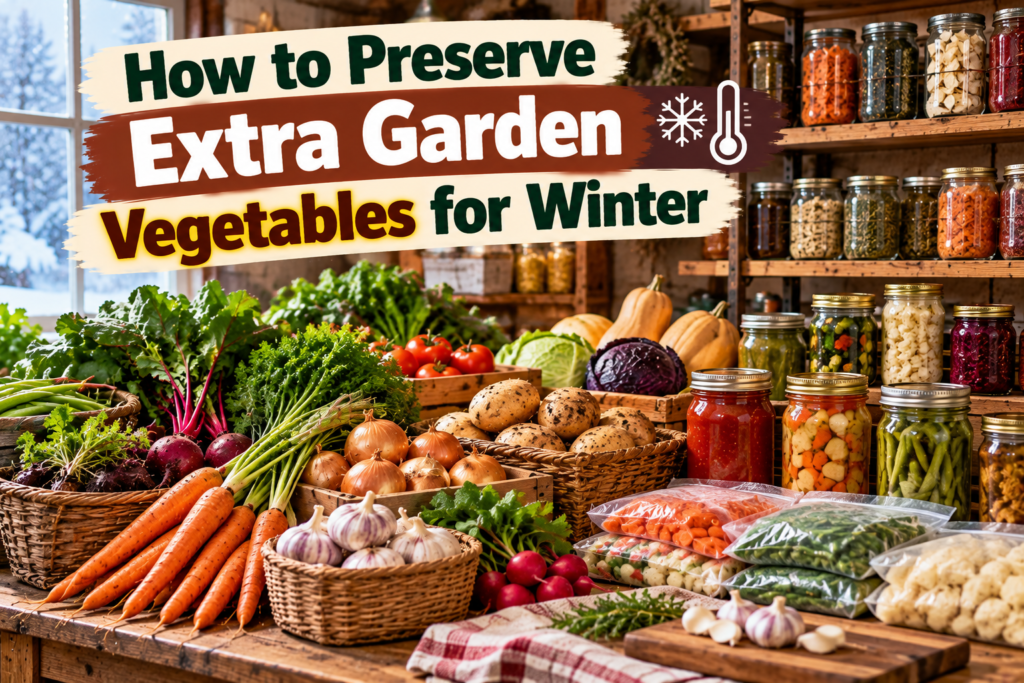
A productive garden can sometimes produce more vegetables than I can eat immediately. Instead of allowing the extra harvest to go to waste, I like to think about how to preserve extra garden vegetables for winter.
Preserving vegetables gives me a way to enjoy homegrown produce even when the garden is no longer producing.
There are several methods available, and the best choice depends on the vegetable, available equipment, and how I plan to use the food later.
Freeze Extra Vegetables
Freezing is one of the most practical preservation methods for many garden vegetables.
Vegetables such as peas, green beans, carrots, and some leafy vegetables can be prepared and frozen.
Before freezing, I usually clean and prepare the vegetables appropriately.
Some vegetables benefit from blanching before freezing because this can help maintain quality during storage.
Dry Vegetables
Drying is another traditional preservation method.
When vegetables are dried correctly, much of their moisture is removed, making them easier to store.
Herbs, peppers, and some vegetables can be dried using suitable home methods.
The important thing is ensuring that the vegetables are thoroughly dried before placing them into storage containers.
Can Suitable Vegetables
Canning can preserve certain vegetables for long periods, but it requires careful attention to food safety.
I would always use a tested canning method and follow appropriate processing instructions.
The correct acidity, temperature, processing time, and equipment matter.
Canning should never be treated as a method where I simply guess the processing conditions.
Make Pickled Vegetables
Pickling can be a useful way to preserve vegetables while also creating a different flavor.
Cucumbers, carrots, onions, beets, and other vegetables can be used in various pickling preparations.
For food safety, I use reliable recipes and follow their instructions carefully.
Store Root Vegetables
Some vegetables do not need to be preserved through processing.
Carrots, beets, potatoes, onions, garlic, and winter squash can often be stored naturally under suitable conditions.
This is one reason I like growing storage crops.
With proper harvesting, curing, and storage, they can provide food during the colder months without requiring complicated preservation equipment.
Preserve Tomatoes
Tomatoes can be preserved in several ways.
They can be frozen, dried, or processed using suitable methods.
When I have more tomatoes than I can eat fresh, preservation allows me to continue using the harvest later.
The method I choose depends on how I plan to use the tomatoes.
Freeze Garden Herbs
Fresh herbs can also be preserved for winter.
Some herbs can be dried, while others can be frozen.
I like having preserved herbs available because even a small amount can add flavor to winter meals.
Label Everything
One simple habit that makes preservation much easier is labeling.
Whenever I freeze, dry, or otherwise preserve vegetables, I label the container with the vegetable and date.
This helps me use older food first and keeps the storage area organized.
Use Small Portions
I prefer preserving vegetables in practical portions.
For example, instead of freezing one huge container of vegetables, I divide them into smaller amounts.
This makes it easier to take out only what I need.
It also reduces unnecessary thawing and refreezing.
Check Stored Food
Preserved vegetables should still be checked periodically.
If a container has an unusual smell, damaged seal, mold, or other signs of spoilage, I do not use it.
Good preservation begins with proper preparation and continues with careful storage.
Final Thoughts
Learning how to preserve extra garden vegetables for winter gives home gardeners more options and can greatly reduce food waste.
Freezing, drying, pickling, safe canning, and natural storage can all play a role.
I prefer choosing the preservation method based on the vegetable rather than trying to use one method for everything.
With a little planning, a productive summer garden can continue providing useful food throughout the winter months.