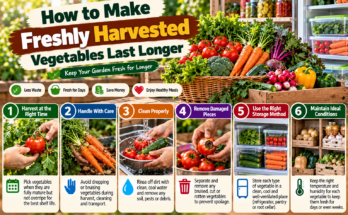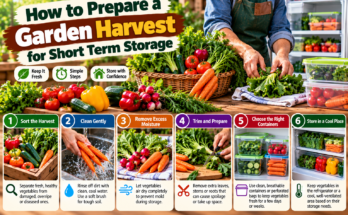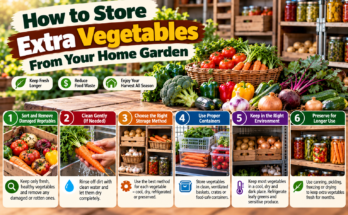
Harvesting vegetables at the right time can make a big difference in how long they remain fresh after leaving the garden. When I grow vegetables for storage, I do not simply pick everything as soon as it looks edible. I pay attention to maturity, weather, plant condition, and the type of vegetable I am harvesting.
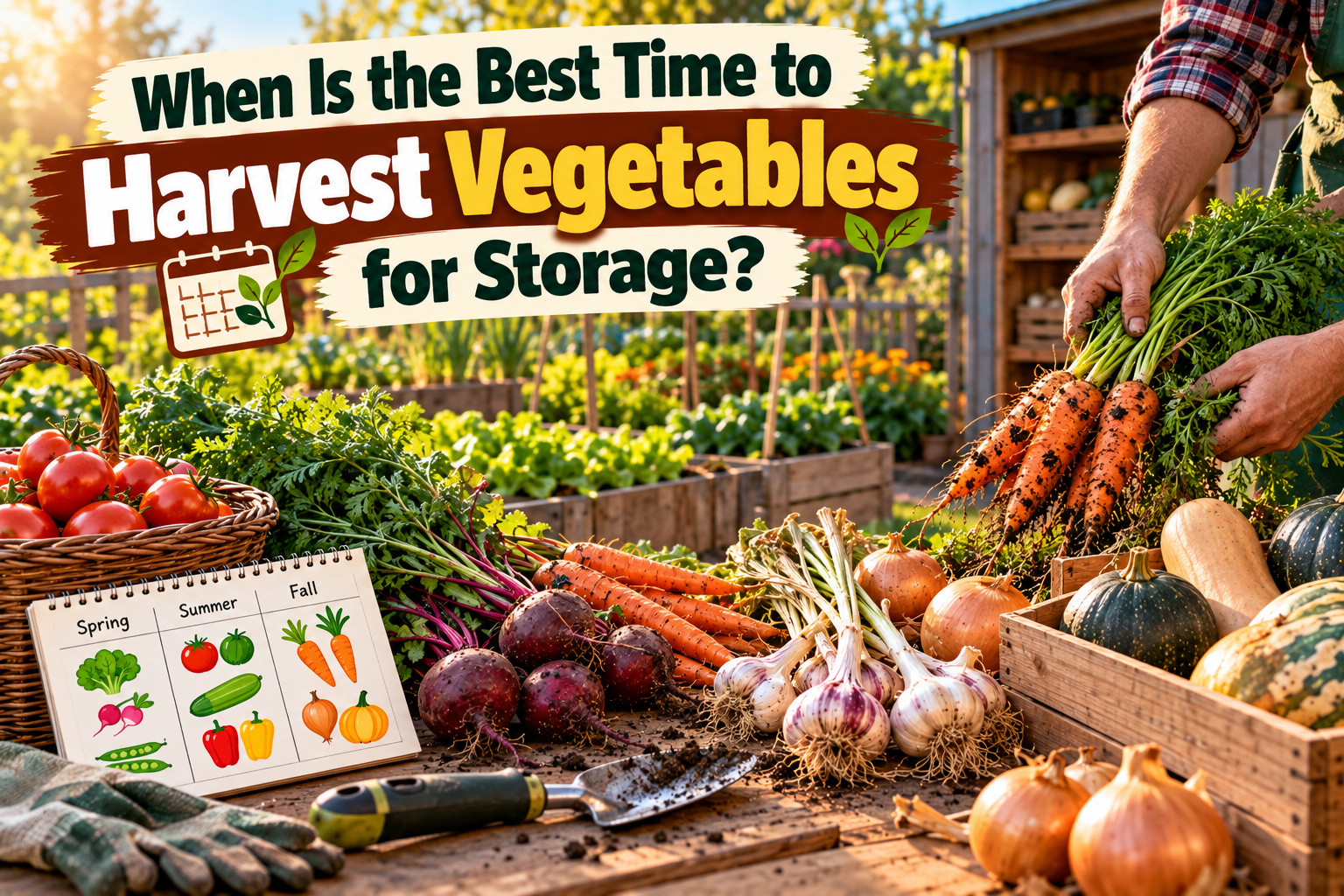
Knowing when is the best time to harvest vegetables for storage helps me protect the quality of my garden harvest and reduce unnecessary waste.
Different vegetables have different harvesting requirements, so there is no single perfect day for every crop.
Harvest Mature Vegetables for Long Storage
In general, vegetables intended for long term storage should be mature and healthy.
For example, potatoes intended for storage benefit from mature skins. Onions usually store better when their leaves begin to fall over and the bulbs have developed dry outer layers.
Winter squash also needs to reach maturity before storage.
Harvesting too early can result in vegetables with weaker skins and shorter storage lives.
Harvest Root Vegetables at the Right Size
Carrots, beets, turnips, and similar root vegetables can often be harvested at different sizes.
For immediate eating, smaller roots can be excellent.
For storage, I usually prefer healthy roots that have reached a good mature size without becoming overgrown.
The exact ideal size depends on the vegetable variety.
Harvest Potatoes After the Plants Mature
For potatoes intended for storage, I prefer waiting until the plants naturally begin to die back.
The skins become stronger as the potatoes mature.
This helps protect them during handling and storage.
Very young potatoes have delicate skins and are generally better for eating soon rather than storing for a long time.
Harvest Onions When the Tops Fall Over
Onions often give a useful visual signal when they are ready.
The green leaves begin turning yellow and falling over.
At this point, the bulbs are approaching maturity.
I prefer harvesting onions when the weather is dry because excess moisture can make curing more difficult.
Harvest Garlic When the Bulbs Are Mature
Garlic also needs to be harvested at the appropriate stage.
When several lower leaves have turned brown while upper leaves remain green, the bulbs may be ready.
I dig carefully to avoid damaging the bulbs.
After harvesting, garlic should be cured before long term storage.
Harvest Winter Squash When Mature
Winter squash should have a firm outer skin and a mature appearance before harvesting.
I cut the fruit from the plant and leave part of the stem attached.
I avoid dropping the squash because bruises can reduce storage life.
Properly mature squash generally has better storage potential.
Choose Dry Weather When Possible
Weather can influence storage quality.
Whenever possible, I prefer harvesting storage vegetables on a dry day.
Wet vegetables can carry excess moisture into storage.
If vegetables are harvested when wet, I allow them to dry naturally in a shaded and ventilated area before preparing them for storage.
Avoid Harvesting During Extreme Heat
Very hot conditions can stress freshly harvested vegetables.
If possible, I harvest early in the morning or during a cooler part of the day.
This can help reduce heat exposure and make handling easier.
The exact best time depends on the crop and local weather conditions.
Handle Vegetables Carefully
Harvesting at the right time is only part of the process.
I also handle the vegetables gently.
Cuts, bruises, and broken skins can shorten storage life.
I use suitable garden tools and avoid throwing vegetables into large containers.
Sort Vegetables Immediately
After harvesting, I separate healthy vegetables from damaged ones.
This is particularly important when I have a large harvest.
Healthy vegetables are suitable for storage, while damaged vegetables should generally be used first.
Final Thoughts
Knowing when is the best time to harvest vegetables for storage can help make the entire storage process easier.
I look for maturity rather than simply picking vegetables as soon as they reach an edible size.
I also consider weather, plant condition, and the specific needs of each crop.
Careful harvesting gives vegetables a much better start in storage and can help extend their useful life after they leave the garden.