The moment a vegetable is harvested can have a major effect on how long it remains fresh. When I harvest vegetables from my garden, I know that the storage process does not begin when I put them into a refrigerator or pantry. It begins the moment I remove them from the plant.
Understanding how harvesting time affects vegetable shelf life helps me decide when to harvest different crops and how to prepare them afterward.
Harvesting Too Early
Harvesting too early can sometimes reduce storage potential.
Young vegetables may have thinner skins, higher moisture levels, or less developed protective layers.
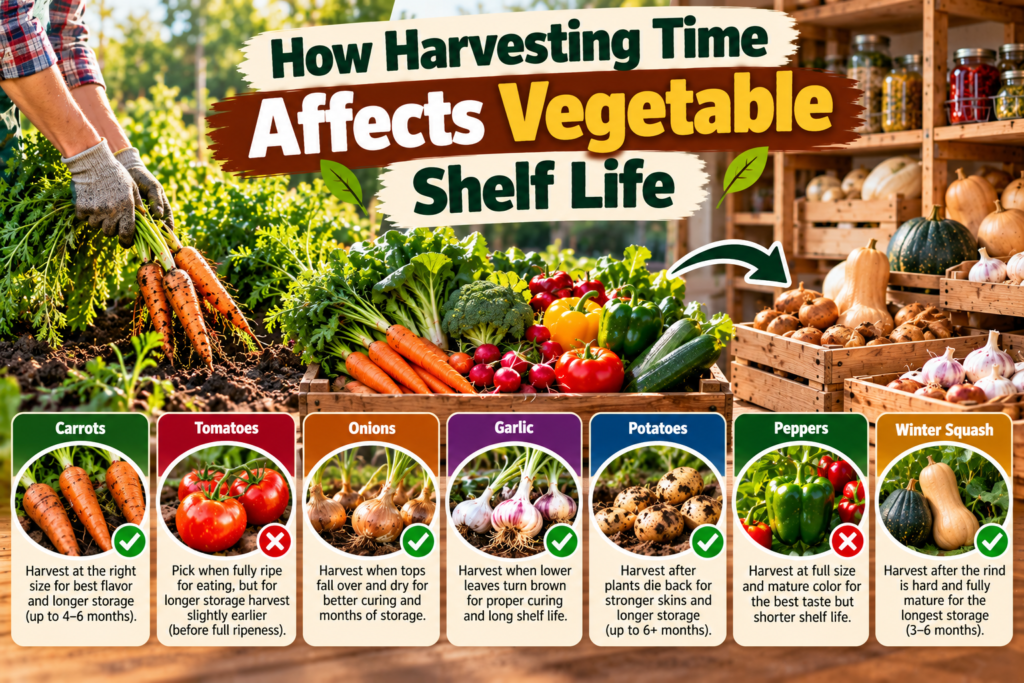
This is particularly important for storage crops such as potatoes, onions, garlic, and winter squash.
Although young vegetables can taste excellent, they are not always the best choice for long term storage.
Harvesting at Full Maturity
For many storage vegetables, full maturity provides better protection.
Mature potatoes develop stronger skins.
Mature onions develop dry outer layers.
Garlic develops protective skins around the cloves.
Winter squash develops a harder outer surface.
These natural protections can help reduce moisture loss and physical damage.
Harvesting Too Late
Waiting too long can also create problems.
Over mature root vegetables can become tough or woody.
Some vegetables may become more vulnerable to insects, cracking, or weather damage.
For this reason, I do not simply leave every vegetable in the garden for as long as possible.
I try to harvest each crop at the stage that provides the best balance between quality and storage potential.
Weather and Shelf Life
Weather at harvest can also affect storage.
If vegetables are harvested during wet conditions, they may carry excess moisture into storage.
Moisture can encourage mold and decay.
Whenever possible, I prefer harvesting storage vegetables during dry weather.
If the vegetables are wet, I allow them to dry naturally before storage preparation.
Temperature at Harvest
Very hot vegetables can be difficult to store immediately.
I prefer harvesting during cooler parts of the day when possible.
This is especially useful during hot weather.
Keeping freshly harvested produce away from excessive heat helps maintain its quality during the transition from garden to storage.
Handling Matters Too
Harvesting at the right time does not guarantee long shelf life if the vegetables are damaged during harvest.
Cuts and bruises create weak areas.
I therefore loosen soil around root crops before pulling them.
For fruiting vegetables such as squash, I use clean and suitable tools rather than twisting or pulling aggressively.
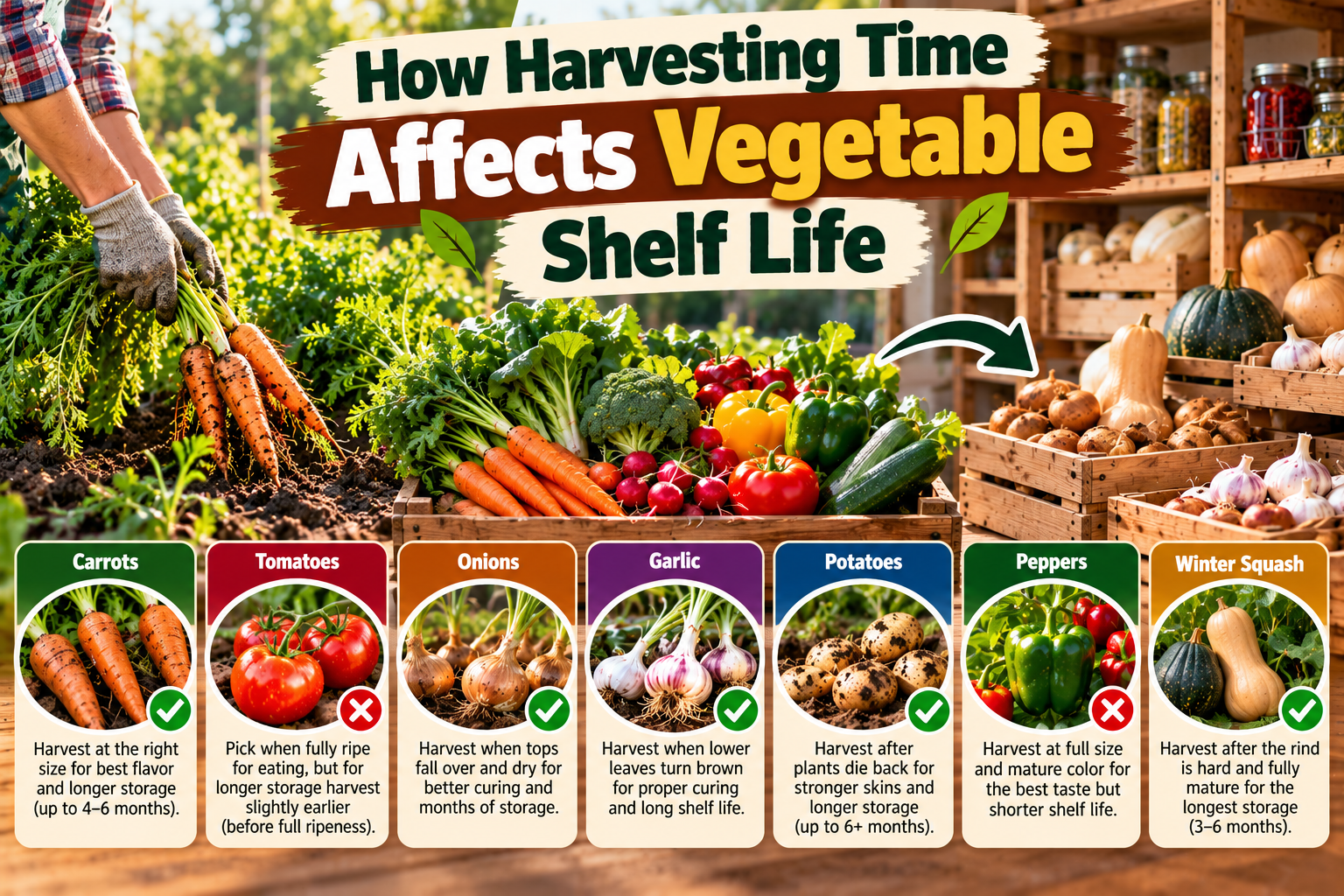
Different Vegetables Have Different Harvest Times
Every vegetable has its own maturity signals.
Carrots can be harvested at different sizes.
Potatoes intended for storage benefit from mature skins.
Onions are often harvested when the tops fall over.
Garlic is harvested when the bulbs have developed properly.
Winter squash should have a mature and firm outer skin.
Learning these signs is useful for any home gardener.
Shelf Life Starts in the Garden
I think of vegetable storage as a process that begins before harvesting.
Healthy plants produce healthier vegetables.
Proper watering, pest management, soil care, and harvesting at the right stage all contribute to storage quality.
The better condition the vegetable is in at harvest, the better chance it has of staying fresh.
Final Thoughts
Understanding how harvesting time affects vegetable shelf life can help gardeners make better decisions.
Harvesting too early can result in vegetables that are not fully prepared for storage, while harvesting too late can lead to toughness or damage.
I prefer learning the maturity signs for each crop and choosing a dry, suitable harvesting period.
Good storage begins with good harvesting, and careful timing can make a noticeable difference in how long a garden harvest lasts.