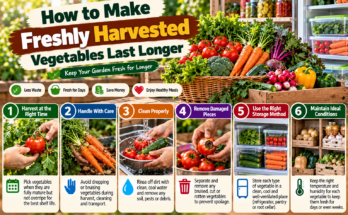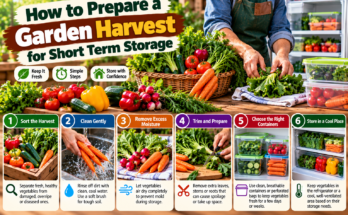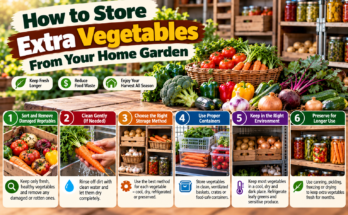
Fresh vegetables can look strong when they are growing in the garden, but they can be surprisingly easy to damage after harvesting. A small cut, bruise, or broken skin may not look serious at first, but it can shorten storage life.
Learning how to handle vegetables without damaging them is something I consider an important part of harvesting and storage.
Handle Vegetables Gently
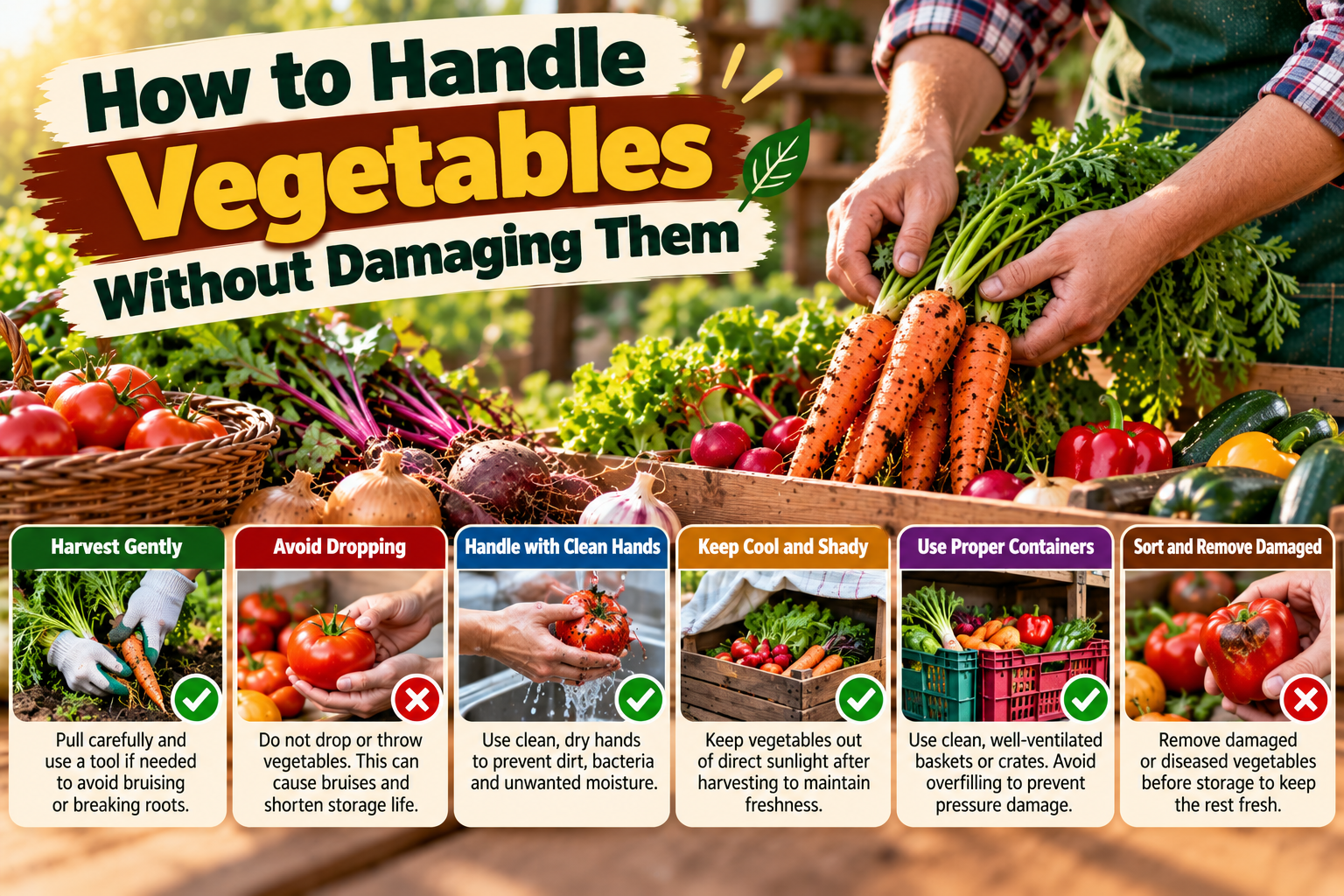
The first rule I follow is simple. I try to handle freshly harvested vegetables as gently as possible.
I avoid throwing them into buckets or containers.
Instead, I place them carefully inside the storage container.
This is especially important for potatoes, onions, garlic, winter squash, and other vegetables intended for long storage.
Use the Right Harvesting Tool
The right tool can reduce damage.
For root vegetables, I loosen the soil around the crop before pulling.
A garden fork can be useful when used carefully.
I avoid pushing tools directly into the area where the vegetables are growing because this can cut the roots.
Avoid Pulling Too Hard
If a root vegetable does not come out easily, I do not force it.
Hard pulling can break the vegetable or damage its skin.
Instead, I loosen more soil around it.
This small amount of extra effort can prevent unnecessary damage.
Be Careful With Squash
Winter squash can bruise when dropped.
When harvesting, I cut the fruit from the plant and place it gently on the ground.
I avoid carrying too many squash at once.
If I need to move several fruits, I prefer making multiple trips rather than risking damage.
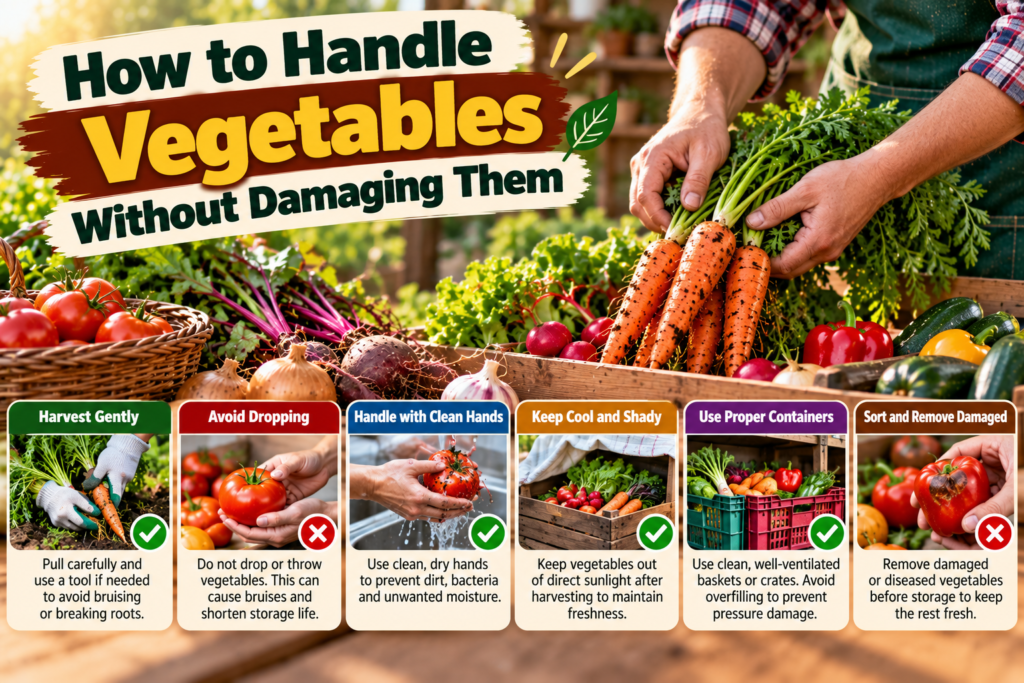
Do Not Throw Vegetables Into Containers
This may seem like a small detail, but dropping vegetables into a deep bucket can cause bruising.
I place them inside rather than tossing them.
For large harvests, I use shallow containers when possible.
This reduces pressure and makes the vegetables easier to inspect.
Avoid Overfilling Containers
Overfilling storage boxes can also cause damage.
Heavy vegetables placed on top of others create pressure.
I prefer using multiple containers if the harvest is large.
This also improves airflow.
Protect Vegetables During Transportation
If I need to move vegetables from the garden to another part of the home, I make sure they are protected.
I avoid placing heavy objects on top of them.
For fragile vegetables, shallow baskets can be more useful than deep containers.
Separate Damaged Vegetables
After harvesting, I inspect the vegetables.
If I notice cuts or bruises, I separate those vegetables.
I use damaged produce first rather than storing it with healthy vegetables.
Keep Vegetables Out of Direct Sunlight
After harvesting, vegetables should not sit in strong sunlight for long periods.
The sun can heat them quickly.
I prefer moving them to a shaded and ventilated location while I prepare them for storage.
Keep Hands and Tools Clean
Clean hands and tools can help reduce unnecessary contamination.
I make sure harvesting tools are reasonably clean before use.
This is especially important when handling vegetables that have cuts or broken skin.
Final Thoughts
Learning how to handle vegetables without damaging them is one of the easiest ways to improve storage life.
I focus on gentle harvesting, using suitable tools, avoiding drops and bruises, protecting produce from heat, and sorting damaged vegetables immediately.
A few extra minutes of careful handling can help protect an entire harvest and reduce food waste.