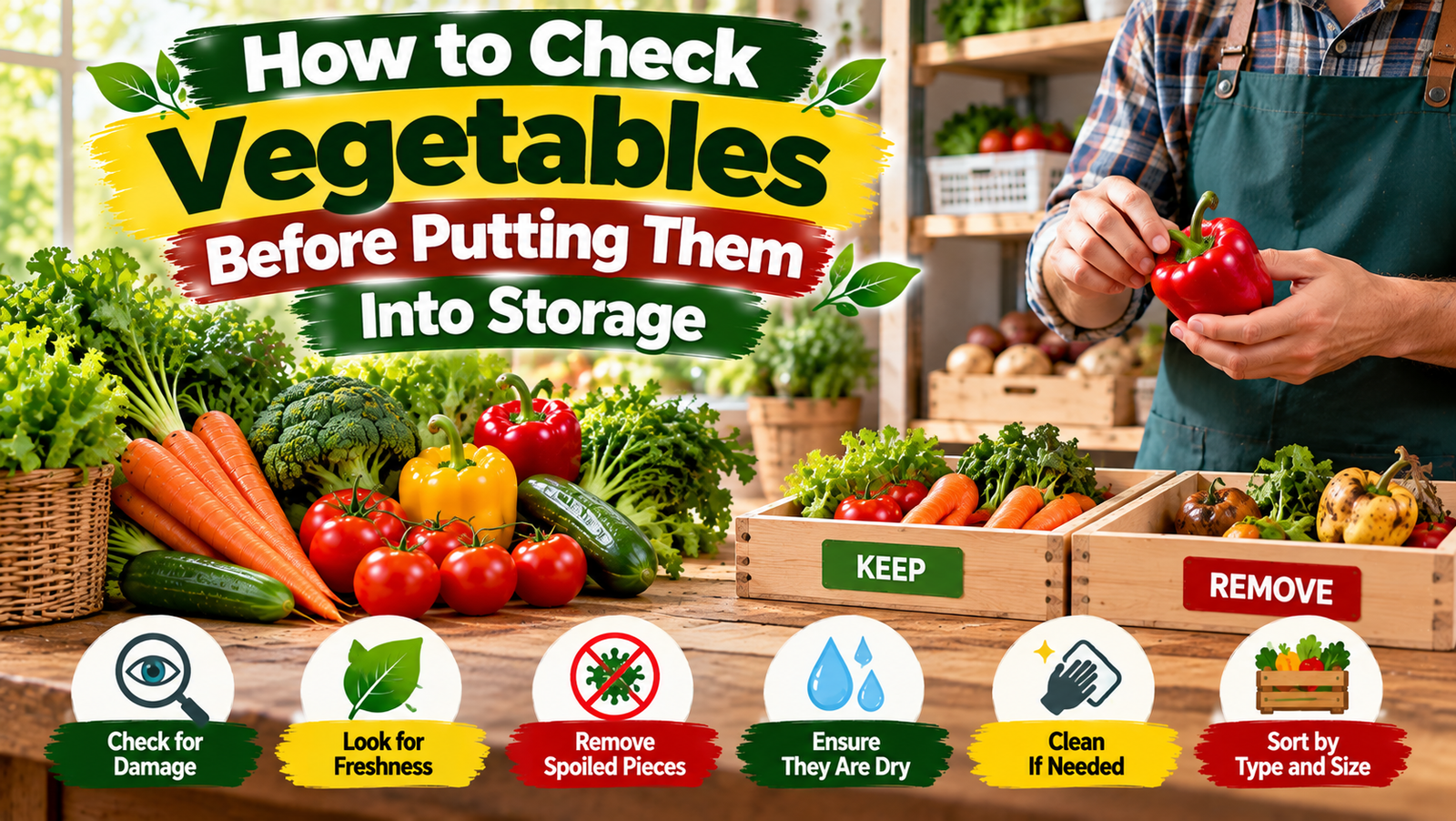
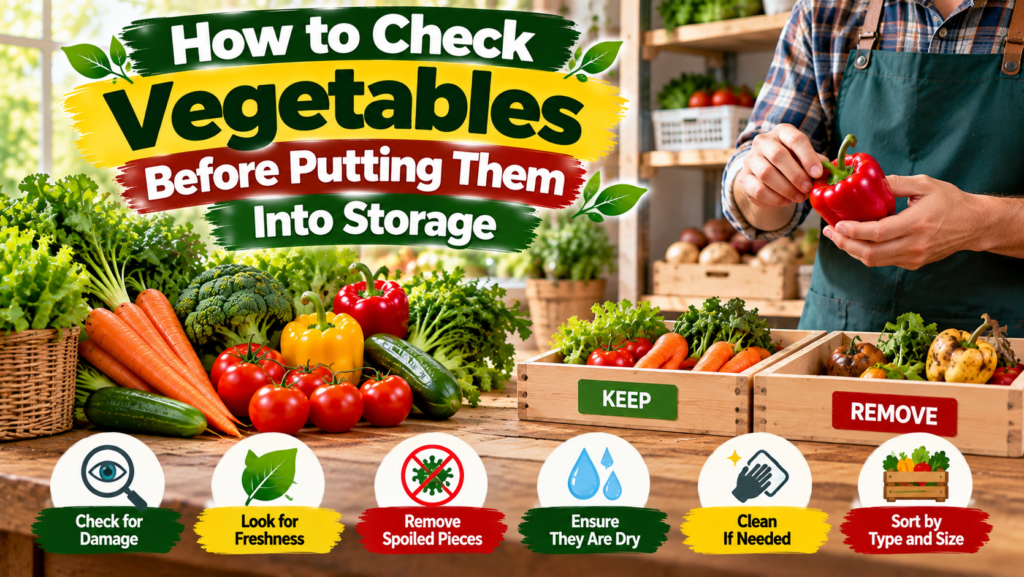
Storing fresh vegetables properly can help reduce food waste and allow us to enjoy the results of our garden for a longer time. However, I have found that good vegetable storage does not begin with the storage shelf, basket, refrigerator, or container. It actually begins with checking the vegetables before putting them away.
Fresh vegetables can look healthy at first glance, but a small cut, soft spot, bruise, insect mark, or sign of moisture can become a bigger problem during storage. One damaged vegetable can also affect other vegetables when they are stored together. This is why I always believe that checking vegetables before storage is one of the simplest habits every home gardener should develop.
In this guide, I will explain how I check vegetables before storage, what signs I look for, which vegetables need special attention, and how proper preparation can help maintain better quality.
Why Should You Check Vegetables Before Storage?
The condition of vegetables at the time of storage has a major effect on how well they keep. Vegetables that are healthy, mature, and free from serious damage generally have a better chance of staying fresh.
When I prepare vegetables for storage, I do not simply collect everything and put it into one container. I first inspect each vegetable because storage is not the right time to ignore small problems.
Damaged vegetables may lose quality more quickly. Bruised areas can become soft, while cuts and broken surfaces may allow microorganisms to enter. Excess moisture can also encourage decay.
Checking vegetables before storage helps me separate the vegetables that are suitable for longer storage from those that should be used soon.
Start With a Visual Inspection
The first thing I do is look carefully at the entire vegetable. A quick glance is useful, but a proper inspection should involve checking all sides.
I look for unusual discoloration, bruises, cracks, holes, soft areas, insect damage, mold, and signs of decay.
For vegetables such as carrots, potatoes, onions, squash, and pumpkins, I pay particular attention to the surface because damage may not always be obvious from a distance.
I also check the ends of vegetables. Sometimes damage around the stem or root end can be easier to notice than damage in the middle.
If a vegetable looks healthy overall, I move on to the next step.
Check for Bruises and Soft Spots
Bruising is one of the problems I pay close attention to before storage. A vegetable may still look usable even when it has been dropped, squeezed, or damaged during harvesting.
I gently examine the surface and look for areas that feel unusually soft compared with the rest of the vegetable.
Soft spots can be especially important when storing vegetables for several days or weeks. A damaged area may deteriorate faster than the healthy parts.
If I find a vegetable with minor damage, I usually keep it separate and plan to use it sooner instead of putting it with vegetables intended for longer storage.
Look for Cuts and Cracks
Cuts and cracks are another important thing to check. These can happen during harvesting, washing, transportation, or handling.
I carefully inspect vegetables for open cuts, split areas, broken stems, or cracks in the skin.
For example, root vegetables may become scratched while being removed from the soil. Squash and other larger vegetables can also develop small cracks if they are handled roughly.
Rather than automatically storing damaged vegetables with healthy ones, I separate them. This makes it easier to use them first and reduces the chance of a damaged vegetable affecting the quality of nearby produce.
Check for Mold
Mold is a clear warning sign that I never ignore. I look carefully for fuzzy growth, unusual patches, or areas that appear to be breaking down.
Mold can sometimes begin in a small area and become more noticeable later. For this reason, I inspect vegetables carefully before placing them into storage.
If a vegetable shows significant mold or decay, it should not simply be placed into a storage container with healthy vegetables. Depending on the vegetable and the condition, the safest choice may be to discard it rather than risk contaminating other produce.
When dealing with food safety concerns, I always recommend following reliable food safety guidance rather than relying only on appearance.
Feel the Vegetable Carefully
Appearance is important, but I also use touch when checking vegetables.
A healthy vegetable usually has a texture that is appropriate for its type. If something feels unusually soft, slimy, hollow, or weak, I take a closer look.
For example, a carrot that feels firm is generally different from one that has developed a very soft section. The same principle applies to many other vegetables.
I do not squeeze vegetables aggressively because rough handling can cause additional bruising. A gentle check is enough.
Check for Excess Moisture
Moisture is one of the biggest things I try to control before vegetable storage.
If vegetables are wet when they are placed into storage, trapped moisture can create conditions that encourage deterioration. This is especially important when vegetables are packed closely together.
After harvesting or washing vegetables, I make sure they are handled according to the storage requirements of that particular vegetable. Some vegetables should be kept dry, while others may have different preparation needs.
I avoid putting visibly wet vegetables into a storage container without considering how that moisture will affect the storage environment.
Remove Dirt Carefully
Garden vegetables often come with soil attached, especially root crops. Before storage, I check whether dirt is covering any damaged areas.
However, I do not automatically wash every vegetable before storage because different vegetables have different storage requirements.
For vegetables that are normally stored dry, excessive washing can introduce additional moisture. Instead, I may gently remove loose soil when appropriate and keep the vegetables in a suitable condition for their storage method.
The important thing is to know the storage needs of each vegetable rather than using one method for everything.
Check the Stem and Leaf Areas
The stem area can sometimes tell me a lot about a vegetable’s condition.
I inspect stems, leaves, and the areas where leaves connect to the vegetable. I look for discoloration, softness, decay, insects, and excessive moisture.
For leafy vegetables, I remove damaged or severely wilted leaves when appropriate. For vegetables with stems, I make sure there are no obvious signs of deterioration around the stem area.
This small step can make the storage process much more organized.
Look for Insect Damage
Garden vegetables can sometimes have insect damage even when they look healthy from a distance.
I check for small holes, tunnels, chewed areas, eggs, insects, and unusual marks. I also inspect underneath leaves when storing leafy vegetables.
A small amount of insect damage does not always mean the entire vegetable needs to be discarded, but damaged vegetables should be evaluated separately and used appropriately.
The main goal is to avoid placing obviously damaged vegetables together with vegetables that are intended for longer storage.
Separate Vegetables by Condition
After checking the vegetables, I divide them into simple groups.
The first group contains vegetables that are healthy and suitable for the intended storage method.
The second group contains vegetables with minor damage that should be used sooner.
The third group contains vegetables with serious decay, mold, or other problems that make them unsuitable for storage.
This simple sorting system makes vegetable storage much easier. It also helps me remember which vegetables need to be used first.
Do Not Store Damaged Vegetables With Healthy Ones
One of the most useful habits I have developed is keeping damaged vegetables separate from healthy ones.
If one vegetable is already deteriorating, storing it directly against other vegetables can create unnecessary problems.
Instead, I prefer to inspect everything first and give priority to vegetables that need to be used quickly.
This approach is particularly helpful when storing a large harvest because it prevents me from forgetting about damaged produce at the bottom of a container.
Check Vegetables Again During Storage
Checking vegetables should not be a one time activity.
Even vegetables that were perfectly healthy when stored can change over time. That is why I like to inspect stored vegetables regularly.
I look for new soft spots, mold, unusual smells, moisture, discoloration, or signs of deterioration.
If I notice a problem, I separate the affected vegetable from the rest and reassess the storage conditions.
Regular checking is especially important when vegetables are being stored for longer periods.
Common Mistakes to Avoid
There are a few mistakes I try to avoid when preparing vegetables for storage.
One mistake is storing everything together without checking it first. Different vegetables have different storage needs, and damaged produce should not simply be mixed with healthy produce.
Another mistake is ignoring small bruises or cuts. These may become more noticeable as storage time increases.
I also avoid storing vegetables while they are unnecessarily wet. Moisture management is an important part of maintaining vegetable quality.
Finally, I do not rely only on appearance. Touch, smell, and careful inspection can also provide useful information about the condition of stored vegetables.
Final Thoughts
Checking vegetables before putting them into storage is a simple step, but I believe it can make a significant difference in how well a harvest keeps. Healthy vegetables should be separated from damaged ones, and every vegetable should be inspected for bruises, cuts, soft spots, mold, insects, cracks, and excess moisture.
From my point of view, the best approach is to slow down for a few minutes before storage instead of discovering problems later. I prefer to sort my vegetables carefully, use damaged produce sooner, and give healthy vegetables the storage conditions they need.
Good vegetable storage is not only about choosing the right container or temperature. It starts with selecting and preparing vegetables carefully. When I take the time to check my harvest before storage, I can reduce unnecessary waste and make better use of the vegetables I have grown.