Fresh spinach can be one of the most rewarding vegetables to grow at home. It grows relatively quickly and can be used in salads, cooked meals, smoothies, and many other dishes.
The challenge is keeping spinach fresh after harvesting. Because spinach leaves are delicate and contain a lot of water, they can wilt or deteriorate quickly when handled poorly.
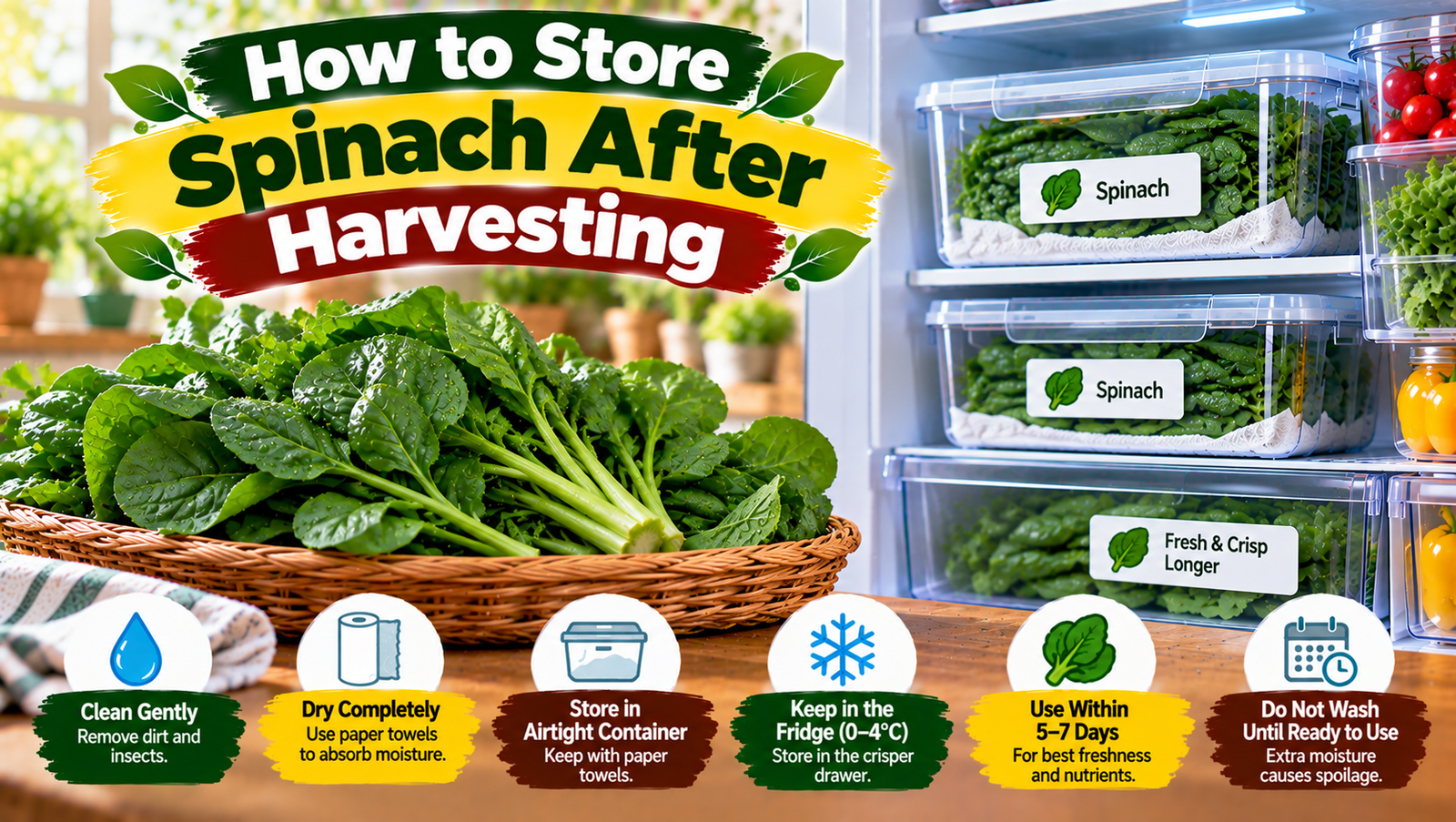
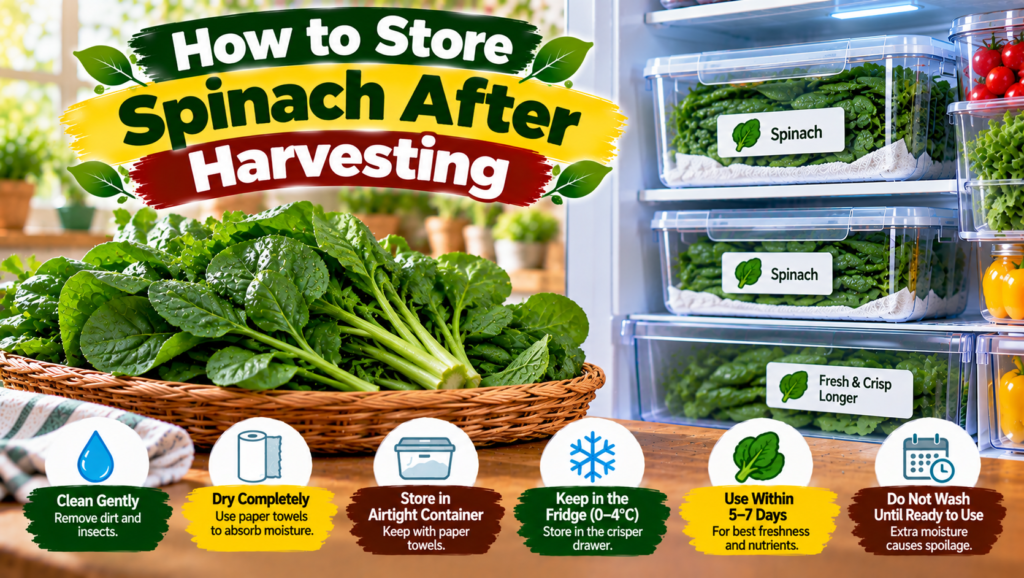
In my experience, the most important things are gentle handling, moisture control, suitable refrigerator storage, and regular inspection.
Harvest Spinach Carefully
I try to harvest spinach without crushing the leaves.
Rough handling can damage the delicate surface and make the leaves deteriorate faster.
After harvesting, I place the leaves into a clean container rather than throwing them into a deep pile.
I also avoid placing heavy vegetables on top of fresh spinach.
Sort the Leaves
Before storage, I inspect the spinach carefully.
I remove leaves that are badly damaged, slimy, yellow, or showing obvious signs of decay.
Healthy leaves are easier to store when damaged material has been separated.
I also check for soil and insects.
Wash Spinach Carefully
If the spinach needs washing, I rinse it carefully and remove visible dirt.
The important part is dealing with excess water afterward.
Wet spinach can develop storage problems if too much water becomes trapped around the leaves.
I therefore try to remove excess moisture before putting spinach into the refrigerator.
Dry Spinach Properly
A salad spinner can be useful for removing excess water from spinach.
I handle the leaves gently because they can tear easily.
I do not try to make the leaves completely dry. I simply remove excessive surface moisture.
This balance helps prevent both excessive drying and excessive wetness.
Use Paper Towels
A clean paper towel can help manage moisture around spinach.
I place a suitable paper towel around or alongside the leaves before storing them.
If it becomes very damp, I replace it.
This simple step can make refrigerator storage easier.
Use a Suitable Container
I prefer a container or bag that protects spinach without crushing it.
I avoid stuffing too much spinach into a small space.
The leaves need room to remain in good condition.
I also make sure the container is clean before placing fresh spinach inside.
Keep Spinach in the Vegetable Drawer
The vegetable drawer is usually my preferred location for fresh spinach.
It helps keep the spinach organized and protected from other foods.
I also place it where I can easily see it.
Visibility matters because spinach is one of those vegetables that I want to use while it is still fresh.
Check Spinach Regularly
I check spinach frequently because its condition can change quickly.
I look for slimy leaves, dark spots, yellowing, unpleasant smells, and excessive moisture.
If a leaf begins to deteriorate, I remove it and check the surrounding leaves.
Use Spinach Soon
Spinach is a delicate vegetable, so I prefer using it relatively soon after harvesting.
I do not expect refrigerator storage to keep spinach fresh indefinitely.
When I harvest a large amount, I plan meals around it.
This allows me to enjoy the spinach while reducing waste.
Common Spinach Storage Mistakes
One common mistake is storing spinach while it is soaking wet.
Another is crushing the leaves into an overcrowded container.
I also avoid leaving spinach uncovered in the refrigerator for long periods.
Forgetting about spinach is another issue because leafy vegetables can change quality quickly.
Final Thoughts
Storing spinach after harvesting requires more care than storing some firm vegetables.
I focus on gentle handling, careful washing, removing excess moisture, using suitable protection, and checking the leaves regularly.
I also prefer to use spinach relatively soon after harvesting.
With these simple habits, home gardeners can keep fresh spinach in better condition and make better use of their harvest.