Fresh green beans are one of the vegetables I enjoy harvesting because they can be used in many simple meals. They are especially useful when picked from a home garden because they can go directly from the garden to the kitchen.
However, green beans can lose their crisp texture when stored incorrectly. They may become limp, dry, or discolored if they are left exposed to unsuitable conditions.
In my experience, proper green bean storage starts with careful harvesting and continues with good refrigerator organization.
Harvest Green Beans Carefully
I try to handle green beans gently during harvesting.
I avoid dropping them into deep containers or placing heavy vegetables on top of them.
Even small bruises can affect their quality.
After harvesting, I inspect the beans and separate any that are badly damaged.
Choose Firm Green Beans
Fresh green beans should generally feel firm and look fresh.
I check for soft areas, dark spots, excessive discoloration, insect damage, and broken sections.
Beans with serious damage should be used first rather than mixed with the healthiest produce.
Avoid Washing Before Storage
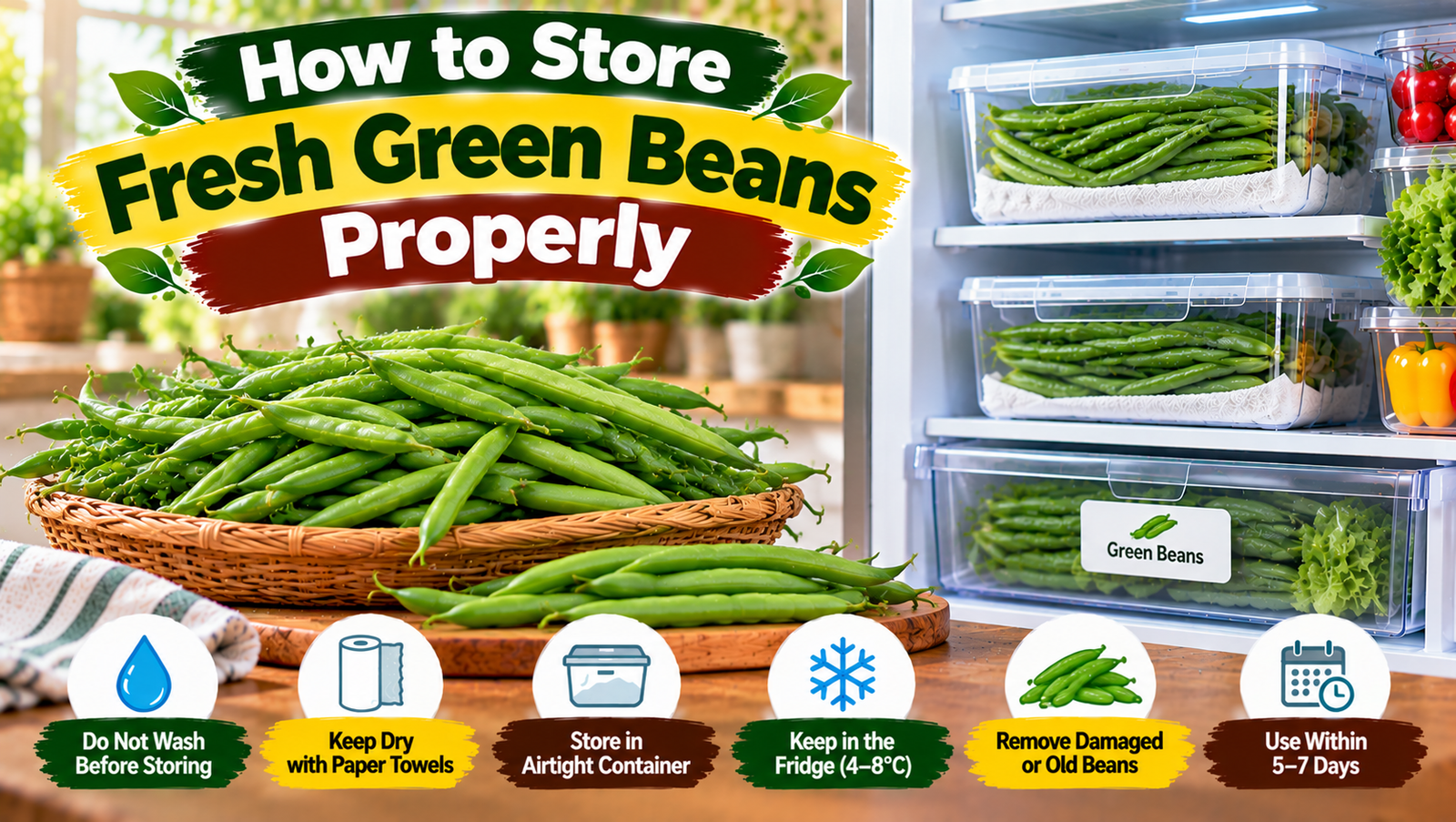
I usually prefer not to wash green beans until I am ready to prepare them.
If the beans need cleaning before storage, I make sure excess water is removed carefully.
Keeping unnecessary moisture out of the storage container helps maintain a better environment.
Use a Suitable Storage Bag
Green beans can lose moisture when exposed to dry refrigerator air.
I use a suitable storage bag or container that helps protect them while avoiding excessive condensation.
I do not pack the beans extremely tightly because they need to remain easy to inspect.
Keep Green Beans in the Vegetable Drawer
The vegetable drawer is a convenient place for green beans.
I keep them away from heavier foods that could crush them.
I also organize the drawer so the beans remain visible.
This helps me remember to use them while they are still fresh.
Do Not Cut Green Beans Before Storage
I prefer to keep green beans whole until I am ready to cook them.
Cutting them in advance exposes more of the vegetable to air and can make storage less convenient.
When I prepare a meal, I wash and trim the amount I need.

Check Green Beans Regularly
I inspect the beans every few days.
I look for soft areas, discoloration, mold, sliminess, or unusual smells.
If I find one deteriorating bean, I remove it and check the surrounding beans.
Regular inspection is one of the easiest ways to reduce waste.
Use Older Beans First
I organize green beans according to when they were harvested.
Older beans go toward the front so they are easy to reach.
Newer beans can be placed behind them.
This simple system helps me use the harvest in a sensible order.
Avoid Excessive Refrigerator Air
Leaving green beans completely exposed can cause them to lose moisture and become limp.
I prefer using suitable protection rather than leaving them uncovered.
At the same time, I avoid creating a storage environment where water collects heavily around the beans.
Balance is the key.
Common Storage Mistakes
I avoid washing green beans and putting them away while they are soaking wet.
I also avoid crushing them under heavy vegetables.
Another mistake is cutting them several days before cooking.
Finally, I try not to forget about them in the refrigerator.
Final Thoughts
Fresh green beans can remain in better condition when they are harvested carefully, kept dry on the surface, protected from excessive moisture loss, and checked regularly.
I prefer keeping them whole until I am ready to cook them and using older beans before newer ones.
For home gardeners, these simple storage habits can help maintain better quality and reduce the amount of fresh produce that goes to waste.