A well organized refrigerator can make vegetable storage much easier. When fresh vegetables are simply placed wherever there is space, they can become difficult to find, get crushed, or remain forgotten until they are no longer useful.
In my experience, refrigerator organization is just as important as choosing the right storage container.
When I have a fresh garden harvest, I like to sort everything before placing it in the refrigerator. This allows me to see what I have, what needs to be used first, and which vegetables need special storage conditions.
Start by Sorting Your Vegetables
The first thing I do is sort vegetables into groups.
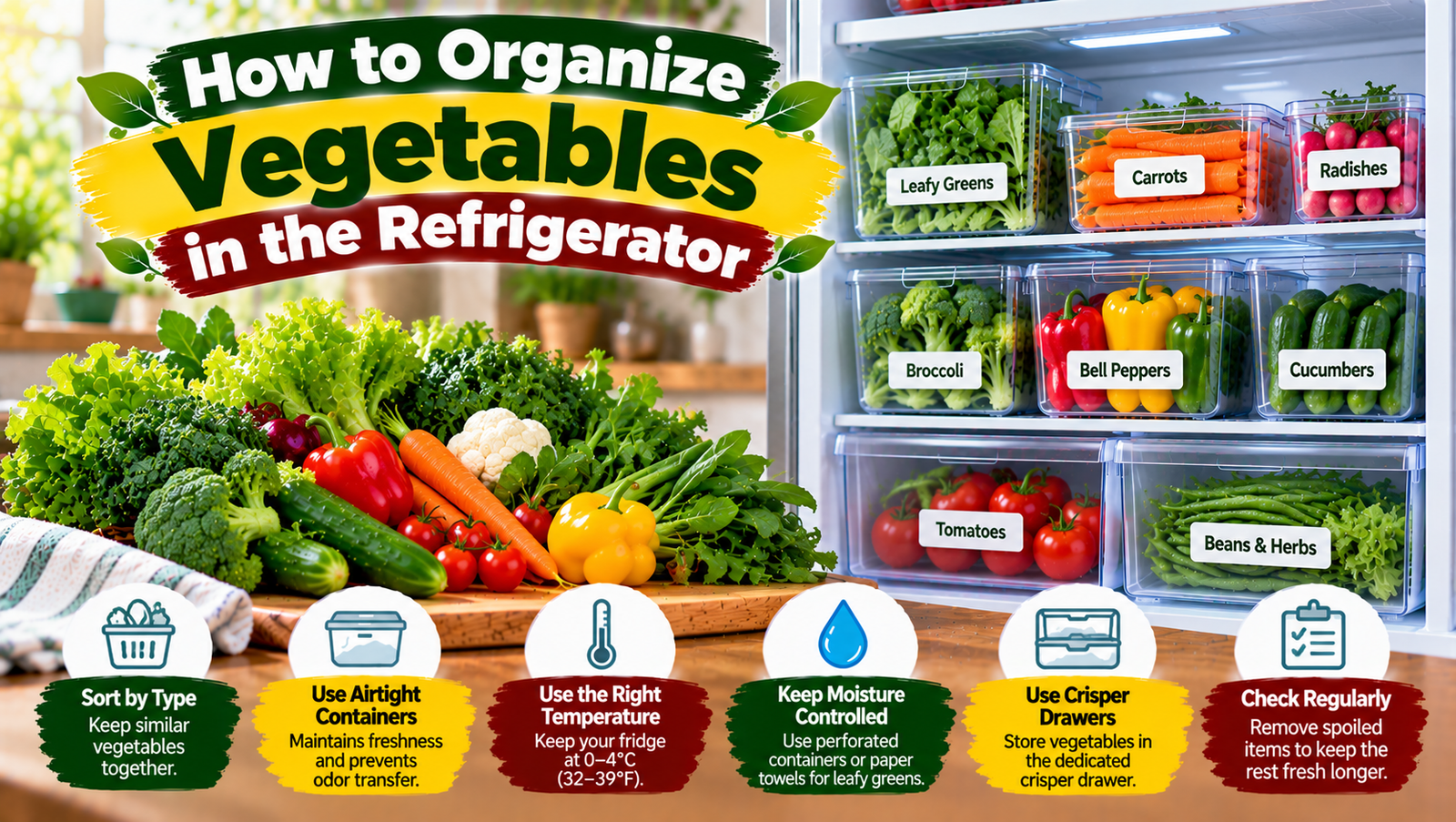
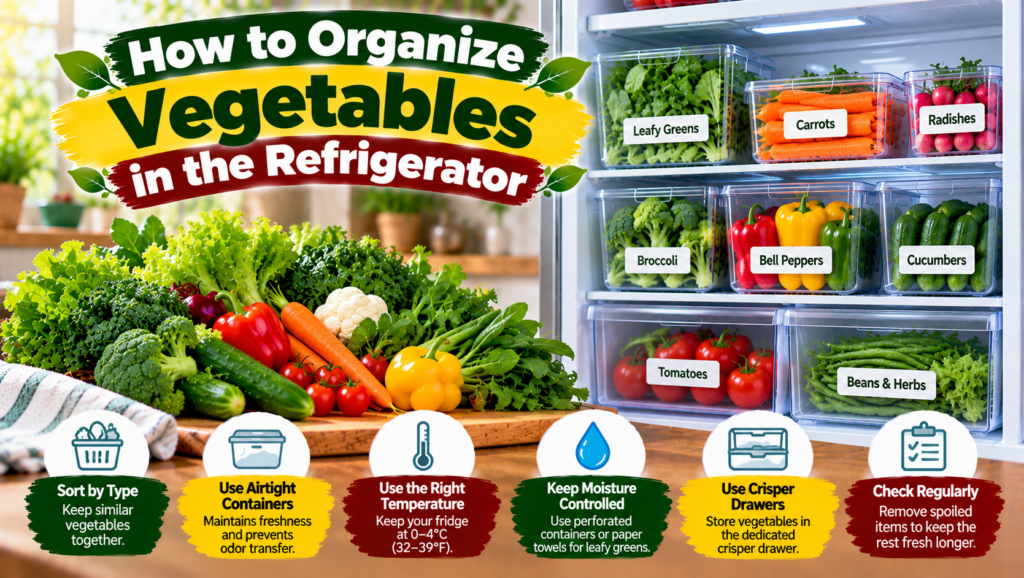
I separate leafy greens, root vegetables, peppers, cucumbers, broccoli, green beans, and other produce.
This makes it easier to decide where each vegetable should go.
I also separate damaged vegetables so I can use them first.
Remove Damaged Produce
Before organizing the refrigerator, I inspect the vegetables.
I remove produce with serious mold, decay, or other problems and separate vegetables that simply need to be used soon.
There is little benefit in creating a perfectly organized refrigerator if damaged vegetables are hidden among fresh ones.
Checking everything first makes the entire system easier.
Use the Crisper Drawer
I use the vegetable drawer for produce that benefits from that environment.
Leafy greens and other vegetables can be organized in suitable bags or containers inside the drawer.
I avoid filling the drawer completely because I still want enough space to inspect and remove vegetables easily.
Keep Delicate Vegetables Away From Heavy Foods
Some vegetables are much easier to damage than others.
Leafy greens, spinach, and other delicate produce can become crushed when heavy containers are placed on top.
I keep delicate vegetables toward the top or in protected containers whenever possible.
This simple arrangement helps preserve their appearance and texture.
Keep Similar Vegetables Together
I like keeping similar vegetables in the same general area.
For example, leafy greens can be grouped together, while firm vegetables can have their own section.
This makes meal preparation easier because I know where everything is.
It also helps me monitor storage conditions.
Use Containers Wisely
Containers can make refrigerator organization much easier.
I use them to separate vegetables and protect delicate produce.
However, I avoid using too many containers because they can take up valuable space.
I choose sizes that fit the refrigerator and allow vegetables to be removed easily.
Avoid Overcrowding
One of the biggest refrigerator organization mistakes is trying to fit too much food into limited space.
I leave enough room to see the vegetables and move them around when necessary.
Overcrowding makes it harder to inspect produce and can result in forgotten vegetables.
A refrigerator that is slightly less full is often easier to manage.
Use Older Vegetables First
I follow a simple first in, first out system.
When I add new vegetables, I place older vegetables where they are easier to reach.
This encourages me to use them before opening a new batch.
It is one of the simplest ways to reduce food waste.
Keep a Simple Harvest Routine
When I harvest vegetables from the garden, I do not immediately place them into random refrigerator spaces.
I first sort them, inspect them, and decide which vegetables need refrigeration.
Then I put each group into its suitable location.
This routine takes only a few minutes but keeps the refrigerator much more organized.
Check the Refrigerator Regularly
I like checking the vegetable section every few days.
I look for vegetables that need to be used soon.
I also remove empty bags and containers and clean up any loose leaves or dirt.
A quick inspection prevents the refrigerator from becoming disorganized.
Plan Meals Around Older Produce
Meal planning can make vegetable storage much easier.
If I have spinach that needs to be used soon, I plan a meal that includes spinach.
If carrots or peppers are older than the newer harvest, I use those first.
This reduces the amount of time vegetables spend in storage.
Keep Storage Conditions in Mind
Organization is not only about appearance.
I also consider temperature, moisture, airflow, and the individual needs of each vegetable.
A vegetable should not be moved into a particular section simply because it looks convenient.
I try to make sure its storage location suits its needs.
Common Refrigerator Organization Mistakes
One mistake is putting all vegetables into one large container.
Another is storing delicate vegetables underneath heavy produce.
I also avoid filling the refrigerator so tightly that I cannot see what is inside.
Forgetting to rotate older vegetables is another common problem.
Finally, I avoid assuming that every vegetable should be stored in exactly the same way.
Final Thoughts
Organizing vegetables in the refrigerator does not have to be complicated.
I start by sorting vegetables, checking their condition, separating damaged produce, and deciding which vegetables actually need refrigeration.
Then I use suitable containers, protect delicate vegetables, avoid overcrowding, and keep older vegetables where they can be used first.
Regular checking is the final part of my routine.
A well organized refrigerator makes it easier to see the food I already have, use vegetables at the right time, and reduce unnecessary waste. For home gardeners, good organization can make a fresh harvest much easier to manage.