Growing potatoes at home can be a very rewarding experience. After spending weeks caring for the plants, seeing healthy potatoes come out of the soil feels like a real achievement. However, harvesting is only one part of the process. Knowing how to store homegrown potatoes properly is just as important if you want to enjoy your harvest for several weeks or even months.
In my experience, potatoes can stay fresh for a long time when they are harvested carefully, cured properly, and stored in the right conditions. The biggest mistake is putting freshly dug potatoes straight into a warm kitchen cabinet or refrigerator without preparing them first.
In this guide, I will explain the simple steps I would follow to store homegrown potatoes and keep them firm, dry, and usable for as long as possible.
Harvest Potatoes at the Right Time
The first step in storing homegrown potatoes is knowing when they are ready to harvest. If you are growing potatoes for long term storage, it is better to allow the plants to mature naturally.
When the leaves and stems begin turning yellow and dying back, the plant is usually reaching the end of its growing cycle. This is a good indication that the potatoes are approaching maturity.
For storage potatoes, I prefer waiting until the plants have completely died back before harvesting. Mature potatoes usually have stronger skins, which helps protect them from damage and moisture loss during storage.
If you harvest potatoes too early, their skins can be thin and delicate. These potatoes are often better for eating soon rather than keeping for a long period.
Choose a Dry Day for Harvesting
Weather matters when harvesting potatoes for storage. I try to harvest on a dry day when the soil is not excessively wet.
Wet soil can stick to the potatoes and increase the chance of moisture related problems. If possible, allow the soil to dry slightly before digging.
Carefully loosen the soil with a garden fork or similar tool. Try not to push the fork directly into the area where the potatoes are growing because this can cut or bruise them.
Even a small cut can become a problem during storage. For this reason, I handle freshly harvested potatoes gently from the moment they come out of the soil.
Do Not Wash Potatoes Before Storage
One of the most useful tips for storing homegrown potatoes is to avoid washing them immediately after harvesting.
It may be tempting to wash away all the soil and make the potatoes look clean, but adding water can increase the risk of rot. Instead, I gently remove loose soil with my hands.
Do not scrub the potatoes aggressively. The goal is simply to remove large pieces of dirt while keeping the natural skin intact.
If there is stubborn soil attached, I leave it alone rather than damaging the skin.
Cure the Potatoes Before Storing
Curing is an important step that should not be skipped when storing potatoes for the long term.
After harvesting, place the potatoes in a dry, dark, and well ventilated area. Keep them away from direct sunlight. A temperature that is comfortably cool rather than hot is ideal.
During curing, the outer skin becomes stronger and minor surface damage can heal. This gives the potatoes better protection during storage.
I would normally allow mature potatoes to cure for around one to two weeks. The exact time can vary depending on the variety, temperature, and condition of the potatoes.
Avoid placing potatoes in direct sunlight while curing because light can cause them to turn green.
Sort the Potatoes Carefully
After curing, inspect every potato before putting it into long term storage.
This is one step that can make a big difference. I separate potatoes that are damaged, badly bruised, soft, cut, or showing signs of decay.
Do not store damaged potatoes together with healthy ones. A single rotting potato can create moisture and encourage problems among the surrounding potatoes.
Small imperfections are not always a reason to throw a potato away if it is otherwise healthy. However, potatoes with significant cuts or soft areas should be used first rather than stored for months.
Choose the Right Storage Location
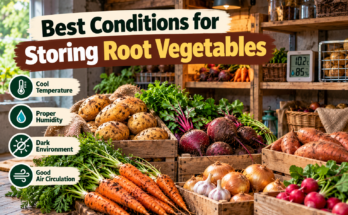
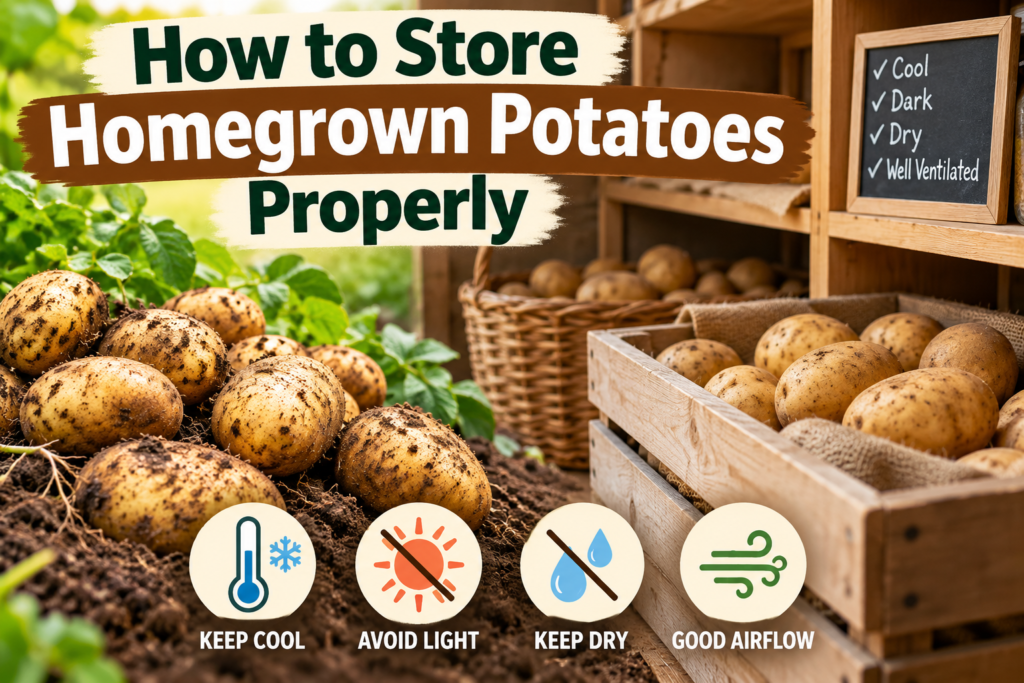
The best place for homegrown potato storage should be cool, dark, dry, and well ventilated.
A basement, cellar, pantry, or another suitable cool storage area can work well. The important thing is to avoid areas that are warm, humid, bright, or poorly ventilated.
Potatoes should also be protected from freezing temperatures. Freezing can damage their texture and affect their quality.
I also avoid storing potatoes near heating appliances, sunny windows, or other sources of heat.
Keep Potatoes in the Dark
Light is one of the biggest enemies of stored potatoes.
When potatoes are exposed to light, they can develop a green color. Green potatoes may also develop increased levels of glycoalkaloids, including solanine.
For this reason, I always choose a dark storage location and use containers that allow airflow while blocking most light.
A dark pantry or storage area is usually much better than leaving potatoes on an open kitchen counter.
Use Containers With Good Airflow
Good ventilation is important when storing potatoes.
I prefer breathable containers such as paper bags, cardboard boxes with ventilation, baskets, or suitable storage crates. Avoid completely sealed plastic bags because they can trap moisture.
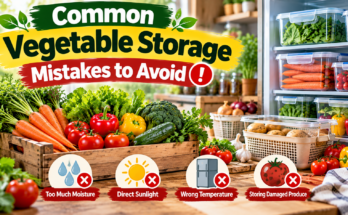
Too much moisture around potatoes can encourage mold and rot.
Do not pile potatoes into an extremely deep container either. Keeping them in a reasonable layer allows air to move around them and makes it easier to inspect the harvest.
Avoid Storing Potatoes in the Refrigerator
For long term storage, I generally would not use the refrigerator unless there is a specific reason to do so.
Very cold temperatures can change the way potatoes taste and cook. The starch can convert into sugars, which may make the potatoes taste sweeter and affect their cooking characteristics.
A cool storage area that is above refrigerator temperatures is generally more suitable for mature potatoes intended for storage.
However, if you have already cut or cooked potatoes, refrigeration is appropriate for those prepared foods.
Keep Potatoes Away From Onions
Potatoes and onions may look like natural storage partners, but I recommend keeping them separate.
Both produce natural gases during storage, and keeping them together can potentially shorten their storage life.
Instead, give each vegetable its own storage space with good ventilation.
This simple change can help reduce unnecessary moisture and storage problems.
Check Your Potatoes Regularly
Even after doing everything correctly, I never consider potato storage a set and forget process.
Check your stored potatoes regularly. Look for soft spots, unpleasant smells, mold, excessive moisture, or signs of sprouting.
If you find a potato that is beginning to rot, remove it immediately. This helps prevent the problem from spreading to nearby potatoes.
While checking them, gently rearrange the potatoes if necessary. Avoid unnecessary handling because repeated movement can cause bruising.
What to Do With Sprouting Potatoes
Potatoes naturally begin to sprout as they age. Sprouting does not necessarily mean the entire potato has to be thrown away immediately.
If the potato is still firm and healthy, small sprouts can often be removed before cooking. However, potatoes that are heavily sprouted, green, shriveled, soft, or bitter should not be treated as normal eating potatoes.
For future storage, sprouting can also be a sign that the storage conditions are too warm.
If your potatoes are sprouting much earlier than expected, check the temperature and storage environment.
How Long Can Homegrown Potatoes Last?
The storage life of homegrown potatoes depends on the variety, maturity, curing process, and storage conditions.
Some potatoes are naturally better suited for long term storage than others. Properly mature potatoes with healthy skins generally have a much better chance of lasting for an extended period.
I recommend checking the harvest regularly rather than expecting every potato to remain perfect for the same amount of time.
Use damaged or smaller potatoes first and save the healthiest mature potatoes for longer storage.
Common Potato Storage Mistakes
There are several simple mistakes that can reduce the storage life of potatoes.
One common mistake is washing potatoes before storage. Another is storing them in direct light. Keeping potatoes in sealed plastic bags can also trap moisture.
Some people place potatoes next to onions or store them in a warm kitchen. These conditions can encourage sprouting and spoilage.
Another mistake is ignoring damaged potatoes. Even one rotten potato can affect the surrounding harvest.
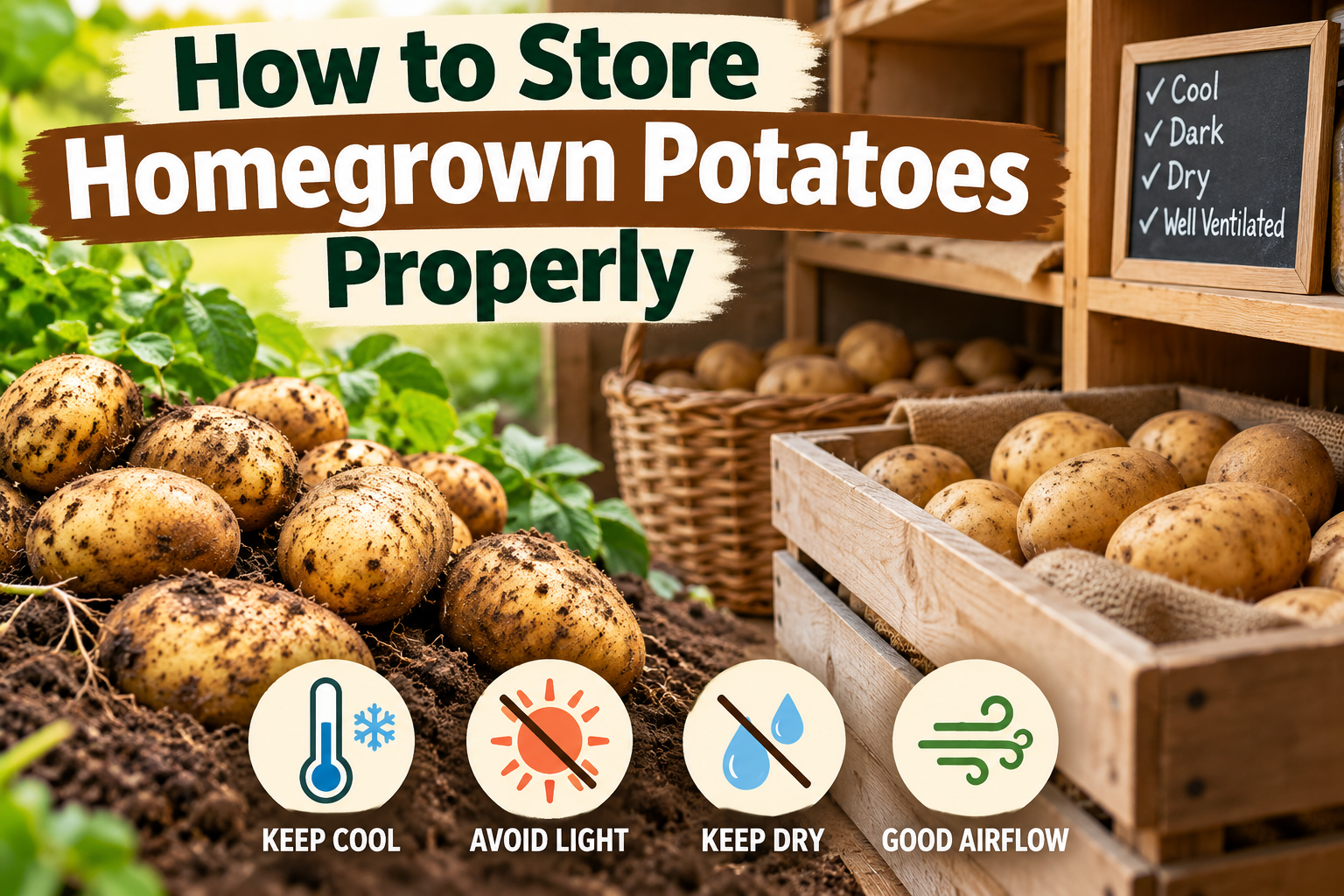
For me, the easiest approach is to remember four basic rules: keep potatoes dark, cool, dry, and well ventilated.
Simple Potato Storage Routine
If you want a simple routine for how to store homegrown potatoes properly, I would follow these steps:
First, harvest mature potatoes carefully.
Second, choose a dry harvesting day whenever possible.
Third, gently remove excess soil without washing them.
Fourth, cure the potatoes in a dark, dry, and ventilated area.
Fifth, inspect and sort the potatoes after curing.
Sixth, remove damaged or rotten potatoes.
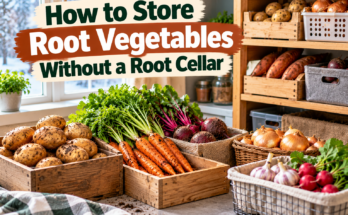
Seventh, place healthy potatoes in breathable containers.
Finally, store them in a cool, dark, dry location and check them regularly.
This routine does not require expensive equipment. Good storage is mostly about creating the right environment and handling the potatoes carefully.
Final Thoughts
Learning how to store homegrown potatoes properly can help you get much more value from your garden harvest. After putting so much effort into growing potatoes, it makes sense to protect them after harvest as well.
The most important things I focus on are harvesting mature potatoes, avoiding unnecessary damage, curing them properly, keeping them dry and dark, and providing enough ventilation.
I also make a habit of checking my stored potatoes regularly. This allows me to remove any problem potatoes before they affect the rest of the harvest.
With a little preparation and the right storage conditions, homegrown potatoes can remain useful and enjoyable well beyond harvest day. You do not need complicated equipment or an expensive storage system. A suitable cool, dark, dry, and well ventilated space can make a big difference.
For anyone growing potatoes at home, I believe proper storage is one of the easiest ways to make the most of the work already done in the garden.