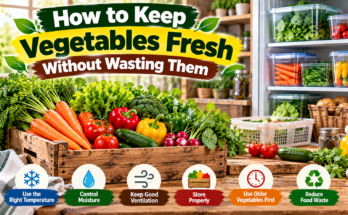
Growing vegetables at home can be very rewarding, especially when the garden produces more food than we can eat immediately. However, having a good harvest also creates one important question: how should we store all those fresh vegetables?
In my experience, vegetable storage does not have to be complicated. With a few simple habits, home gardeners can keep many vegetables in better condition and reduce unnecessary food waste. The most important thing is understanding that different vegetables have different storage needs. Some prefer cool conditions, some need a dry environment, and others are best used soon after harvesting.
I have found that proper storage starts immediately after harvesting. Handling vegetables carefully, checking their condition, keeping suitable temperatures, and avoiding unnecessary moisture can all help extend their useful life.
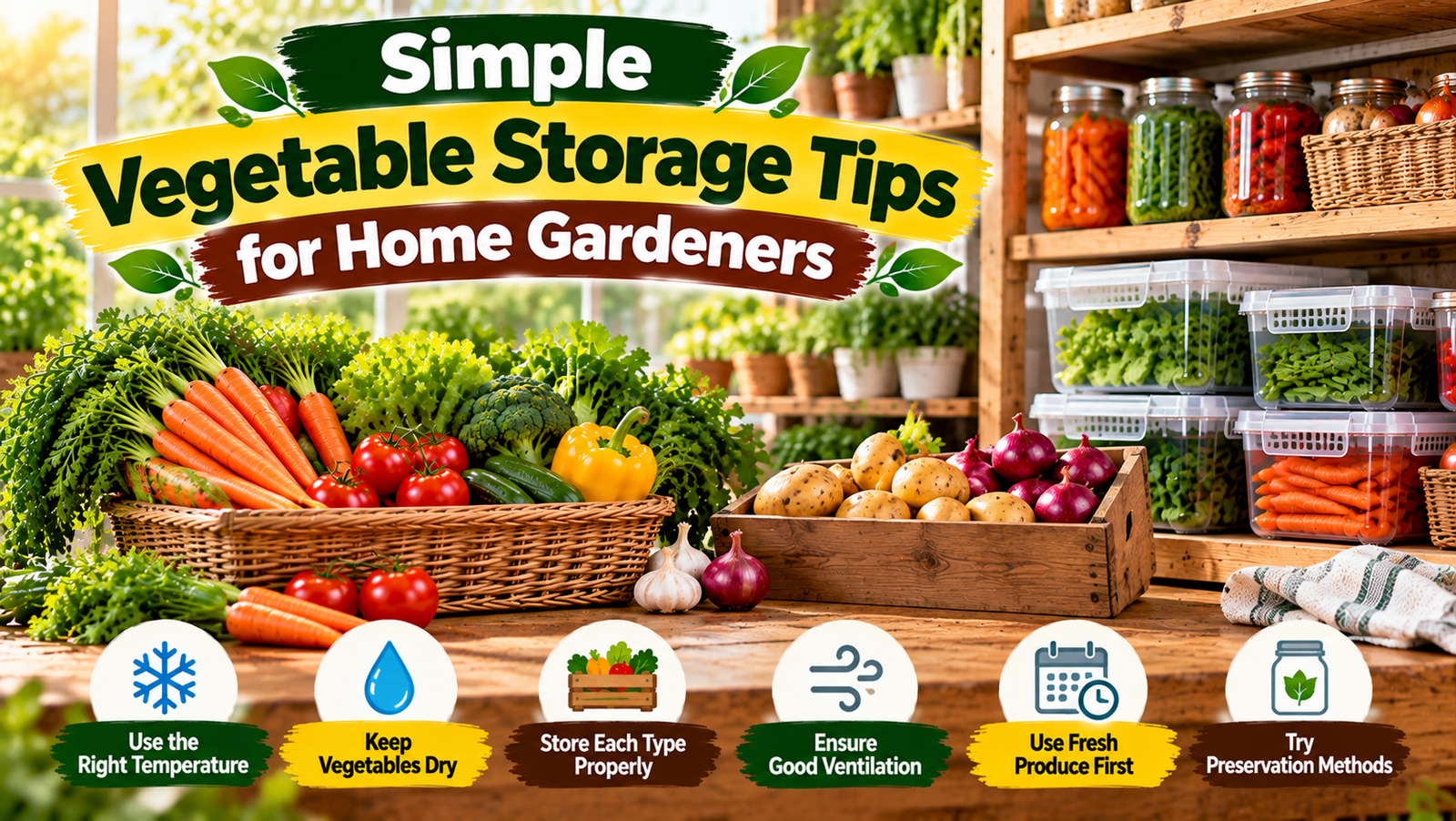
In this article, I will share some simple vegetable storage tips that I believe are practical for home gardeners.
Harvest Vegetables at the Right Time
Good storage starts before the vegetables even leave the garden. I try to harvest vegetables at the right stage of maturity because overripe or immature produce may not store as well.
Some vegetables are best harvested when they reach their normal mature size, while others can be harvested younger for fresh use.
I also prefer harvesting during cooler parts of the day when possible. This can make handling easier and helps me avoid leaving freshly picked vegetables exposed to unnecessary heat.
The exact harvest time depends on the vegetable, so I always consider the individual needs of each crop.
Handle Vegetables Carefully
Fresh vegetables can be surprisingly easy to bruise. Even when there is no obvious damage, rough handling can reduce their storage quality.
When I harvest vegetables, I avoid throwing them into large containers or placing heavy produce on top of delicate vegetables.
I use clean baskets or suitable containers and try to handle the harvest gently.
This is particularly important for vegetables with soft skins. A small bruise may become a larger damaged area later during storage.
Check Vegetables Before Storage
Before putting vegetables away, I always inspect them carefully.
I look for cuts, bruises, cracks, insect damage, mold, soft spots, and signs of decay. Vegetables that have serious damage should not simply be mixed with healthy produce.
I prefer to separate vegetables that need to be used soon from those that are suitable for longer storage.
This simple habit makes it easier to monitor the harvest and can help prevent one damaged vegetable from creating problems among the others.
Keep Vegetables Dry When Appropriate
Moisture can be useful for some types of produce but harmful for others. That is why I do not use the same storage method for every vegetable.
Many vegetables that are intended for dry storage should not be put away while they are unnecessarily wet. Extra moisture can encourage deterioration.
After harvesting, I handle each vegetable according to its storage requirements. If a vegetable needs to remain dry, I make sure it is not covered in excess moisture before storing it.
Understanding the difference between moisture that is helpful and moisture that causes problems is an important part of vegetable storage.
Learn Which Vegetables Like Cool Conditions
Temperature plays a major role in keeping vegetables fresh.
Some vegetables generally keep better in cool conditions, while others are more sensitive to very cold temperatures.
For home gardeners, a refrigerator, cool pantry, basement, or other suitable storage area may be useful depending on the vegetable and the available space.
I recommend checking the storage requirements of individual vegetables rather than assuming that everything should go into the refrigerator.
A suitable temperature can help maintain quality for longer.
Use the Refrigerator Wisely
The refrigerator is one of the easiest storage options available to many home gardeners, but it is not automatically the best choice for every vegetable.
I usually consider the vegetable’s natural storage needs before putting it into the refrigerator.
Some vegetables benefit from refrigeration, while others may experience quality changes when kept too cold.
I also avoid overcrowding the refrigerator because good air circulation can help keep stored produce in better condition.
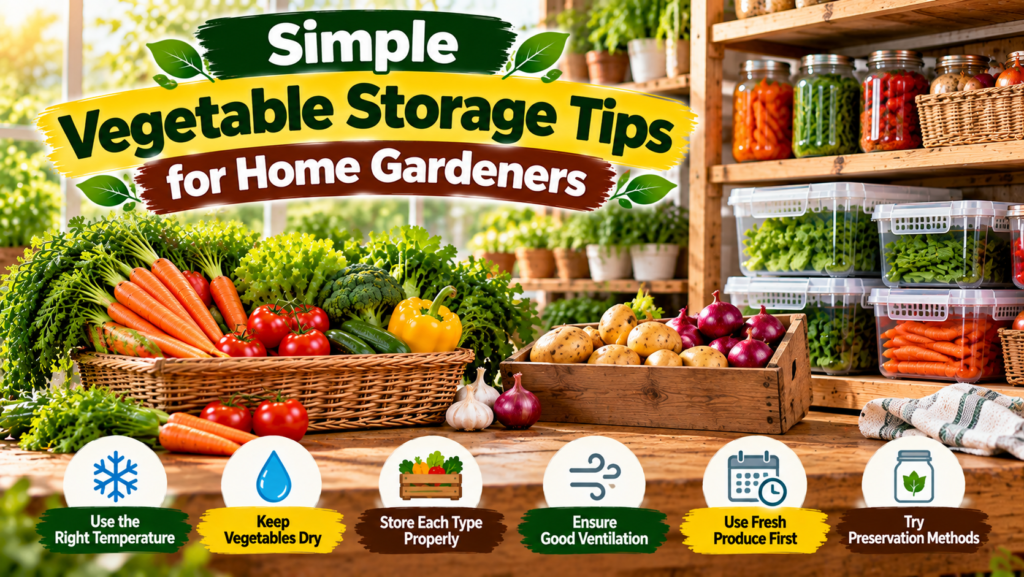
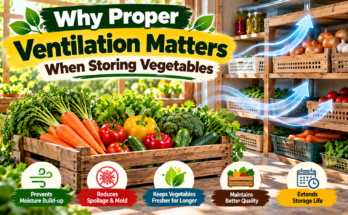
Give Vegetables Enough Airflow
Air circulation is another simple but useful vegetable storage tip.
When vegetables are packed tightly together, moisture can become trapped. This can contribute to faster deterioration.
I prefer to avoid completely sealing vegetables in containers unless that storage method is appropriate for the particular vegetable.
Some produce benefits from breathable bags, baskets, or containers that allow suitable airflow.
The goal is to create a storage environment that matches the needs of the vegetable rather than simply keeping everything tightly covered.
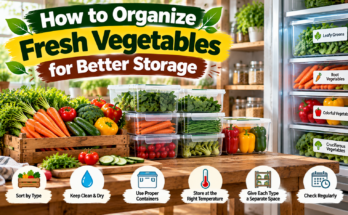
Separate Different Types of Vegetables
I have found that organizing vegetables by type makes storage much easier.
Instead of mixing everything together, I group similar vegetables and consider their individual storage requirements.
For example, root vegetables may need different conditions from leafy vegetables. Onions and garlic also have different storage needs from vegetables that require more moisture.
Separating produce helps me monitor each group and makes it easier to identify vegetables that should be used first.
Store Vegetables in Suitable Containers
The right container can make a noticeable difference.
I avoid choosing containers simply because they are convenient. I consider whether the vegetable needs airflow, protection from light, or a particular level of humidity.
Baskets can work well for certain dry vegetables. Refrigerator drawers can be useful for other produce. Paper or breathable storage options may also be suitable in certain situations.
The best container is the one that supports the storage requirements of the vegetable.
Keep Stored Vegetables Away From Direct Sunlight
Direct sunlight can increase temperature and may affect the quality of stored vegetables.
For vegetables that are stored outside the refrigerator, I prefer a cool, suitable location away from direct sunlight.
A dark or shaded storage area may be appropriate for certain vegetables, especially those that naturally prefer cool and dark conditions.
Before choosing a storage location, I consider temperature, light, humidity, and airflow.
Do Not Wash Everything Before Storage
It may seem natural to wash all vegetables immediately after harvesting, but this is not always the best storage approach.
Different vegetables have different preparation requirements. Washing can add moisture, and excess moisture may reduce storage quality for some crops.
For vegetables that are better stored dry, I prefer to remove loose dirt when appropriate and avoid unnecessary moisture.
When washing is necessary, I make sure the vegetable is handled according to its storage needs afterward.
Keep Root Vegetables in Suitable Conditions
Root vegetables such as carrots, beets, and radishes can have good storage potential when handled properly.
Before storage, I check them for cuts, bruises, soft areas, and other damage.
I also consider their greens. In some cases, removing the leafy tops can help the root vegetable maintain better quality because the leaves can continue drawing moisture from the root.
The exact storage method depends on the particular crop, so I always consider the requirements of each vegetable.
Store Onions and Garlic Properly
Onions and garlic are examples of vegetables that generally need different conditions from leafy greens.
They are commonly stored in a dry location with suitable airflow.
Before storing them, I check for damaged bulbs, soft areas, or signs of decay. I keep damaged pieces separate and prioritize them for use.
Good airflow is particularly important when storing these types of vegetables for longer periods.
Use Delicate Vegetables First
Not every vegetable is meant to sit in storage for a long time.
Leafy greens and other delicate vegetables can lose quality relatively quickly. Because of this, I prefer to use them first.
When organizing my harvest, I place vegetables that need immediate attention where I can easily see them.
This simple system helps prevent vegetables from being forgotten in the back of a refrigerator or storage area.
Check Your Stored Vegetables Regularly
Storage is not a process that I finish once the vegetables are placed away.
I like to check stored vegetables regularly. I look for changes in texture, color, moisture, smell, mold, or visible damage.
If I find one vegetable beginning to deteriorate, I remove it from the storage group and inspect the surrounding produce.
Regular checking allows me to respond to problems early instead of discovering a large amount of spoiled produce later.
Avoid Overcrowding
Overcrowding is another common vegetable storage mistake.
When too many vegetables are packed into one container, airflow can become limited and damaged vegetables can be difficult to identify.
I prefer to leave enough room for reasonable air circulation and easy inspection.
This also makes the storage area more organized and allows me to use older vegetables before newer ones.
Keep a Simple Storage Routine
A simple routine can make vegetable storage much easier.
After harvesting, I inspect the vegetables, separate damaged produce, organize them by type, and place them in suitable storage conditions.
Every few days, I check what needs to be used.
I also try to follow a first in, first out approach. In simple terms, the vegetables that were stored first should generally be used before newer vegetables when their condition allows.
This prevents older produce from being forgotten.
Common Vegetable Storage Mistakes
There are several mistakes I try to avoid.
One is putting damaged vegetables into storage without checking them. Another is storing vegetables while they are unnecessarily wet.
I also avoid putting every vegetable into the refrigerator simply because it seems convenient.
Another common mistake is ignoring stored produce for too long. Even vegetables that started in excellent condition can eventually lose quality.
Finally, I avoid treating all vegetables in exactly the same way. Learning the basic storage requirements of individual crops is much more effective.
Final Thoughts
Simple vegetable storage does not require expensive equipment or a complicated system. In my opinion, the most useful approach is to understand what each vegetable needs and then create suitable conditions around those needs.
I start by harvesting vegetables carefully, checking them for damage, separating different types, and avoiding unnecessary moisture. I then choose a suitable storage location based on temperature, airflow, humidity, and light.
Regular inspection is just as important as the initial storage process. By checking vegetables regularly and using delicate produce first, I can reduce waste and make better use of my homegrown harvest.
For home gardeners, good vegetable storage is really about developing a few practical habits. With careful handling, proper organization, and suitable storage conditions, a fresh garden harvest can remain useful for much longer.