When I grow vegetables at home, I pay a lot of attention to how I store them after harvesting. Growing healthy vegetables is only part of the process. If the vegetables are stored at the wrong temperature, they can lose their freshness, flavor, texture, and nutritional quality much faster than expected.
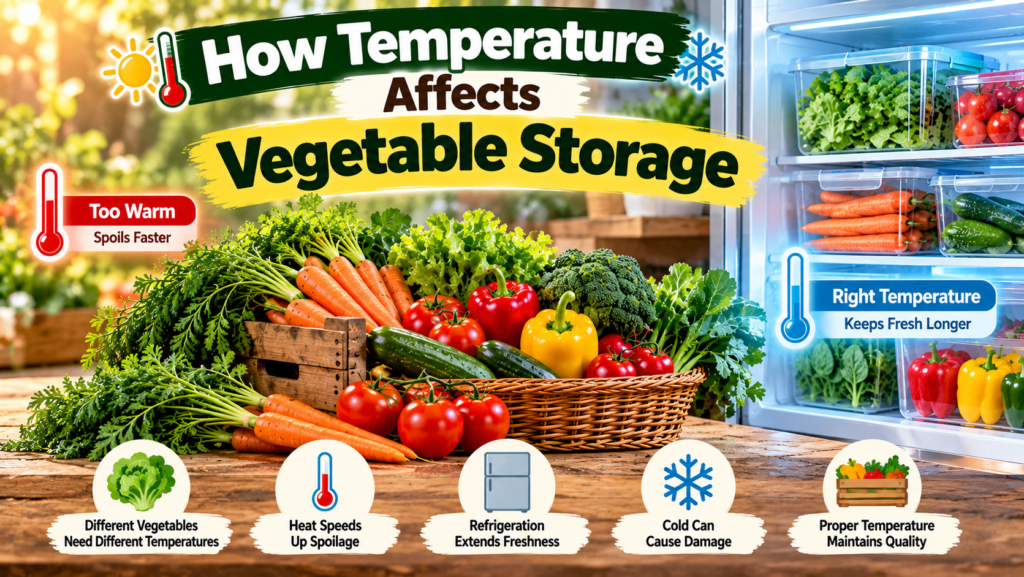
Temperature has a major effect on vegetable storage. Some vegetables prefer cold conditions, while others can become damaged when exposed to very low temperatures. There are also vegetables that stay better at room temperature or in a cool, dry storage area.
Understanding how temperature affects vegetable storage can help gardeners reduce food waste and enjoy their harvest for longer. In my experience, the key is not simply keeping vegetables as cold as possible. The goal is to provide each vegetable with the temperature and storage environment that suits it best.
Why Temperature Matters for Fresh Vegetables
Fresh vegetables are still living plant tissues after they are harvested. They continue to breathe and undergo natural changes even after being removed from the plant.
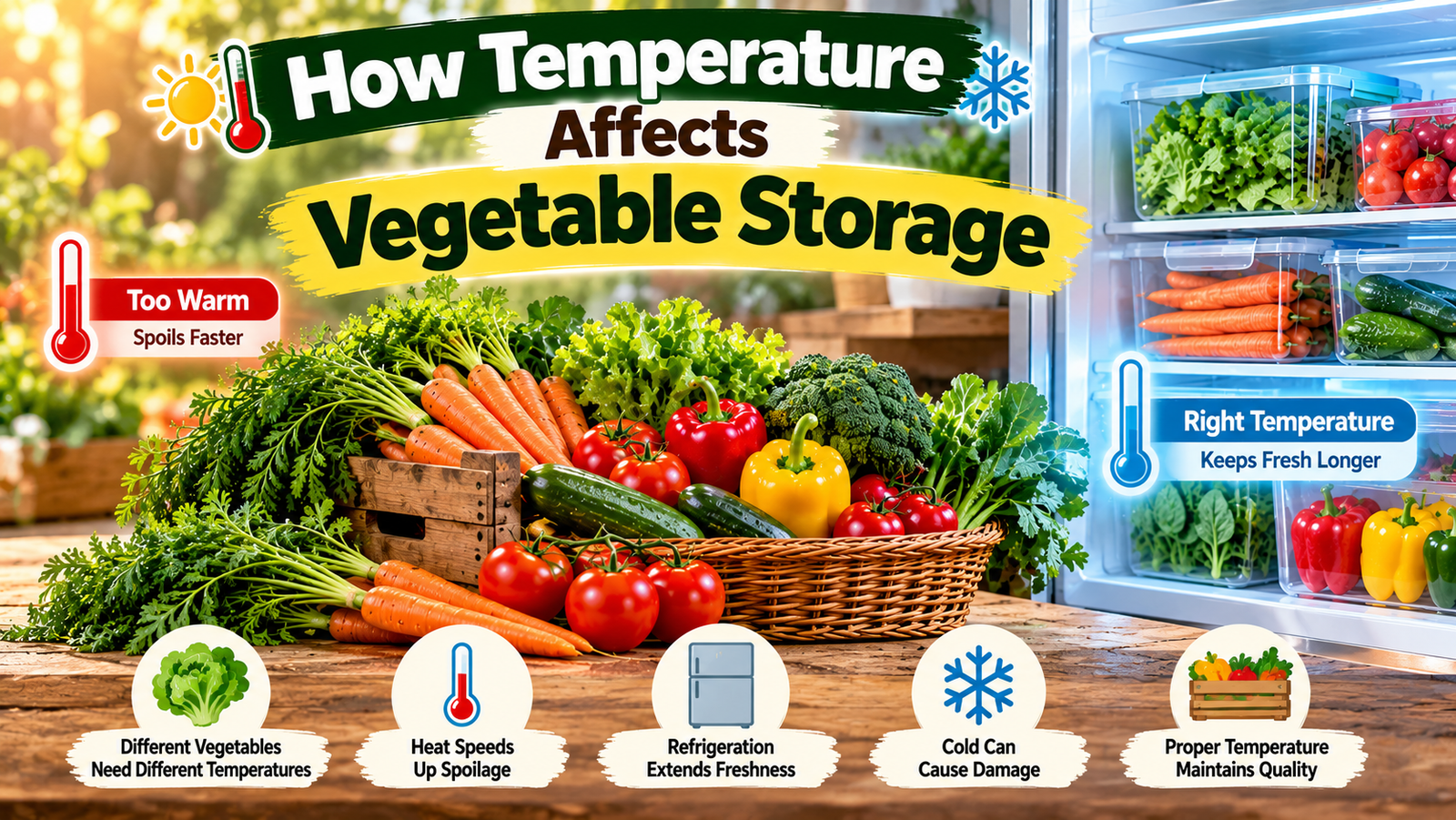
Higher temperatures generally speed up these natural processes. As a result, vegetables can lose moisture and quality more quickly.
Warm conditions can also encourage the growth of microorganisms that contribute to spoilage.
Lower temperatures can slow many of these processes, which is why refrigeration is useful for many vegetables. However, extremely cold conditions can damage certain types of produce.
This is why I believe understanding the temperature preference of each vegetable is more useful than simply putting everything into the refrigerator.
How Warm Temperatures Affect Vegetables
Warm temperatures can cause vegetables to deteriorate faster.
When vegetables are kept in a warm environment, they may lose water more quickly. This can make leafy vegetables wilt, carrots become less crisp, and other produce lose its firmness.
Warm conditions can also speed up ripening and aging.
For vegetables that need cool storage, keeping them at room temperature for too long can significantly reduce their storage life.
If I harvest vegetables during hot weather, I try to move them into a suitable storage environment as soon as reasonably possible.
How Cold Temperatures Help Some Vegetables
Cold temperatures can be very helpful for many vegetables.
Refrigeration slows down the natural processes that cause vegetables to age. It can help leafy greens, carrots, broccoli, and several other vegetables maintain their quality for longer.
A refrigerator also provides a more stable environment than a warm kitchen.
However, I do not assume that every vegetable should be refrigerated. Some vegetables are sensitive to cold and may develop poor texture or flavor when exposed to temperatures that are too low.
Cold Damage in Sensitive Vegetables
One of the most important things I have learned about vegetable storage is that extremely low temperatures are not always beneficial.
Some vegetables can suffer from cold damage when kept in conditions that are too cold for too long.
Cold sensitive vegetables may develop changes in texture, discoloration, or other quality problems.
This is one reason I store vegetables according to their specific requirements rather than treating the entire harvest in the same way.
Leafy Vegetables and Temperature
Leafy vegetables usually benefit from cool storage.
Lettuce, spinach, coriander, and similar greens can lose moisture quickly when exposed to warm conditions.
I prefer keeping leafy greens refrigerated when appropriate and controlling moisture carefully.
However, temperature is only one part of the equation. If leafy greens are stored in a wet container, excess moisture can encourage decay.
A cool environment combined with suitable moisture control can help keep leafy vegetables crisp for longer.
Root Vegetables and Cool Storage
Root vegetables such as carrots, beets, turnips, and radishes generally benefit from cool storage.
I find that refrigeration can help many of these vegetables maintain their firmness.
Before storing them, I usually remove the leafy tops because the leaves can continue drawing moisture from the roots.
The exact storage conditions can vary depending on the vegetable, but keeping them cool and preventing unnecessary moisture loss is generally important.
How Temperature Affects Potatoes
Potatoes require special attention because storing them too cold or too warm can create problems.
I prefer keeping potatoes in a cool, dark, and dry location rather than automatically placing them in the refrigerator.
Light exposure should also be avoided.
A suitable storage location should have good airflow and remain relatively stable in temperature.
Checking potatoes regularly can help identify any signs of spoilage before the problem spreads.
Temperature and Onion Storage
Onions generally prefer cool, dry conditions with good ventilation.
I avoid storing onions in warm and humid areas because moisture can encourage decay.
At the same time, I do not place onions in extremely cold conditions unless there is a specific reason to do so.
A dry storage area with good airflow can work well for onions.
Temperature and Garlic
Garlic is another vegetable that usually benefits from dry storage.
After proper curing, garlic can remain useful for a long time when kept in a suitable environment.
I prefer storing it away from direct sunlight and excessive humidity.
Stable temperatures and good airflow can help maintain its quality.
Tomatoes and Temperature
Tomatoes are a good example of why refrigeration is not always the best answer.
When tomatoes are ripe and ready to eat, I generally prefer keeping them at room temperature if I plan to use them soon.
Very cold temperatures can affect the texture and flavor of tomatoes.
If tomatoes become very ripe and need to be kept longer, refrigeration can slow further deterioration. Before eating them, allowing refrigerated tomatoes to return to room temperature can help improve their eating quality.
Cucumbers and Temperature
Cucumbers are another vegetable that can be sensitive to unsuitable storage temperatures.
They need a cool environment, but extremely cold conditions can affect their texture.
I avoid placing cucumbers in the coldest part of the refrigerator.
Protecting them from excessive moisture and temperature fluctuations can also help maintain their quality.
Temperature Changes Can Cause Problems
I have found that stable storage conditions are often better than repeatedly moving vegetables between very different temperatures.
For example, moving vegetables from a hot environment into a very cold area and then back into warmth can create condensation.
That extra moisture can contribute to spoilage.
Whenever possible, I prefer keeping vegetables in a stable environment that matches their storage requirements.
Temperature and Humidity Work Together
Temperature should not be considered separately from humidity.
A cold environment can slow deterioration, but if moisture is poorly controlled, vegetables can still spoil.
Leafy vegetables often benefit from higher humidity, while onions, garlic, and potatoes generally prefer drier conditions.
This is why I consider both temperature and moisture when deciding where to store a particular vegetable.
Keep the Refrigerator Organized
A well organized refrigerator can make vegetable storage easier.
I avoid filling the refrigerator so tightly that air cannot circulate properly.
I also keep vegetables in suitable sections and containers when possible.
Checking the temperature regularly can help ensure that the refrigerator is maintaining suitable conditions.
If vegetables are freezing accidentally, the temperature may be too low for that particular storage area.
Avoid Direct Sunlight and Heat
Even vegetables that do not require refrigeration should generally be protected from direct sunlight and strong heat.
A sunny kitchen counter can become much warmer than the rest of the room.
I prefer keeping vegetables in a shaded and well ventilated location when room temperature storage is appropriate.
Avoid placing vegetables next to ovens, stoves, heaters, or other sources of heat.
Monitor Stored Vegetables
Temperature can change throughout the day, especially in areas where indoor conditions are not controlled.
For this reason, I recommend checking stored vegetables regularly.
If vegetables are becoming soft, wilted, discolored, or unusually wet, their storage conditions may need to be adjusted.
Regular observation helps identify problems before the entire harvest is affected.
Final Thoughts
Understanding how temperature affects vegetable storage can make home gardening much more successful. From my point of view, temperature is one of the most important factors that determine how long freshly harvested vegetables remain useful.
Cool temperatures can slow natural deterioration and help many vegetables stay fresh. However, extremely cold conditions can damage vegetables that are sensitive to low temperatures.
Leafy greens and many root vegetables usually benefit from suitable refrigeration, while potatoes, onions, and garlic generally prefer cool and dry storage with good airflow. Tomatoes and cucumbers also require more careful temperature management.
The most important lesson is that there is no single storage temperature that works perfectly for every vegetable. Each type of produce has different needs.
By paying attention to temperature, humidity, airflow, sunlight, and regular inspection, I can protect more of my harvest and reduce unnecessary food waste. Proper temperature management is a simple step, but it can make a big difference in keeping homegrown vegetables fresh for longer.