Bell peppers are colorful, versatile, and easy to use in everyday cooking. I enjoy growing them in the garden because they can be used fresh in salads, cooked meals, sandwiches, sauces, and many other dishes.
However, like other fresh vegetables, bell peppers can lose quality when they are not stored properly.
In my experience, the best way to store bell peppers in the refrigerator is to keep them dry, protect them from unnecessary moisture loss, and avoid damaging their skin.
Start With Healthy Bell Peppers
Before refrigerator storage, I inspect every pepper.
I look for cuts, bruises, soft areas, mold, insect damage, and unusual discoloration.
Firm peppers with intact skin are generally better candidates for storage.
If a pepper has significant damage, I prefer to use it sooner rather than placing it with the healthiest peppers.
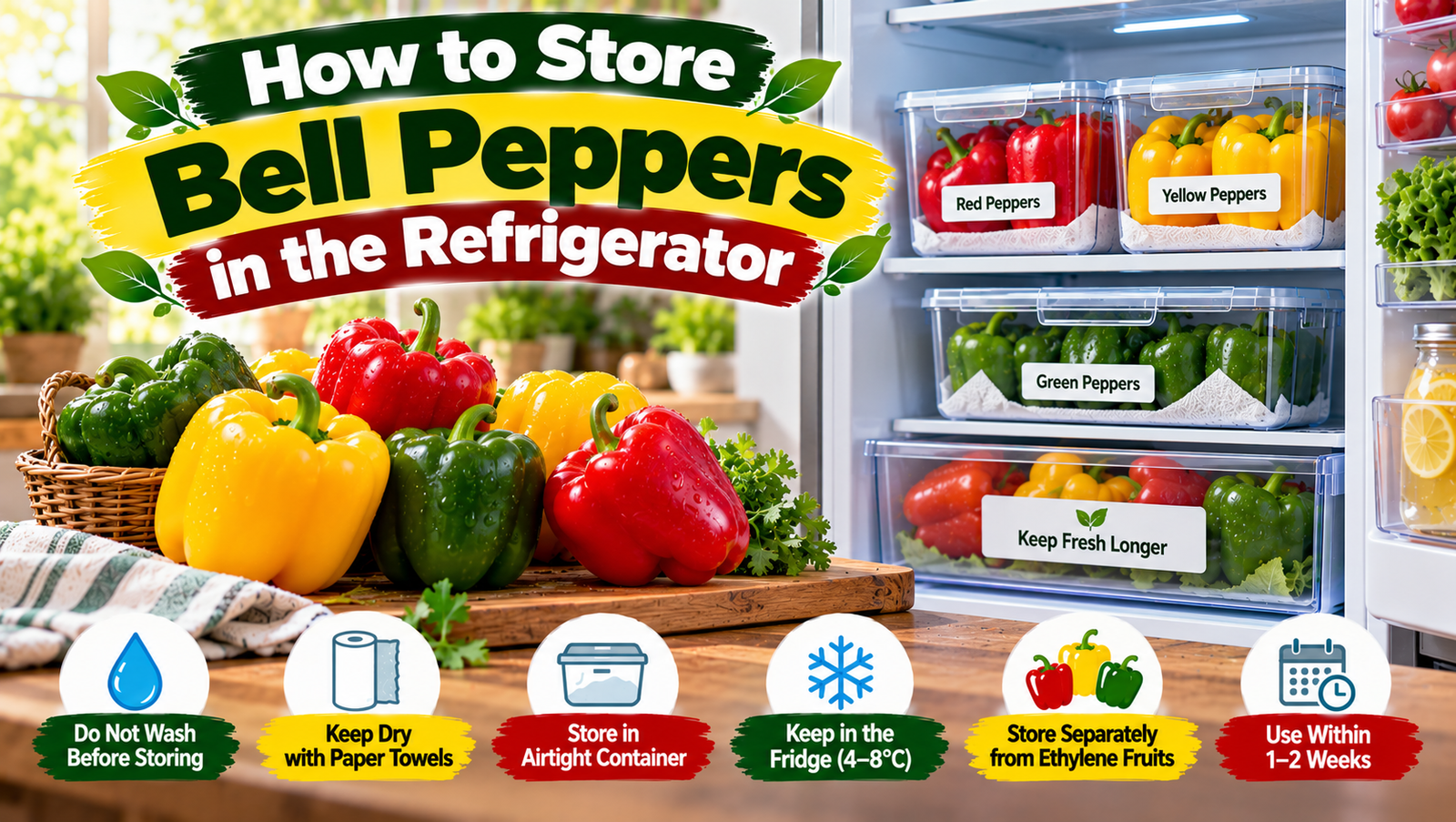
Do Not Wash Peppers Before Storage Unless Needed
I generally avoid unnecessary washing before storing bell peppers.
Water left on the surface can create excess moisture inside a storage bag or container.
If the peppers are dirty, I clean them appropriately and make sure excess moisture is removed before storage.
For peppers that are already clean, I prefer to leave washing until I am ready to use them.
Keep Bell Peppers Dry
Moisture control is important.
I make sure the peppers are not wet when I place them into the refrigerator.
At the same time, I protect them from excessive exposure to dry refrigerator air.
A suitable storage bag or container can help maintain a more stable environment.
Use the Vegetable Drawer
I usually keep bell peppers in the refrigerator’s vegetable storage area.
This keeps them organized with other fresh produce and protects them from being crushed by heavier foods.
I avoid placing heavy containers directly on top of the peppers.
Keep Peppers Whole
Whole bell peppers generally have better storage potential than cut peppers.
When I know I will not use a pepper immediately, I prefer to keep it whole.
Once a pepper is cut, I store the unused portion appropriately and try to use it sooner.
This also makes meal preparation easier because I can cut only the amount I need.
Avoid Overcrowding
I avoid filling one storage container with too many peppers.
Overcrowding makes it harder to inspect each pepper and can increase the chance of bruising.
A little space also makes it easier to remove one pepper without disturbing the others.
Check for Soft Spots
I inspect stored peppers regularly.
A pepper that begins to soften may need to be used soon.
I also look for mold, dark spots, unpleasant smells, or changes in texture.
If one pepper starts deteriorating, I remove it and check the others.
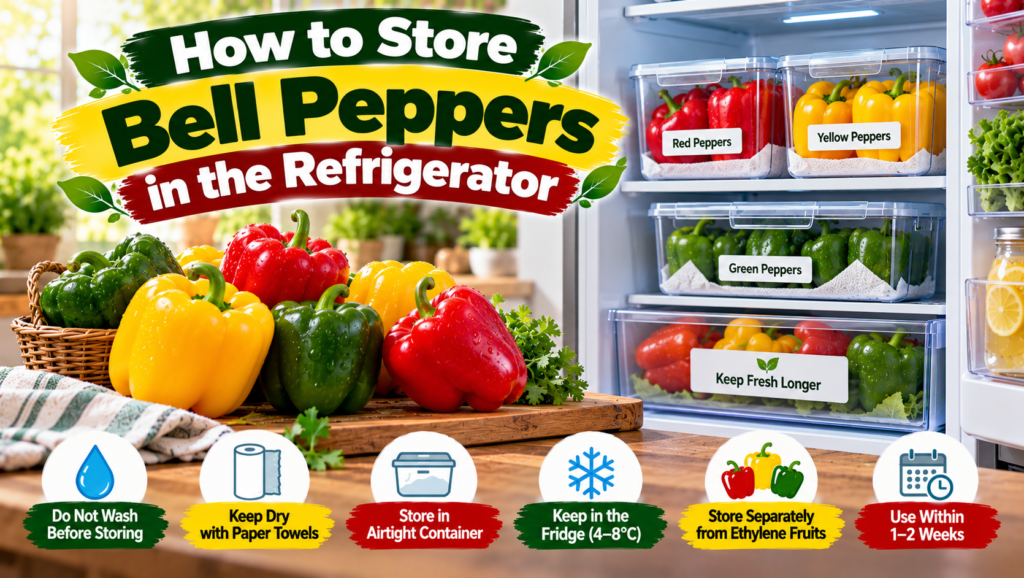
Store Different Colors Together Carefully
Green, red, yellow, and orange bell peppers can all be stored in the refrigerator, but I still organize them carefully.
I like keeping them together in a way that allows me to see every pepper.
This prevents smaller peppers from being hidden underneath larger ones.
Good organization is especially useful when the harvest is large.
Use Older Peppers First
I follow a simple first in, first out system.
Older peppers stay toward the front of my refrigerator, while newer ones are placed behind them.
This helps me remember which peppers should be used first.
It is a simple habit, but it can significantly reduce forgotten vegetables.
Common Bell Pepper Storage Mistakes
One mistake is washing peppers and immediately storing them while they are still wet.
Another is cutting all the peppers at once.
I also avoid overcrowding the vegetable drawer or placing heavy items on top of the peppers.
Ignoring soft or damaged peppers is another common problem.
Regular inspection helps prevent these issues.
Final Thoughts
Storing bell peppers in the refrigerator is fairly simple when I focus on a few basic habits.
I start with healthy peppers, avoid unnecessary moisture, keep them whole whenever possible, and store them in a suitable refrigerator area.
I also check them regularly and use older peppers first.
For home gardeners, these simple steps can help maintain the quality of a fresh pepper harvest and make it easier to enjoy garden grown vegetables throughout the week.