Broccoli is one of those vegetables that can be extremely useful in the kitchen, but it can lose its fresh appearance fairly quickly if stored poorly. Fresh broccoli can become limp, dry, yellow, or soft when refrigerator storage is not handled properly.
In my experience, keeping broccoli fresh is mainly about controlling moisture while allowing the vegetable to maintain a suitable environment.
Whether I harvest broccoli from the garden or bring it home from the market, I like to prepare it for storage rather than simply leaving it uncovered in the refrigerator.
Choose Fresh Broccoli
Good storage begins with fresh broccoli.
I look for firm stalks and compact green florets. I avoid storing broccoli that already shows serious yellowing, slimy areas, mold, or extensive damage.
The fresher the broccoli is when stored, the easier it is to maintain its quality.
Check the Florets
The florets are the part I inspect most carefully.
I look for discoloration, insects, soft areas, and excessive moisture.
If a few small damaged sections are present, I separate them as appropriate rather than allowing damaged material to remain mixed with healthy broccoli.
Avoid Excess Moisture
Broccoli needs moisture, but excess surface water can become a problem.
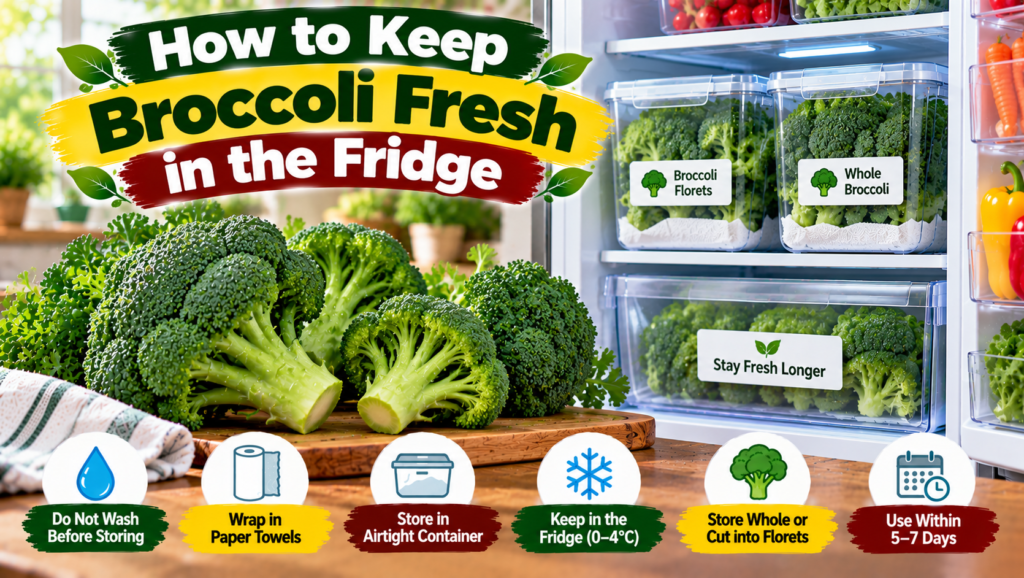
I avoid storing freshly washed broccoli while it is dripping wet.
If I wash it before storage, I make sure excess water is removed carefully.
My goal is to prevent water from collecting inside the storage container while still protecting the broccoli from excessive drying.
Use Suitable Refrigerator Storage
I keep broccoli in the refrigerator rather than leaving it at room temperature for extended periods.
A vegetable drawer can be a useful place for storing it.
I also make sure the broccoli is not crushed beneath heavy containers.
Give Broccoli Some Protection
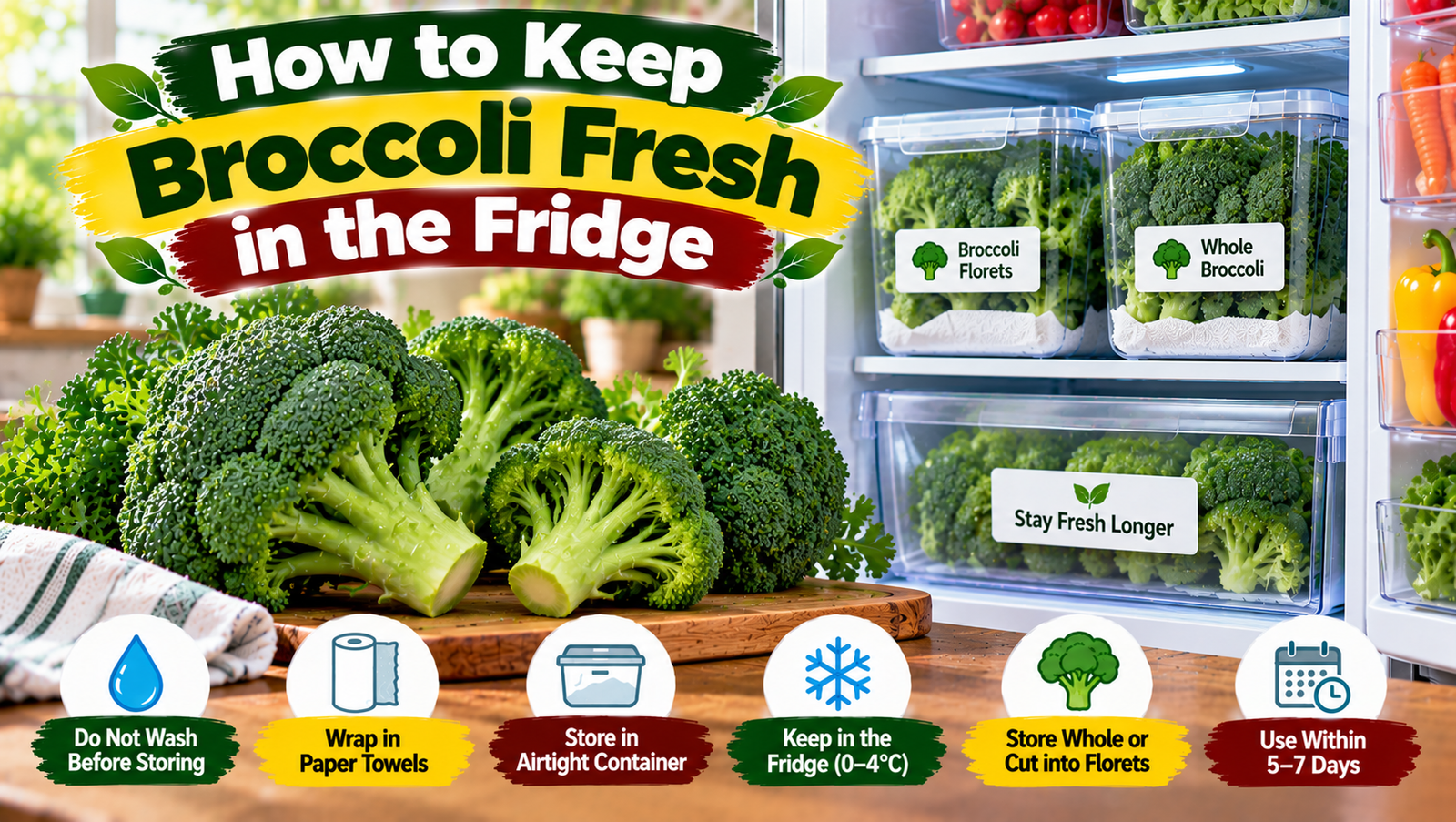
A suitable storage bag or container can protect broccoli from drying out.
However, I avoid creating unnecessary condensation.
If the inside of the storage bag becomes excessively wet, I check the broccoli and adjust the storage method.
The storage environment should protect the vegetable while avoiding trapped moisture.
Keep Broccoli Whole Until Needed
I prefer keeping broccoli whole when possible.
Cutting it into small pieces increases the exposed surface area and can make it more difficult to maintain quality.
When I am ready to cook, I wash and cut the amount I need.
This keeps the remaining broccoli protected for longer.
Check Broccoli Regularly
I check stored broccoli regularly for changes.
I look for yellowing, soft areas, unpleasant smells, sliminess, or mold.
If I notice deterioration, I separate the affected portion and assess the remaining vegetable.
Regular checking allows me to use broccoli while it is still in good condition.
Do Not Overcrowd the Refrigerator
An overcrowded vegetable drawer makes it difficult to manage fresh produce.
I try to give broccoli enough room so that it is not crushed between other vegetables.
This also allows me to inspect it without having to remove everything from the drawer.
Use Broccoli Before It Loses Quality
I prefer not to store broccoli longer than necessary.
When I plan meals, I try to use fresh broccoli relatively soon after harvesting.
This is especially important when I have several vegetables competing for refrigerator space.
Using produce while it is fresh is generally easier than trying to recover quality after it has already declined.
Common Broccoli Storage Mistakes
One mistake is leaving broccoli uncovered in the refrigerator.
Another is storing it while excessively wet.
I also avoid cutting the entire head before I need it.
Overcrowding and forgetting about the broccoli are other common problems.
Final Thoughts
Keeping broccoli fresh in the fridge is easier when I focus on freshness, moisture control, suitable protection, and regular inspection.
I start with healthy broccoli, avoid unnecessary surface moisture, store it properly in the refrigerator, and keep it whole until I am ready to use it.
With these simple habits, home gardeners can make better use of their broccoli harvest and reduce unnecessary food waste.