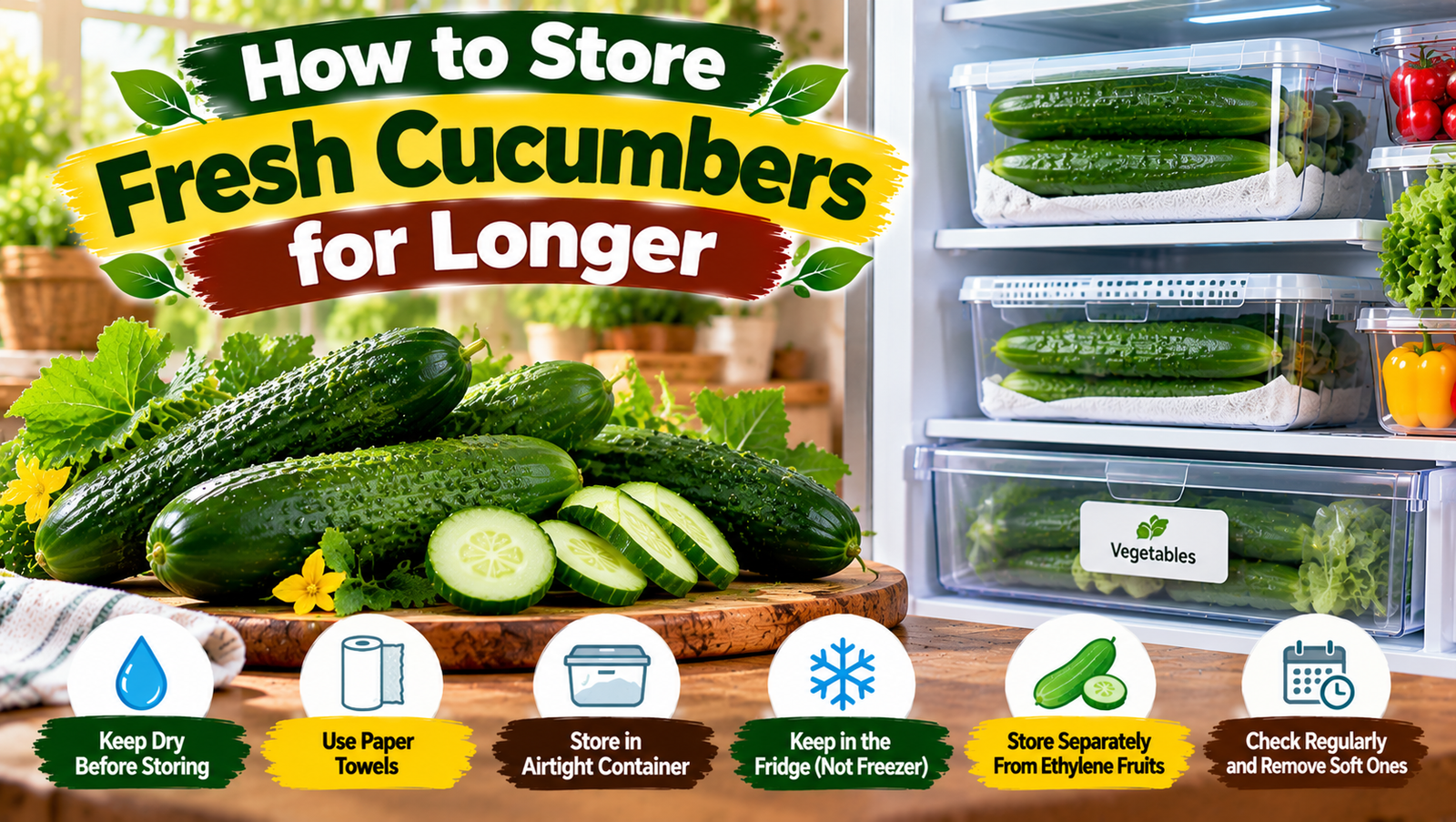
Fresh cucumbers are one of my favorite vegetables to harvest from a home garden. They are refreshing, easy to use, and perfect for salads, sandwiches, snacks, and many other meals. The only problem is that cucumbers can lose their quality fairly quickly if they are stored incorrectly.
In my experience, cucumber storage is mostly about protecting the vegetable from excessive moisture, cold conditions that are unsuitable for it, and physical damage.
Because cucumbers have a high water content, they need careful handling after harvesting. I avoid simply placing them anywhere in the refrigerator without considering their storage needs.
Harvest Cucumbers Carefully
The first step in keeping cucumbers fresh is careful harvesting.
I avoid dropping or squeezing them because bruises and damaged areas can affect their quality later.
When harvesting, I handle cucumbers gently and check them for cuts, insect damage, soft areas, and other problems.
I prefer storing the healthiest cucumbers and using damaged ones sooner.
Choose Firm Cucumbers
Before storage, I check the texture of each cucumber.
A fresh cucumber should generally feel firm rather than soft or weak.
If a cucumber already has a soft section, I separate it from the others.
Sorting the harvest at the beginning makes refrigerator organization much easier.
Keep Cucumbers Dry
Excess moisture can cause problems during storage.
If cucumbers are wet after harvesting or washing, I avoid placing them directly into a tightly closed container.
I gently remove excess moisture and prepare them according to their storage needs.
The goal is to avoid unnecessary water sitting on the cucumber surface.
Avoid Very Cold Storage
One thing I pay attention to with cucumbers is refrigerator temperature.
Cucumbers can be sensitive to very cold conditions, so I avoid storing them in the coldest part of the refrigerator.
I prefer a suitable vegetable storage area and keep them away from areas where they may be exposed to extremely cold temperatures.
The exact conditions can vary between refrigerators, so I monitor the cucumbers and adjust their location if needed.
Use a Protective Storage Method
I like keeping cucumbers protected from excessive moisture loss while also avoiding trapped condensation.
A suitable bag or container can help, but I do not pack cucumbers tightly.
They need enough space to avoid unnecessary pressure and bruising.
If condensation appears inside the storage container, I check the cucumbers and adjust the storage setup.
Keep Cucumbers Away From Heavy Vegetables
Cucumbers can bruise when heavy vegetables or containers are placed on top of them.
I prefer to give them their own space in the refrigerator.
This makes them easier to see and prevents accidental pressure when I am taking other vegetables out.
Do Not Cut Cucumbers Before Storage
When possible, I prefer to keep cucumbers whole until I am ready to use them.
Cut vegetables generally have a shorter useful storage period than whole vegetables.
Keeping cucumbers whole protects the inside from unnecessary exposure and makes refrigerator organization easier.
If I cut a cucumber, I store the unused portion appropriately and use it sooner.
Check Cucumbers Regularly
I inspect stored cucumbers every few days.
I look for soft spots, discoloration, sliminess, unpleasant smells, or visible deterioration.
If one cucumber starts becoming soft, I remove it from the storage group.
Regular checking helps me use vegetables at the right time instead of discovering spoiled produce later.
Use Fresh Cucumbers First
When I have several cucumbers, I try to use the older ones first.
I place newly harvested cucumbers behind the earlier harvest so that the older ones remain easy to reach.
This simple habit helps reduce waste.
It also makes it easier to keep track of how long vegetables have been stored.
Common Cucumber Storage Mistakes
One mistake is keeping cucumbers in very cold conditions without considering their sensitivity.
Another is storing wet cucumbers in a tightly sealed environment.
I also avoid squeezing cucumbers into an overcrowded container.
Leaving damaged cucumbers with healthy ones is another mistake because the damaged vegetable may deteriorate faster.
Final Thoughts
Storing fresh cucumbers for longer is mainly about careful harvesting, suitable temperature, moisture control, and regular inspection.
I prefer to keep cucumbers whole, dry on the surface, protected from excessive cold, and away from heavy produce.
By checking them regularly and using older cucumbers first, I can make better use of my garden harvest and reduce unnecessary food waste.
The most important thing is to remember that cucumbers have different storage needs from many other vegetables. Once I understood that, keeping them fresh became much easier.