Fresh radishes have a crisp texture and a slightly spicy flavor that makes them a great addition to salads, sandwiches, and many home cooked meals. When I grow radishes in my garden, I like to harvest them when they are young and firm. However, knowing how to keep radishes fresh after harvest is important because radishes can become soft if they are not stored correctly.
Radishes are relatively easy to store, especially when the green tops are removed soon after harvesting. With a few simple steps, I can usually keep them fresh and crisp for much longer than if I simply leave them on the kitchen counter.
Harvest Radishes at the Right Time
The first step is harvesting radishes at the right stage. I prefer harvesting them when the roots have reached a good size but are still firm.
If radishes remain in the soil for too long, they can become tough, woody, or develop an unpleasant texture.
When harvesting, I loosen the soil around the root before pulling it out. This reduces the chance of breaking the radish.
Remove the Green Tops
After harvesting, I remove the green leaves fairly quickly.
The leaves continue drawing moisture from the radish root, which can cause the root to lose its crispness.
I cut the leaves off while leaving a small amount of stem attached.
The leaves can often be used separately in cooking, depending on their freshness.
Remove Loose Soil
Freshly harvested radishes may have soil stuck to them. I gently remove loose soil with my hands.
I do not aggressively scrub the roots because damaged skin can shorten storage life.
If the radishes are going into short term storage, I prefer keeping them relatively dry.
Avoid Excessive Moisture
Radishes need moisture to stay crisp, but too much moisture can encourage mold and decay.
This is why I avoid putting freshly washed radishes into a sealed container while they are still wet.
If I wash radishes before storage, I make sure they are properly drained and dried on the outside.
A storage container with some airflow is usually a better choice than a completely sealed wet environment.
Store Radishes in the Refrigerator
The refrigerator is generally the easiest place to store fresh radishes at home.
I place them in the vegetable drawer because it provides a suitable environment for many fresh vegetables.
A storage bag or container can help prevent excessive moisture loss.
If condensation builds up inside the container, I remove the excess moisture and check the radishes for soft spots.
Use a Damp Paper Towel
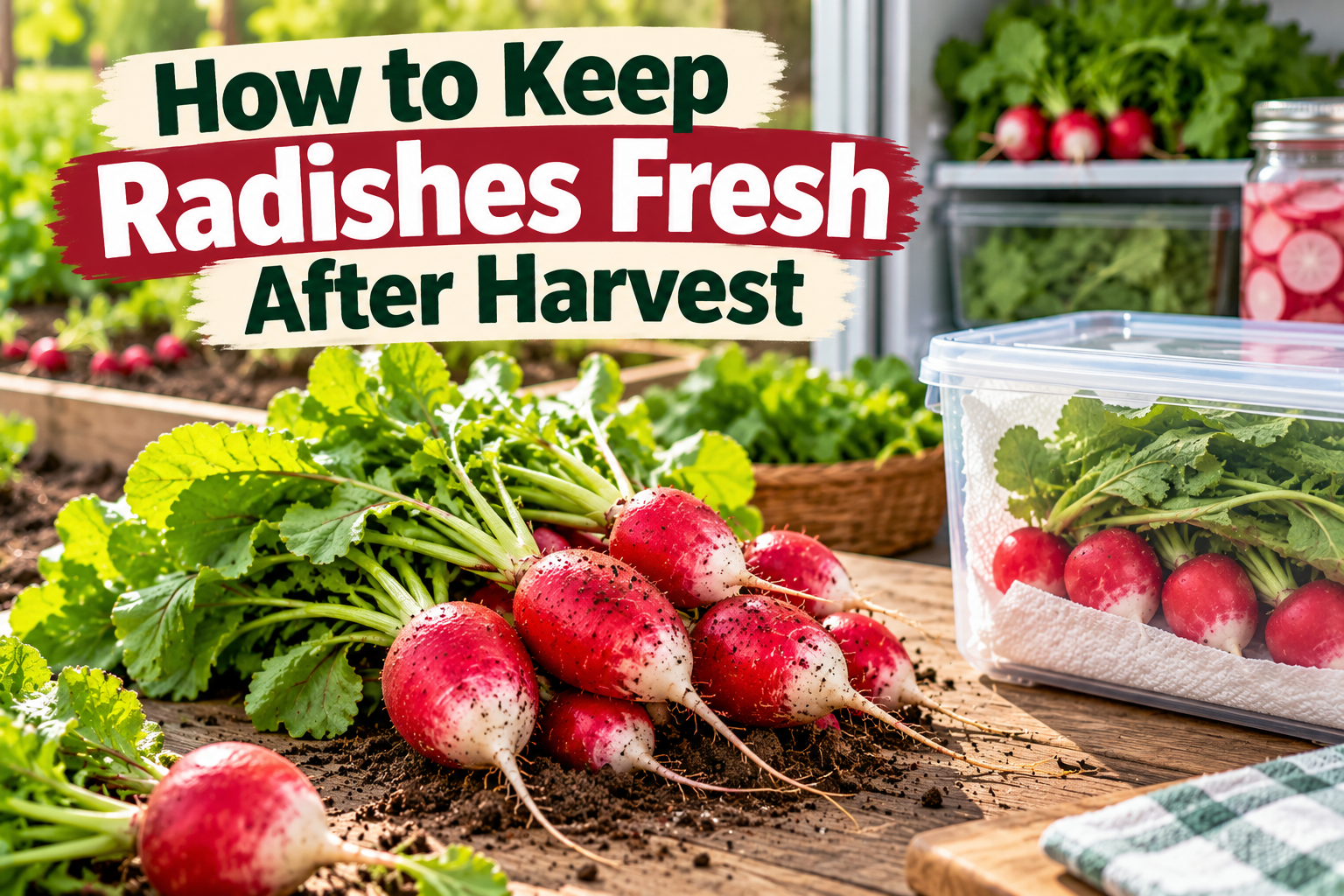
One simple method I like is using a clean, slightly damp paper towel around the radishes.
The towel can help maintain humidity without leaving the roots sitting in water.
The important word here is slightly. A soaking wet paper towel can create too much moisture.
I check the towel periodically and replace it if it becomes excessively wet.
Keep Radishes Away From Ethylene Producing Produce
For better storage, I prefer keeping radishes separate from produce that releases significant amounts of ethylene gas.
Using a separate refrigerator drawer or container can make organization easier and may help maintain better quality.
Separating vegetables also reduces the chance of odors and moisture moving between different foods.
Check Radishes Regularly
Fresh radishes do not require much attention, but I still check them every few days.
If a radish becomes soft, slimy, or develops mold, I remove it from the storage container.
This is especially important when storing a large harvest because one damaged vegetable can affect nearby produce.
How to Make Soft Radishes Crisp Again
Sometimes radishes become slightly soft because they have lost moisture.
If they are still otherwise healthy, placing them in cold water for a short period can sometimes help restore some crispness.
This does not repair spoiled or rotten radishes. It is simply a way to refresh roots that have become slightly limp.
I always inspect them carefully before using them.
Common Mistakes When Storing Radishes
One of the most common mistakes is leaving the leaves attached.
Another mistake is storing radishes while they are soaking wet.
Leaving them uncovered in the refrigerator can also cause moisture loss and softness.
I also avoid storing damaged radishes with healthy ones because they can spoil more quickly.
Final Thoughts
Knowing how to keep radishes fresh after harvest is mostly about controlling moisture and temperature.
I remove the leaves, gently clean away loose soil, keep the roots cool, and store them in the refrigerator with suitable humidity.
Regular checking is also important. With these simple steps, fresh radishes can remain crisp and enjoyable for considerably longer after harvesting.