Fresh carrots are one of the easiest vegetables to grow and one of the most useful vegetables to keep at home. They can be used in salads, soups, cooked meals, snacks, and many other dishes. However, freshly harvested carrots can gradually become soft if they are not stored properly.
In my experience, keeping carrots crisp in the refrigerator mainly comes down to controlling moisture, removing the leafy tops, protecting the carrots from drying out, and avoiding unnecessary exposure to air.
When I harvest carrots from the garden, I like to prepare them for storage instead of simply putting them directly into the refrigerator. A few simple steps can make a noticeable difference in how long they maintain their firm texture.
Start With Good Quality Carrots
The first step is choosing carrots that are suitable for storage.
I check the carrots carefully after harvesting and separate any that have serious cuts, bruises, soft spots, or signs of decay. Damaged carrots usually need to be used sooner than healthy ones.
Healthy carrots should feel firm and have a good overall appearance. If a carrot already feels very soft when I harvest it, I do not expect it to remain crisp for a long time.
Sorting the carrots before storage also makes it easier to monitor them later.
Remove the Green Tops
If the carrots still have their green tops attached, I remove them before refrigerator storage.
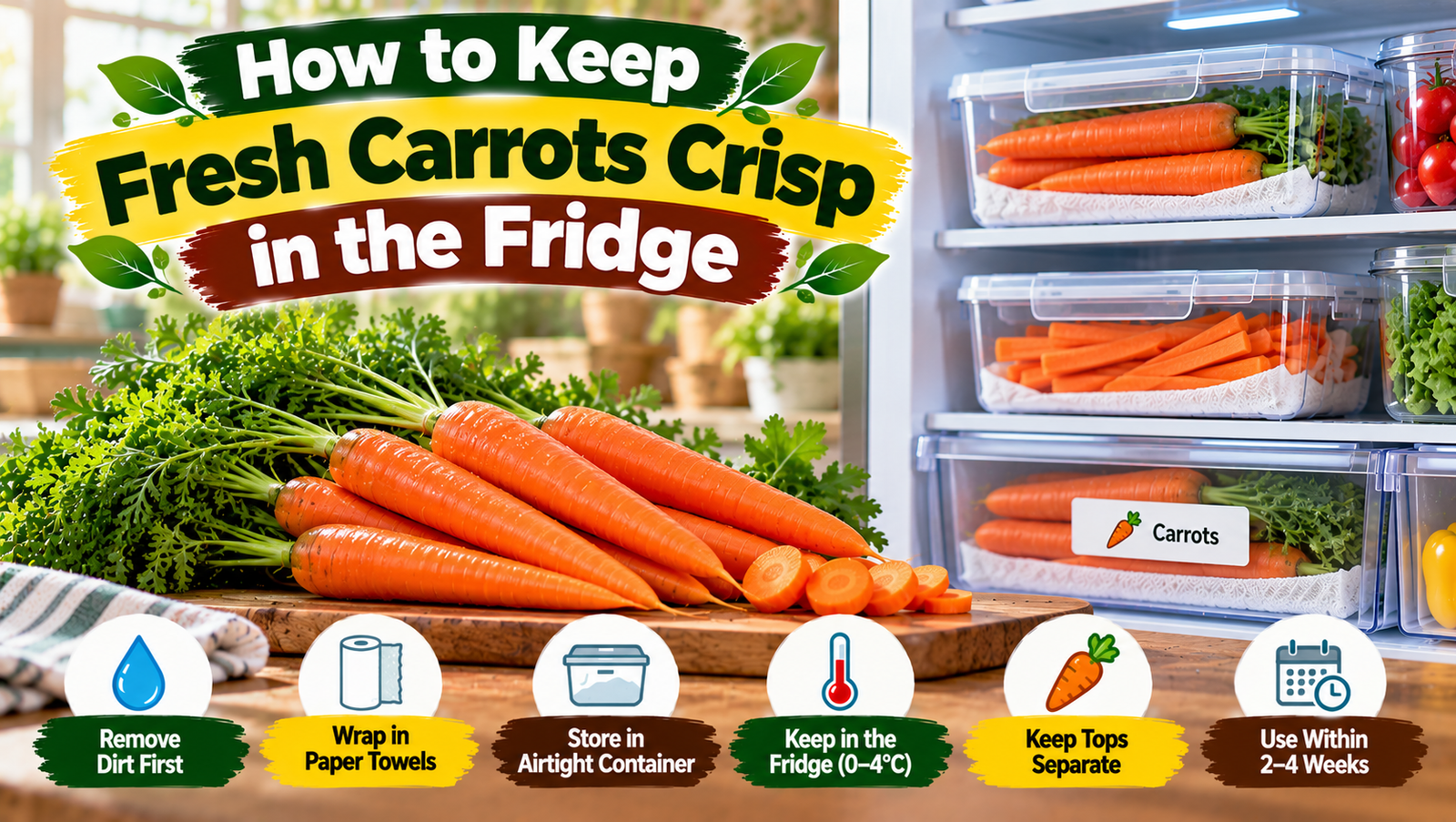
The leafy tops continue to use moisture from the carrot after harvesting. Removing them helps the root retain its moisture and can help maintain its firmness.
I do not throw the carrot tops away automatically. Fresh carrot greens can sometimes be used in suitable recipes, depending on their condition and personal preference.
After removing the tops, I prepare the carrots for storage.
Do Not Store Wet Carrots
Moisture needs to be managed carefully when storing carrots.
I avoid placing carrots into a storage container while they are covered in unnecessary water. Excess moisture can encourage deterioration, especially when there is poor airflow.
If the carrots are washed, I make sure excess surface moisture is removed before storing them.
At the same time, I do not want the carrots to become completely dehydrated. The goal is to maintain a suitable balance.
Use the Refrigerator Crisper Drawer
The crisper drawer is one of the most convenient places for storing fresh carrots.
I generally keep carrots in the vegetable section rather than leaving them exposed on an open refrigerator shelf.
A suitable storage environment helps protect carrots from excessive moisture loss.
I also avoid putting heavy items directly on top of the carrots because pressure can cause bruising and damage.
Use a Suitable Storage Bag or Container
The way carrots are packed can affect their texture.
I prefer a storage bag or container that provides protection without creating excessive moisture buildup.
If condensation starts appearing inside the container, I check the carrots and adjust the storage method.
The carrots should not be packed so tightly that they become difficult to inspect.
I also like keeping them organized so I can quickly see which carrots should be used first.
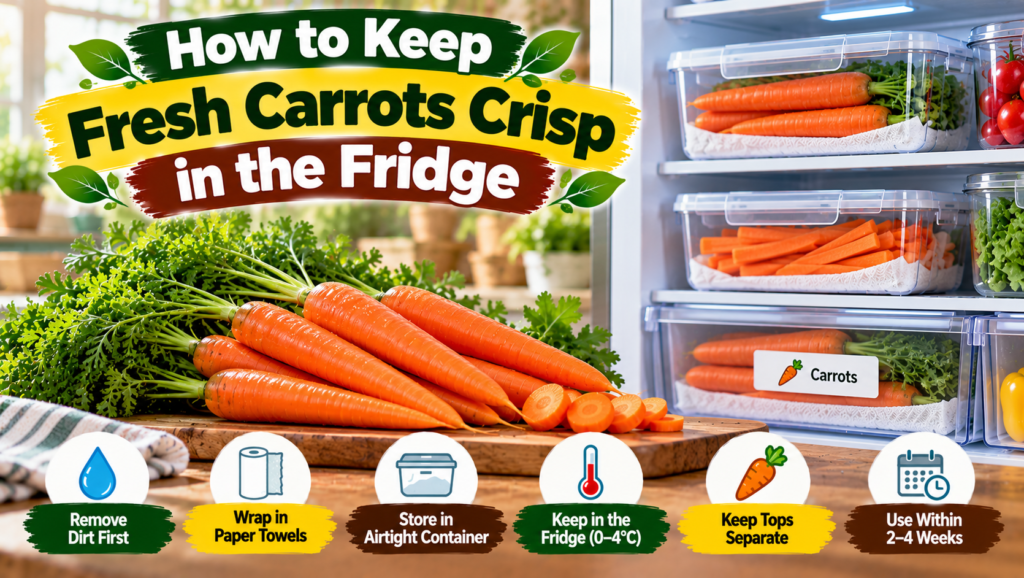
Keep Carrots Away From Dry Air
One reason carrots become soft is moisture loss.
The cold air inside a refrigerator can gradually remove moisture from vegetables when they are left exposed.
For this reason, I avoid leaving fresh carrots uncovered for long periods.
A suitable storage bag or container can help reduce unnecessary moisture loss and protect the carrots from the dry refrigerator environment.
Check Carrots Regularly
I do not simply put carrots into the refrigerator and forget about them.
Every few days, I check their condition. I look for soft areas, discoloration, mold, unpleasant smells, or excessive moisture.
If one carrot begins to deteriorate, I remove it from the group and inspect the surrounding carrots.
This simple habit helps prevent a single damaged carrot from being forgotten among the healthy ones.
Keep Carrots Away From Ethylene Producing Produce
Some fruits and vegetables release ethylene gas as they mature, and this can affect the quality of nearby produce.
I prefer to keep carrots organized separately from produce that may affect their storage environment.
Good refrigerator organization makes this easier and also prevents different vegetables from becoming mixed together.
Do Not Overcrowd the Refrigerator
An overcrowded refrigerator can make vegetable storage difficult.
When I have a large carrot harvest, I avoid filling one small container completely. Overcrowding can make inspection harder and may contribute to moisture problems.
I prefer to divide the carrots into manageable amounts.
This also makes it easier to take out only what I need without repeatedly disturbing the entire batch.
Use Older Carrots First
I like using the first stored carrots before the newer ones.
When I harvest another batch, I place the newer carrots behind or separately from the older ones.
This simple approach helps prevent older carrots from being forgotten.
It also allows me to enjoy the freshest carrots while making sure earlier harvests are used in time.
Common Carrot Storage Mistakes
One common mistake is leaving carrot tops attached for too long.
Another is storing carrots while they are unnecessarily wet.
I also avoid leaving carrots exposed to refrigerator air without protection because they can gradually lose moisture and become soft.
Overcrowding is another problem because it makes organization and inspection difficult.
Finally, I avoid assuming that every carrot will remain crisp for the same amount of time. Storage conditions and the initial quality of the carrots can make a difference.
Final Thoughts
Keeping fresh carrots crisp in the fridge is mostly about protecting their moisture while avoiding excessive wetness.
I start by selecting healthy carrots, removing their green tops, checking for damage, and preparing them carefully. I then use a suitable storage bag or container and keep the carrots in the refrigerator’s vegetable storage area.
Regular inspection is also important. If I notice a carrot becoming soft or damaged, I use it sooner instead of leaving it with the rest.
With these simple habits, home gardeners can keep fresh carrots in better condition and reduce unnecessary food waste.