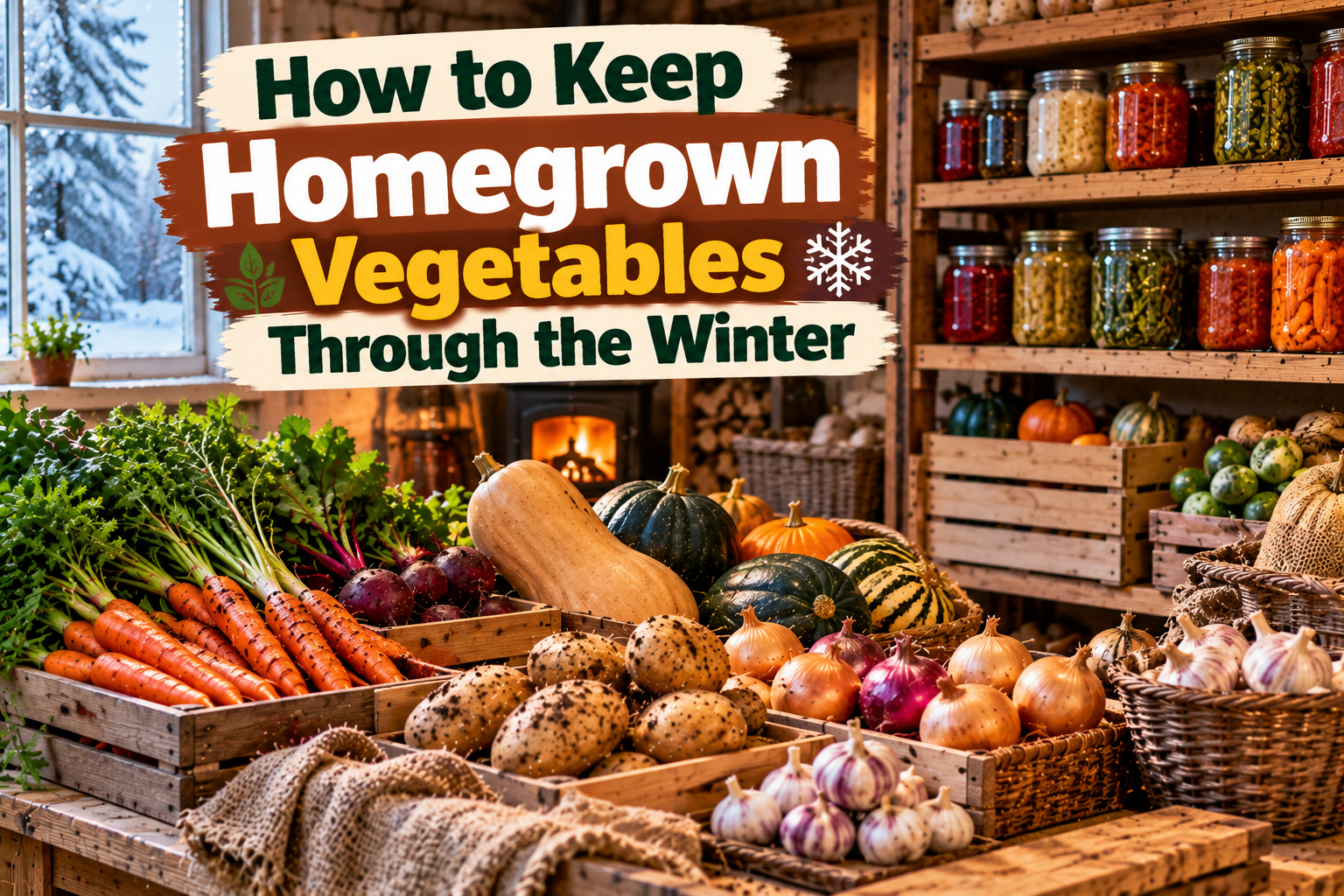
One of the best things about growing vegetables at home is being able to enjoy the harvest beyond the main growing season. However, keeping homegrown vegetables through winter requires planning.
Learning how to keep homegrown vegetables through the winter can help me reduce food waste and enjoy the results of my garden for many months.
Grow Vegetables Suitable for Storage
The first step is choosing vegetables that can handle storage.
Potatoes, onions, garlic, carrots, beets, and winter squash are useful examples.
Some vegetables naturally have longer storage lives than others.
When planning my garden, I consider not only what I want to eat during summer but also what I want to store for winter.
Harvest at the Right Time
Proper storage starts with harvesting.
I try to harvest vegetables at their appropriate maturity stage.
Immature vegetables may not store as well, while over mature vegetables can also develop quality problems.
Careful harvesting is important because cuts and bruises can shorten storage life.
Cure Storage Crops
Some vegetables need curing before long term storage.
Potatoes, onions, garlic, and winter squash can benefit from proper curing.
Curing helps prepare the outer surface and improves storage quality.
I never rush this step when I am preparing a large harvest for winter.
Use the Refrigerator
The refrigerator is useful for vegetables that need cool and humid conditions.
Carrots, beets, and radishes can often be stored this way.
I remove green tops and use suitable containers or bags to prevent excessive moisture loss.
Use a Pantry
A dry pantry can be useful for onions, garlic, potatoes, and certain winter squash.
I keep the storage area dark and well ventilated.
I also check the temperature regularly.
Freeze Extra Vegetables
Freezing is useful when natural storage is not practical.
I can prepare suitable vegetables and freeze them in convenient portions.
Labeling each package with the date makes organization easier.
Dry Herbs and Vegetables
Drying can also extend the usefulness of the garden harvest.
Herbs, peppers, and some vegetables can be dried using appropriate methods.
Once completely dry, they should be stored in clean containers away from moisture.
Check Everything Regularly
Winter storage requires occasional attention.
I inspect stored vegetables for mold, soft areas, sprouting, or unpleasant smells.
If I find a problem, I remove the affected vegetable immediately.
Use Older Food First
I try to use older stored vegetables before newer ones.
Labeling containers with harvest or storage dates helps me keep track.
This simple first in, first out approach can reduce waste.
Final Thoughts
Knowing how to keep homegrown vegetables through the winter is mostly about planning ahead.
I choose suitable storage crops, harvest them carefully, cure them when needed, and use refrigerators, pantries, freezers, or other appropriate storage methods.
With a little organization, a summer garden can continue supplying useful food well into winter.