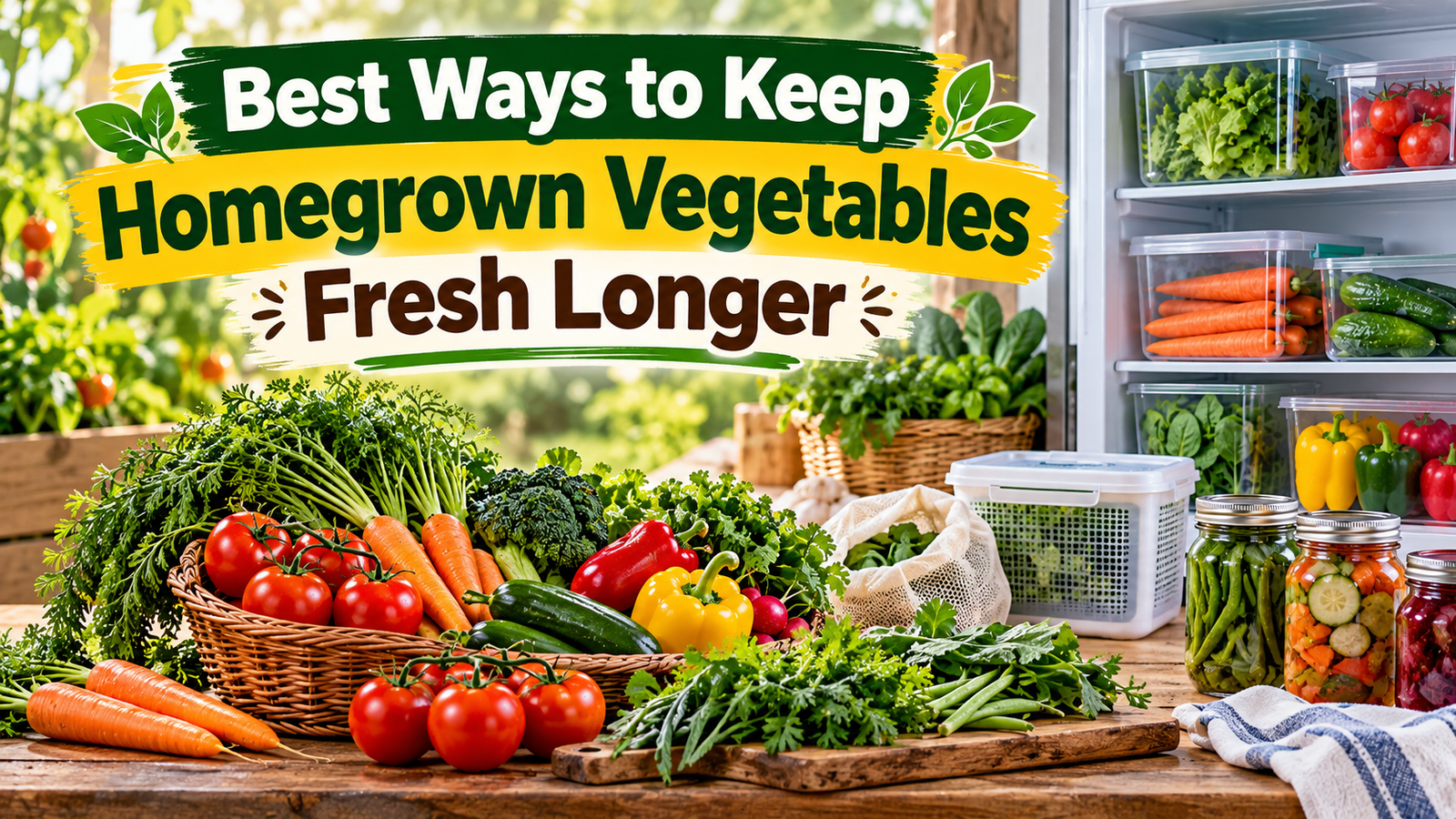
Growing vegetables at home is one of the most rewarding parts of gardening. After spending weeks caring for plants, watering them, protecting them from pests, and waiting for the right harvest time, I always want my fresh vegetables to stay useful for as long as possible. This is why I believe knowing the best ways to keep homegrown vegetables fresh longer is just as important as knowing how to grow them.
Freshly harvested vegetables can lose their quality quickly if they are handled or stored incorrectly. Some vegetables need refrigeration, while others are better kept in a cool and dry place. Some need moisture to remain crisp, while too much moisture can cause them to rot.
In my experience, keeping homegrown vegetables fresh does not require complicated equipment. A few simple habits can make a noticeable difference. Proper harvesting, gentle handling, suitable storage, moisture control, and regular checking can help extend the freshness of your garden produce.
Harvest Vegetables at the Right Time
One of the first things I focus on is harvesting vegetables at the right stage. Vegetables picked at the proper time usually have better flavor, texture, and storage quality.
I prefer harvesting during the cooler part of the day, especially in the morning. The weather is usually more comfortable, and the vegetables have not been exposed to the strongest heat of the day.
Avoid pulling, throwing, or dropping vegetables during harvest. Even small bruises can become areas where spoilage starts.
Use clean gardening scissors or a sharp knife when a vegetable needs to be cut from the plant. Gentle harvesting helps protect both the vegetable and the plant.
Handle Fresh Vegetables Carefully
After harvesting, I try to handle vegetables as little as possible. Fresh vegetables may look strong, but many can be damaged quite easily.
Avoid placing heavy vegetables on top of delicate produce such as leafy greens. Bruising can shorten the storage life of vegetables even when the damage is not immediately visible.
I also recommend using clean baskets or containers when collecting vegetables. Dirty containers can transfer soil and microorganisms to freshly harvested produce.
If you are harvesting several types of vegetables, keeping them separated can make cleaning and storage easier later.
Do Not Wash Every Vegetable Immediately
Washing vegetables is important for cleanliness, but washing everything immediately is not always the best choice for longer storage.
Extra moisture can encourage mold and decay, especially when vegetables are placed into closed containers while they are still wet.
For vegetables that will be stored for several days, I usually remove loose dirt gently and wash them closer to the time I plan to use them.
If a vegetable does need washing before storage, I make sure it is thoroughly dried first. A clean towel or paper towel can help remove excess surface moisture.
Store Leafy Greens Correctly
Leafy vegetables such as lettuce, spinach, coriander, and other fresh greens can lose their crispness quickly.
I find that keeping leafy greens cool and controlling excess moisture is one of the most effective ways to keep them fresh longer.
After removing damaged leaves, I gently clean the greens when necessary. I then dry them carefully and place them in a suitable container or storage bag.
Adding a clean paper towel can help absorb extra moisture. If the paper towel becomes damp, replacing it can help maintain a better storage environment.
Avoid crushing leafy greens under heavier vegetables or containers.
Keep Root Vegetables in Suitable Conditions
Root vegetables such as carrots, beets, radishes, and turnips can remain fresh for a good amount of time when stored properly.
Before storing root vegetables, I recommend removing their leafy tops. The leaves can continue drawing moisture from the root, which may cause the vegetable to become soft.
Remove loose soil gently rather than soaking the vegetables unnecessarily.
Depending on the vegetable, refrigeration can be useful. The main goal is to maintain suitable moisture without allowing the roots to sit in water.
Store Tomatoes Carefully
Tomatoes are among the vegetables that require slightly different treatment.
When tomatoes are ripe and I plan to eat them soon, I prefer keeping them at room temperature away from direct sunlight. This can help preserve their natural flavor and texture.
Very ripe tomatoes can be refrigerated if they need to be kept for a little longer. However, I prefer allowing refrigerated tomatoes to return to room temperature before eating them because this can improve their taste.
Try not to stack tomatoes heavily because pressure can cause bruising.
Keep Cucumbers Fresh
Cucumbers contain a large amount of water, so proper storage can help prevent them from becoming soft.
I usually keep fresh cucumbers in a cool place and protect them from excessive moisture. If they are refrigerated, I avoid placing them in the coldest section of the refrigerator.
A suitable produce bag can help protect cucumbers while preventing unnecessary moisture buildup.
It is also better to keep them away from vegetables or fruits that can affect their quality during storage.
Store Potatoes in a Dark Place
Potatoes should be stored differently from many fresh vegetables.
I prefer keeping potatoes in a cool, dark, and dry location with good airflow. Light exposure can cause potatoes to develop green areas.
I avoid storing potatoes in sealed plastic bags because trapped moisture can encourage spoilage.
A breathable basket, paper bag, or suitable storage container can provide better airflow.
Check potatoes regularly and remove any that are becoming soft, rotten, or strongly damaged.
Keep Onions and Garlic Dry
Onions and garlic can last for a surprisingly long time when they are stored correctly.
I keep them in a dry, cool area with good ventilation. Unlike leafy vegetables, they generally do not need a highly humid environment.
Avoid storing onions and garlic in tightly sealed containers where moisture can become trapped.
I also prefer keeping onions away from vegetables that require high humidity because different vegetables have different storage requirements.
Use Your Refrigerator Properly
The refrigerator is one of the most useful tools for extending the freshness of homegrown vegetables, but I do not recommend putting every vegetable inside it without considering its needs.
Use the vegetable drawer when appropriate and avoid overcrowding it. Vegetables need enough space for air circulation.
Keep an eye on condensation. If the inside of a storage bag or container becomes excessively wet, remove the extra moisture.
Organizing vegetables also helps you notice older produce before it becomes unusable.
Control Moisture
In my opinion, moisture control is one of the most important parts of vegetable storage.
Too much moisture can encourage mold, while too little moisture can make vegetables lose water and become limp.
The ideal moisture level depends on the vegetable. Leafy greens generally benefit from some humidity, while onions and garlic prefer drier conditions.
Paper towels can be useful for absorbing extra moisture from leafy vegetables and other produce that is stored in containers.
Keep Damaged Vegetables Separate
Before putting vegetables into storage, I always recommend checking them for cuts, bruises, insect damage, or soft areas.
A damaged vegetable may spoil faster than healthy produce. If it is still safe to eat, I prefer using it first instead of storing it for a long period.
Removing spoiled vegetables quickly is also important. One rotten vegetable can make nearby produce dirty or encourage the spread of mold.
Do Not Overcrowd Storage Containers
It can be tempting to put the entire harvest into one large container, especially after a successful gardening season.
However, overcrowding can restrict airflow and increase moisture buildup.
I prefer using smaller containers when necessary and leaving enough space around vegetables. This makes it easier to inspect the produce and remove individual vegetables when needed.
Good organization also helps me remember what I harvested first.
Check Your Vegetables Regularly
Vegetable storage is not a set and forget process.
I recommend checking stored vegetables every few days. Look for changes in texture, color, smell, and moisture.
If you notice one vegetable beginning to spoil, remove it immediately. Vegetables that are still good but starting to lose freshness should be used soon.
This simple habit can prevent a large amount of food waste.
Use Older Vegetables First
A simple storage system can make a big difference. I like using the oldest vegetables first and keeping the newest harvest toward the back or in a separate area.
This approach helps prevent vegetables from being forgotten.
You can also label containers with the harvest date if you regularly grow large amounts of produce. Even a simple date written on a piece of paper can help you keep track of what should be used first.
Consider Freezing Extra Vegetables
Sometimes a home garden produces more vegetables than a family can eat fresh. In that situation, freezing can be a useful option for suitable vegetables.
Some vegetables benefit from being prepared properly before freezing. Depending on the vegetable, this may involve cleaning, cutting, and briefly blanching it before freezing.
Frozen vegetables will not always have exactly the same texture as freshly harvested vegetables, but they can still be useful for soups, stews, sauces, and cooked meals.
Always follow reliable food preservation practices when freezing or preserving large amounts of produce.
Reduce Food Waste From Your Garden
One of my biggest reasons for learning better vegetable storage methods is to reduce waste.
Growing vegetables requires time, water, soil, seeds, and regular care. It makes little sense to grow a successful harvest and then lose much of it because of poor storage.
If you have more vegetables than you can use, consider sharing them with family, friends, or neighbors. You can also plan meals around your harvest so fresh vegetables are used while they are still at their best.
Final Thoughts
Keeping homegrown vegetables fresh longer does not have to be difficult. From my point of view, the most important thing is understanding that every vegetable has slightly different storage needs.
Harvest vegetables carefully, avoid unnecessary washing, control moisture, use the refrigerator when appropriate, and store dry vegetables in suitable conditions. Leafy greens need different treatment from potatoes, onions, tomatoes, and root vegetables.
I also recommend checking your stored vegetables regularly and using older produce first. These small habits can help extend freshness, reduce food waste, and allow you to enjoy more of the vegetables you worked hard to grow.
A successful garden does not end when vegetables are harvested. Proper storage is the final step that helps turn a good harvest into fresh, useful food for your home.