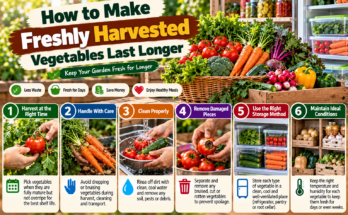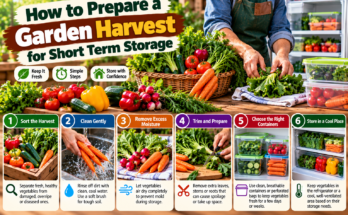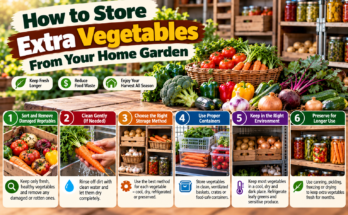
After a large garden harvest, I always take some time to sort the vegetables before storing them. This is an important step because not every vegetable is in the same condition.
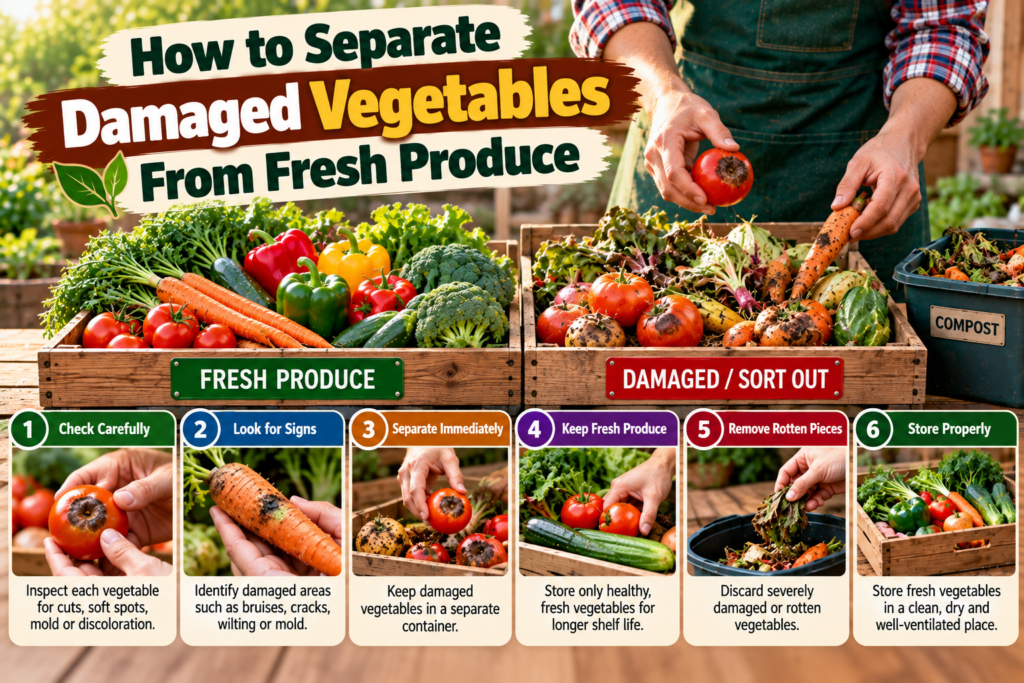
Learning how to separate damaged vegetables from fresh produce can help protect healthy vegetables and reduce food waste.
Inspect the Entire Harvest
I begin by spreading the vegetables out so I can see them properly.
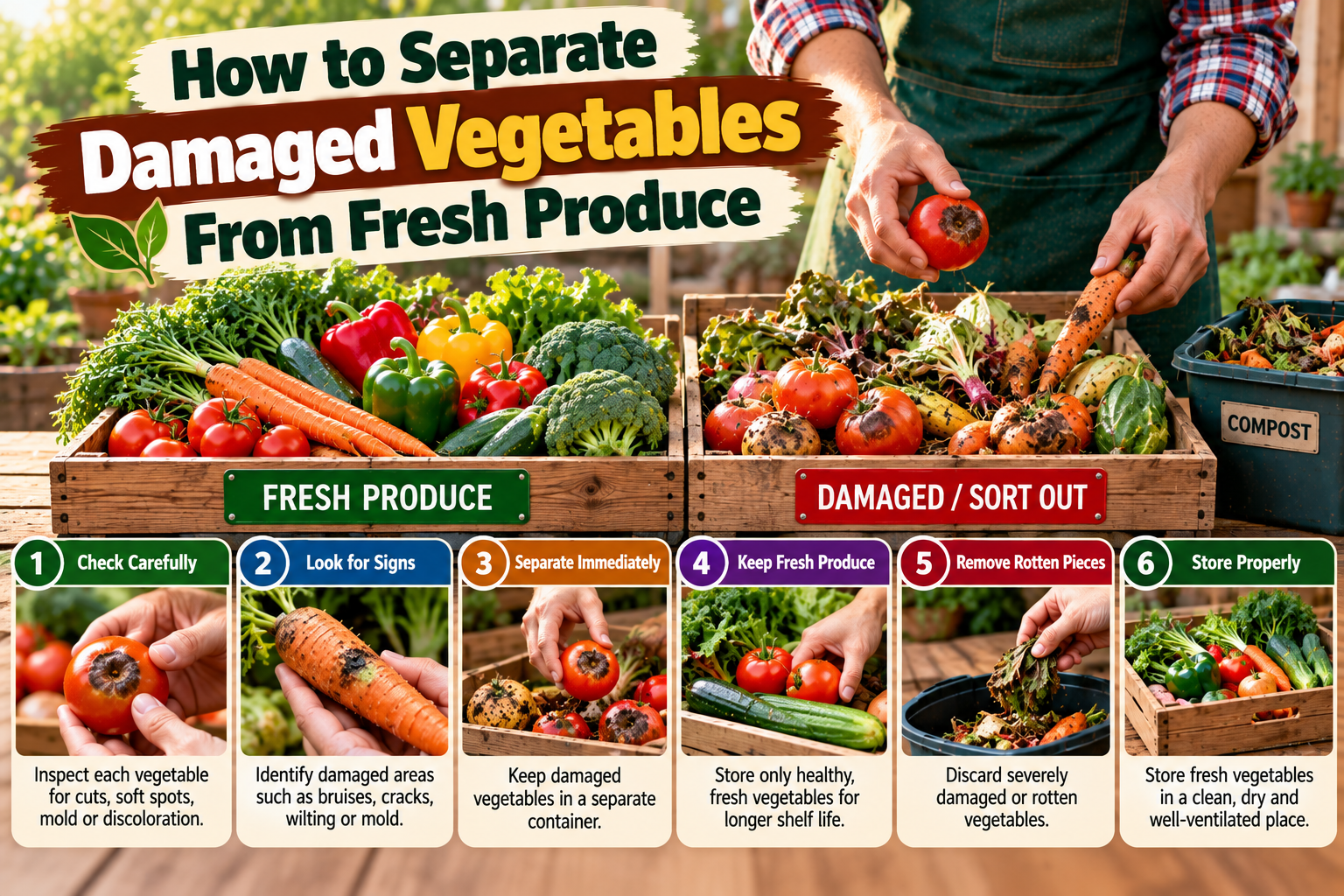
I look for cuts, bruises, cracks, soft areas, mold, insect damage, and signs of decay.
Sorting is much easier when I can inspect each vegetable individually.
Identify Cuts and Open Wounds
A vegetable with a deep cut should not normally be placed into long term storage with healthy produce.
Open wounds can become areas where spoilage begins.
I separate these vegetables and plan to use them first.
Look for Bruising
Some bruises are difficult to see immediately.
I gently check vegetables for unusually soft areas.
Potatoes, squash, and other storage crops can be affected by bruising.
If I find a badly bruised vegetable, I keep it separate.
Separate Soft Vegetables
Healthy storage vegetables should generally feel firm.
If a carrot, beet, potato, onion, or squash feels unusually soft, I inspect it more closely.
Softness can be an early sign of deterioration.
I do not mix questionable vegetables with healthy ones.
Remove Moldy Produce
Any vegetable showing obvious mold should be separated immediately.
I do not want moldy produce sitting against healthy vegetables.
The affected item should be handled appropriately rather than returned to the storage container.
Check for Insect Damage
Insect damage can also shorten storage life.
Small surface marks may not always be serious, but deep insect damage should be considered when sorting.
I use damaged vegetables sooner whenever possible.
Create Different Groups
After inspecting the harvest, I usually create three simple groups.
The first group contains healthy vegetables suitable for long term storage.
The second group contains vegetables with minor damage that should be used soon.
The third group contains vegetables showing serious spoilage that should not be stored.
This makes the entire storage process easier.
Use Damaged Vegetables First
Minor damage does not always mean a vegetable must be wasted.
If a vegetable is otherwise healthy and the damaged area can be safely removed, I try to use it soon.
This approach can reduce food waste.
Keep Storage Containers Separate
I place healthy vegetables into clean storage containers.
Vegetables that need to be used quickly can be kept separately.
This prevents the short term produce from being forgotten among the long term storage crops.
Check Again Later
Sorting is not a one time task.
I check stored vegetables regularly.
A healthy vegetable at the beginning of storage can develop a problem later.
Regular inspection helps me catch these changes early.
Final Thoughts
Learning how to separate damaged vegetables from fresh produce is a simple but valuable part of garden storage.
I look for cuts, bruises, soft areas, mold, and insect damage.
Healthy vegetables go into long term storage, slightly damaged vegetables are used first, and seriously spoiled produce is removed.
This simple sorting system can help protect a large harvest and reduce unnecessary waste.