A successful garden can sometimes produce more vegetables than one family can eat immediately. While a large harvest is exciting, it can also become overwhelming if I do not have a plan.
Learning how to reduce vegetable waste after a large garden harvest helps me make better use of the food I have worked hard to grow.
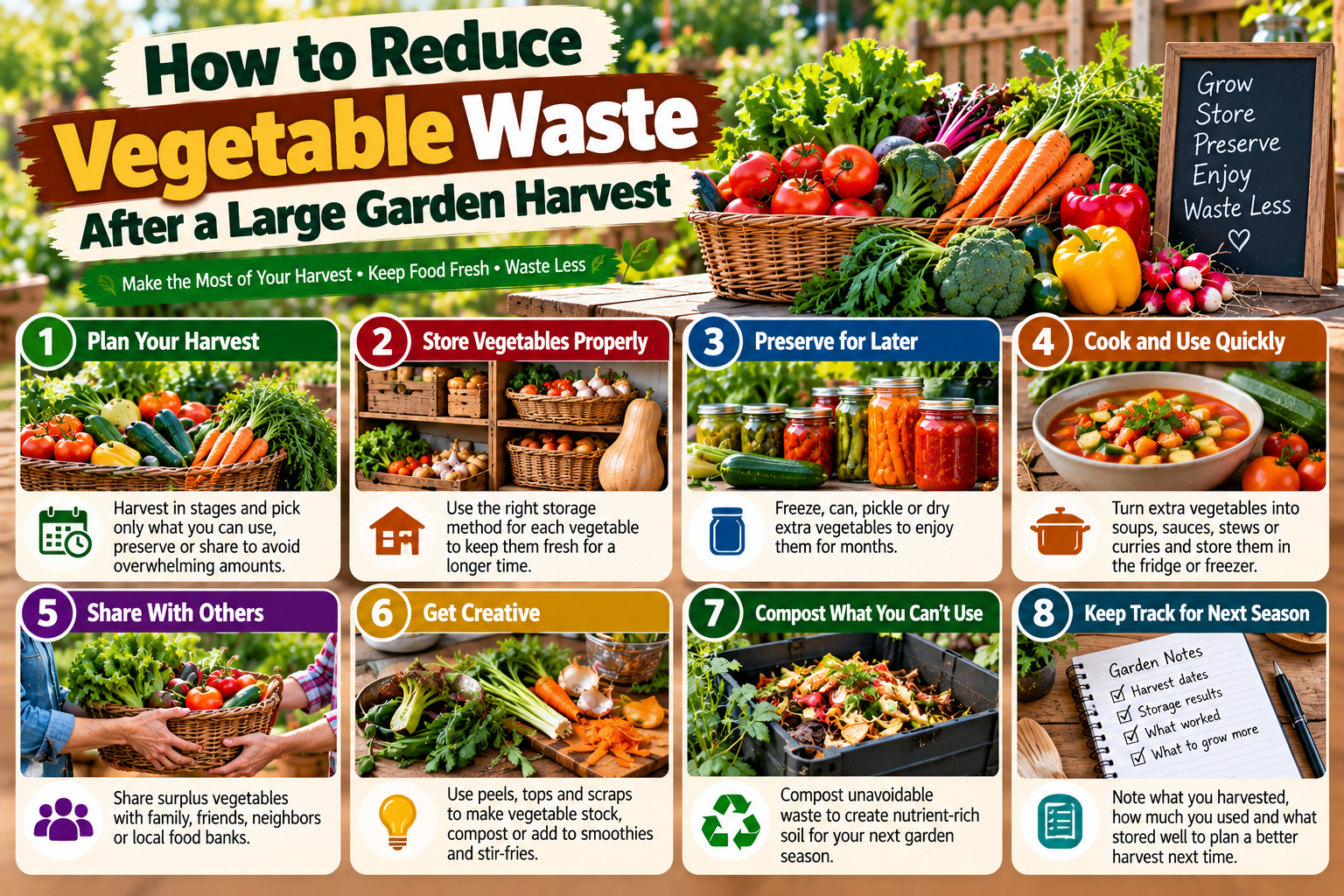
Harvest Only What You Need
One way to reduce waste is to harvest vegetables at the right time.
If a crop can remain safely in the garden for a little longer, I do not always harvest everything on the same day.
This allows me to spread the harvest over time.
Sort the Harvest Immediately
After harvesting, I separate healthy vegetables from damaged ones.
This prevents spoiled vegetables from being stored with good produce.
I also create a group of vegetables that should be eaten first.
Store Vegetables Properly
Good storage can prevent a large amount of waste.
Carrots, beets, potatoes, onions, garlic, and winter squash can all benefit from appropriate storage methods.
The important thing is matching the vegetable with the correct conditions.
Freeze Extra Produce
When I have more vegetables than I can eat fresh, freezing can be useful.
Many vegetables can be prepared and frozen for later use.
I divide them into practical portions and label them with the date.
Dry Suitable Vegetables
Drying can be useful for herbs, peppers, and some vegetables.
Removing moisture can make food easier to store for longer periods.
The vegetables should be properly dried before being placed into storage.
Pickle Extra Vegetables
Pickling can turn extra vegetables into a different type of food.
Cucumbers, onions, carrots, beets, and other vegetables can be suitable for pickling.
For food safety, I always use reliable recipes and follow appropriate processing instructions.
Share Extra Produce
If I have more vegetables than I can preserve or store, sharing is another option.
Friends, family, neighbors, or community groups may appreciate fresh garden produce.
Sharing can prevent perfectly good vegetables from being wasted.
Use Vegetable Parts
Some vegetables have edible leaves or stems.
For example, carrot tops and beet greens can sometimes be used in cooking when they are fresh and suitable.
Instead of automatically throwing away every part of the plant, I consider whether it has another useful purpose.
Compost Unsuitable Produce
Not every vegetable can be saved.
Vegetables that are completely spoiled or unsuitable for eating can often be added to a suitable compost system.
This allows organic material to return to the garden instead of going directly into the trash.
Plan Future Plantings
A large harvest can also teach me how much I actually need.
If I consistently have too many vegetables, I can adjust the number of plants next season.
This helps create a more manageable harvest.
Final Thoughts
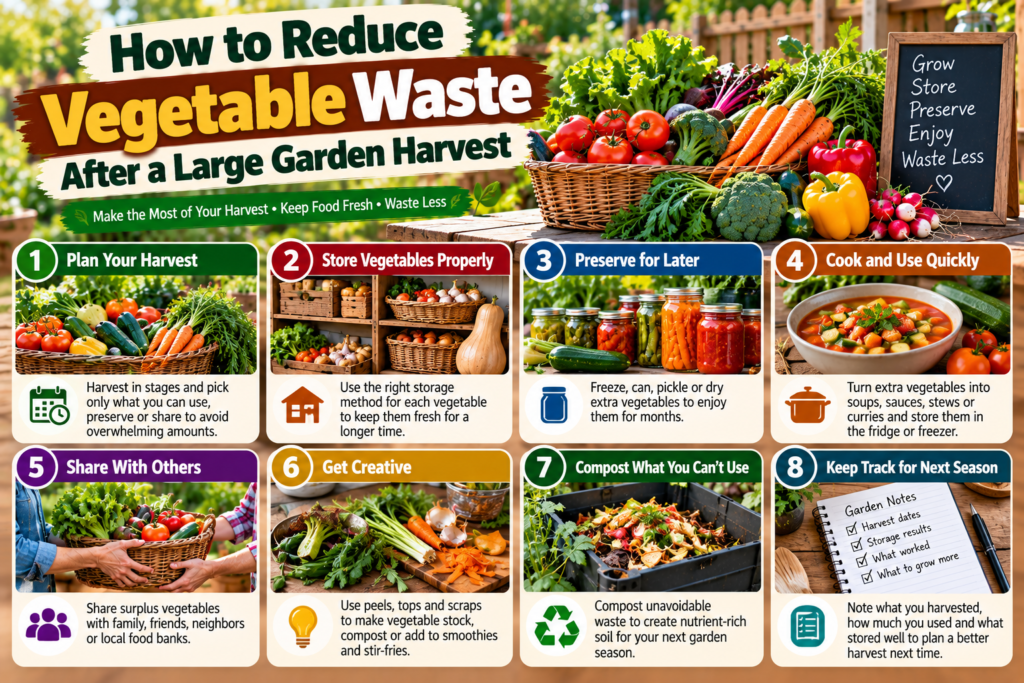
Knowing how to reduce vegetable waste after a large garden harvest is about having a plan before the vegetables begin piling up.
I sort the harvest, store suitable vegetables correctly, preserve extras, share surplus produce, use edible plant parts, and compost what cannot be saved.
With a little organization, a large harvest can become an opportunity rather than a source of waste.