Freshly harvested vegetables are at their best when they are crisp, firm, and full of flavor. However, once vegetables are removed from the garden, their quality can slowly decline.
Learning how to make freshly harvested vegetables last longer is one of the most useful skills for any home gardener.
The good news is that many simple habits can help extend the life of fresh produce.
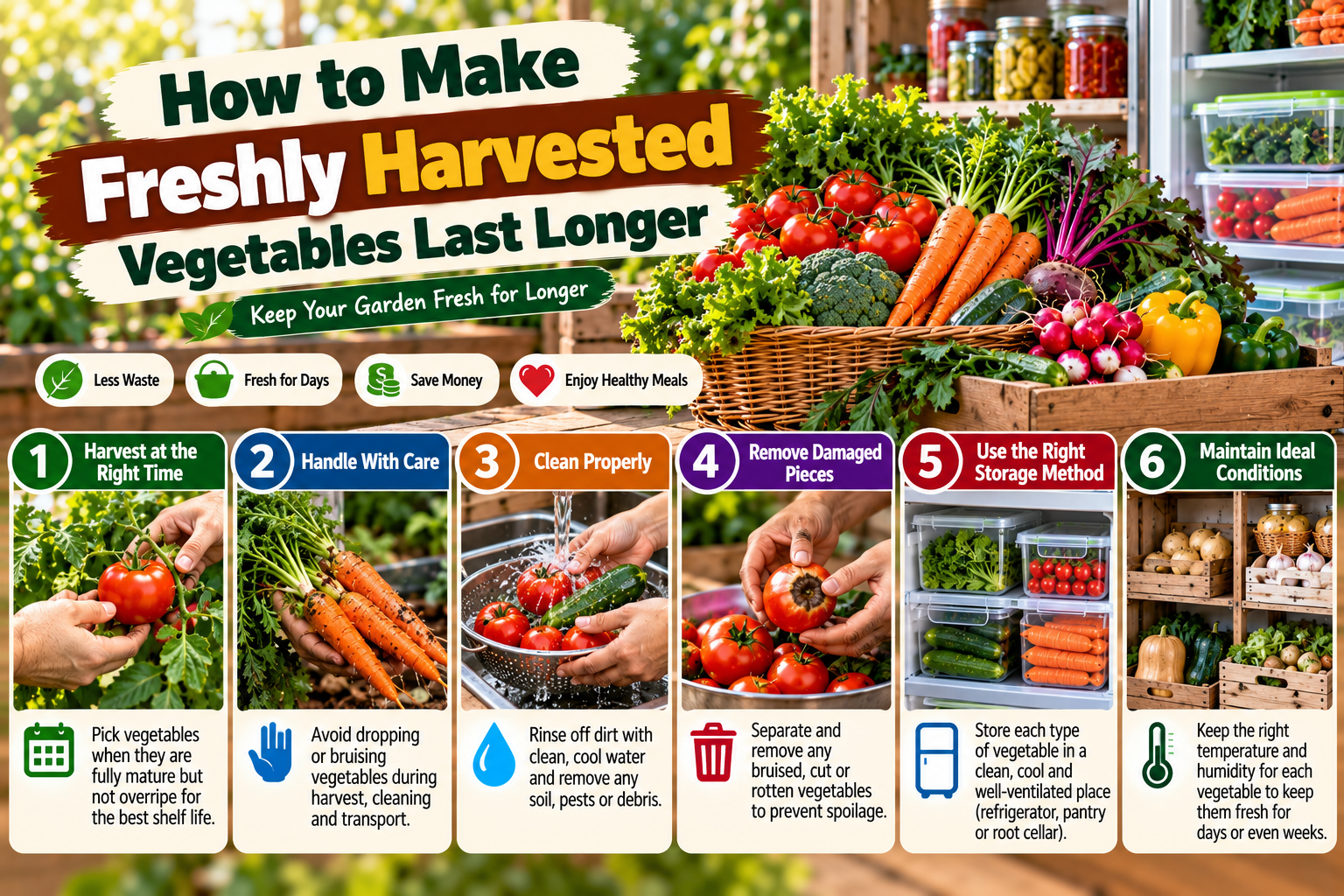
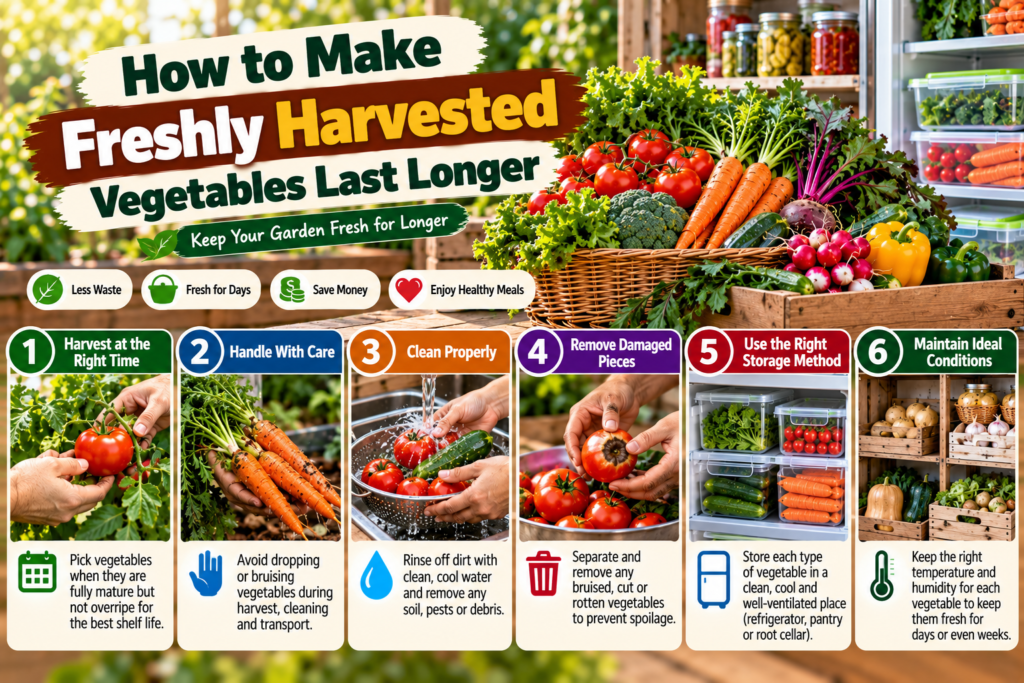
Harvest at the Right Time
I start by harvesting vegetables when they are ready.
Harvesting too early or too late can affect storage quality.
For storage crops, maturity is particularly important.
Handle Produce Carefully
Cuts and bruises can shorten storage life.
I place vegetables gently into baskets or containers instead of throwing them inside.
For root vegetables, I loosen the soil carefully before pulling them.
Remove Green Tops
For carrots, beets, and similar root crops, I remove the green tops soon after harvesting.
The leaves can continue drawing moisture from the roots.
This can cause the roots to become soft more quickly.
Control Moisture
Moisture is one of the most important factors in vegetable storage.
Too little moisture can cause vegetables to become limp.
Too much moisture can encourage mold and decay.
I try to create the right balance for each vegetable.
Use the Refrigerator Properly
The refrigerator can extend the life of many fresh vegetables.
I use the vegetable drawer and suitable containers or bags.
I avoid overcrowding the refrigerator because good airflow is still useful.
Store Long Term Crops Correctly
Potatoes, onions, garlic, and winter squash need different conditions from fresh leafy vegetables.
I cure them when necessary and store them in suitable dry and ventilated locations.
Keep Vegetables Away From Heat
Heat can speed up quality loss.
I avoid leaving freshly harvested vegetables in direct sunlight or near kitchen appliances.
After harvesting, I move them to an appropriate storage location as soon as practical.
Separate Damaged Vegetables
I never want a damaged vegetable sitting unnoticed among healthy produce.
I inspect the harvest and use damaged vegetables first.
This helps protect the rest.
Preserve Extra Produce
If I know I will not be able to eat everything fresh, I preserve the surplus.
Freezing, drying, pickling, and other suitable methods can extend the usefulness of the harvest.
Check Stored Vegetables Regularly
Regular inspection is one of the simplest habits I can develop.
I look for mold, soft spots, sprouting, or unpleasant smells.
Removing problem vegetables early can save the rest.
Final Thoughts
Learning how to make freshly harvested vegetables last longer begins with careful harvesting and continues through proper storage.
I focus on maturity, gentle handling, moisture control, suitable temperature, and regular inspection.
There is no single storage method that works for every vegetable. The best approach is to understand what each crop needs and provide the simplest suitable environment.
With these habits, I can enjoy more of my garden harvest while reducing the amount of fresh produce that ends up being wasted.