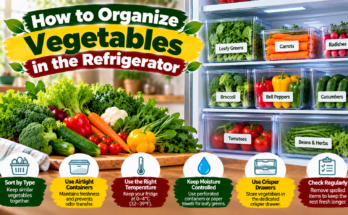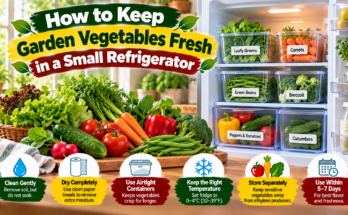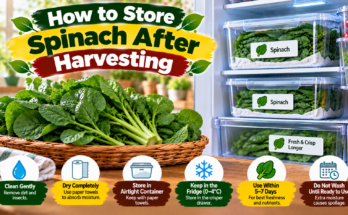
One of the most frustrating things about refrigerator storage is opening the vegetable drawer and finding that fresh vegetables have become dry, limp, or wrinkled.
I have experienced this with several types of vegetables, especially when they are left uncovered or stored without enough protection.
The refrigerator is designed to keep food cool, but the environment inside can also cause some vegetables to lose moisture. The good news is that a few simple storage habits can help reduce unnecessary moisture loss.
Why Do Vegetables Dry Out?
Vegetables contain water naturally, and they can gradually lose some of that moisture after harvesting.
Cold refrigerator air can contribute to moisture loss, especially when vegetables are left uncovered.
Leafy vegetables can wilt, while carrots and other firm vegetables can become less crisp.
The storage method therefore needs to protect vegetables from excessive moisture loss while avoiding excessive condensation.
Store Vegetables in Suitable Bags
One simple way I protect vegetables is by using suitable storage bags.
A bag can help reduce direct exposure to dry refrigerator air.
However, I do not simply seal everything tightly without considering the vegetable.
Some produce needs more airflow, while other vegetables benefit from greater protection from moisture loss.
The storage method should match the vegetable.
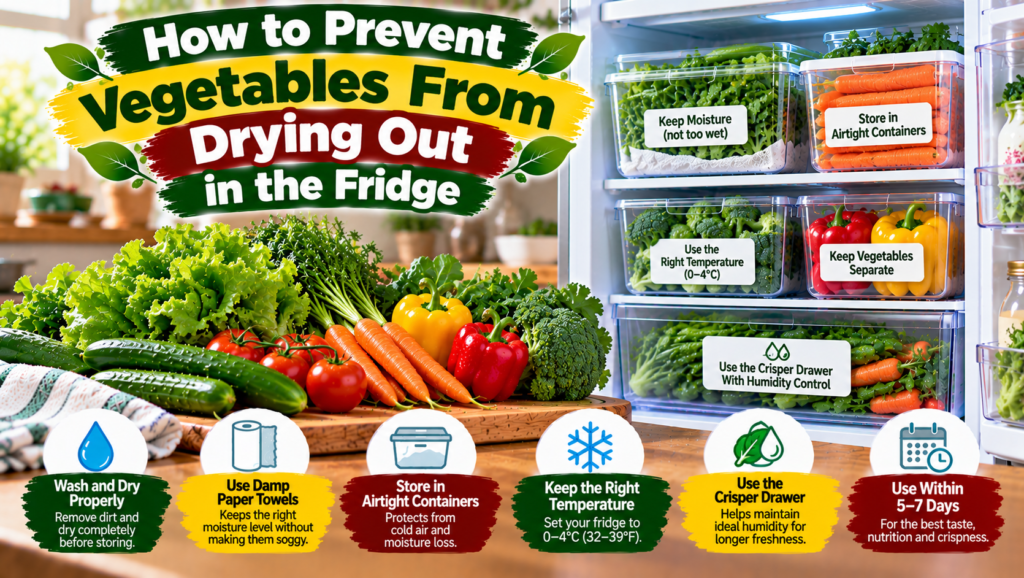
Use the Crisper Drawer
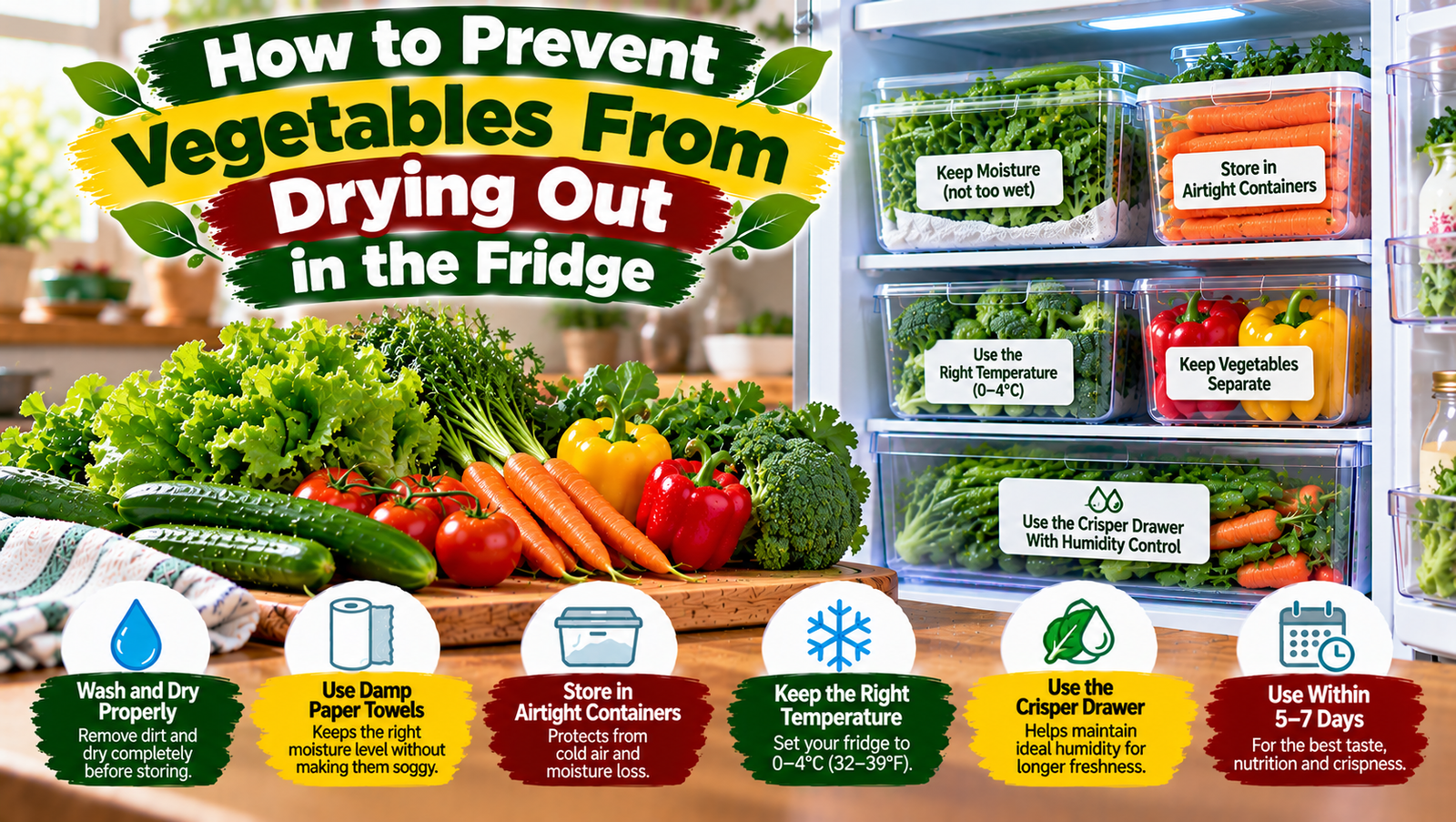
The refrigerator crisper drawer can be useful for protecting vegetables from the general refrigerator environment.
I use it to organize fresh produce and keep vegetables together.
I also avoid filling it so tightly that vegetables become crushed.
Good organization allows me to maintain a suitable environment while still being able to inspect everything.
Do Not Leave Vegetables Uncovered
When vegetables are left uncovered for long periods, they can gradually lose moisture.
I have found that this is particularly noticeable with leafy greens.
Instead of leaving them exposed, I use suitable bags or containers.
This helps reduce unnecessary moisture loss.
Balance Moisture Carefully
Preventing vegetables from drying out does not mean making them wet.
This is an important point.
Too little moisture can cause wilting and dryness, while excessive moisture can encourage deterioration.
I therefore try to maintain a balance.
If I see a lot of condensation inside a storage bag, I check the vegetables and adjust the storage method.
Use Paper Towels for Moisture Control
Paper towels can be useful for certain vegetables.
When storing leafy greens, I may place a clean paper towel around or alongside them.
The towel can help manage excess moisture.
If it becomes wet, I replace it.
This simple method can help create a more suitable storage environment.
Avoid Washing Vegetables Too Early
Washing vegetables immediately before storage is not always necessary.
For some vegetables, I prefer washing them shortly before use.
This reduces the amount of water introduced into the storage container.
If I do wash vegetables before storage, I make sure excess water is removed appropriately.
Keep Vegetables Away From Refrigerator Vents
Some areas inside refrigerators are colder and drier than others.
I avoid placing delicate vegetables directly in the path of strong cold air when possible.
This is especially useful for vegetables that are sensitive to moisture loss.
I prefer using a suitable storage drawer or protected area.
Store Vegetables According to Their Needs
Not every vegetable should be stored in exactly the same way.
Leafy greens may need protection from drying.
Carrots need moisture protection while remaining free from excessive water.
Bell peppers and green beans also have their own storage characteristics.
Learning the basic needs of individual vegetables makes storage much easier.
Check Vegetables Regularly
I inspect stored vegetables every few days.
If I notice wrinkles, wilting, or dryness, I consider whether the vegetable is receiving too much exposure to refrigerator air.
I also check for excessive moisture because changing the storage method may be necessary.
Regular observation helps me improve my storage routine.
Avoid Overcrowding
An overcrowded refrigerator can create problems of its own.
Vegetables may become crushed, airflow may be restricted, and it can become difficult to see what is being stored.
I prefer to organize vegetables so each group is easy to access.
This also helps me use produce before it loses quality.
Final Thoughts
Preventing vegetables from drying out in the fridge is mainly about reducing unnecessary moisture loss without creating an overly wet environment.
I prefer to use suitable bags or containers, make good use of the crisper drawer, avoid unnecessary washing before storage, and keep vegetables away from strong refrigerator airflow.
I also check vegetables regularly and adjust their storage conditions when needed.
With these simple habits, home gardeners can keep vegetables looking and feeling fresher while reducing unnecessary food waste.