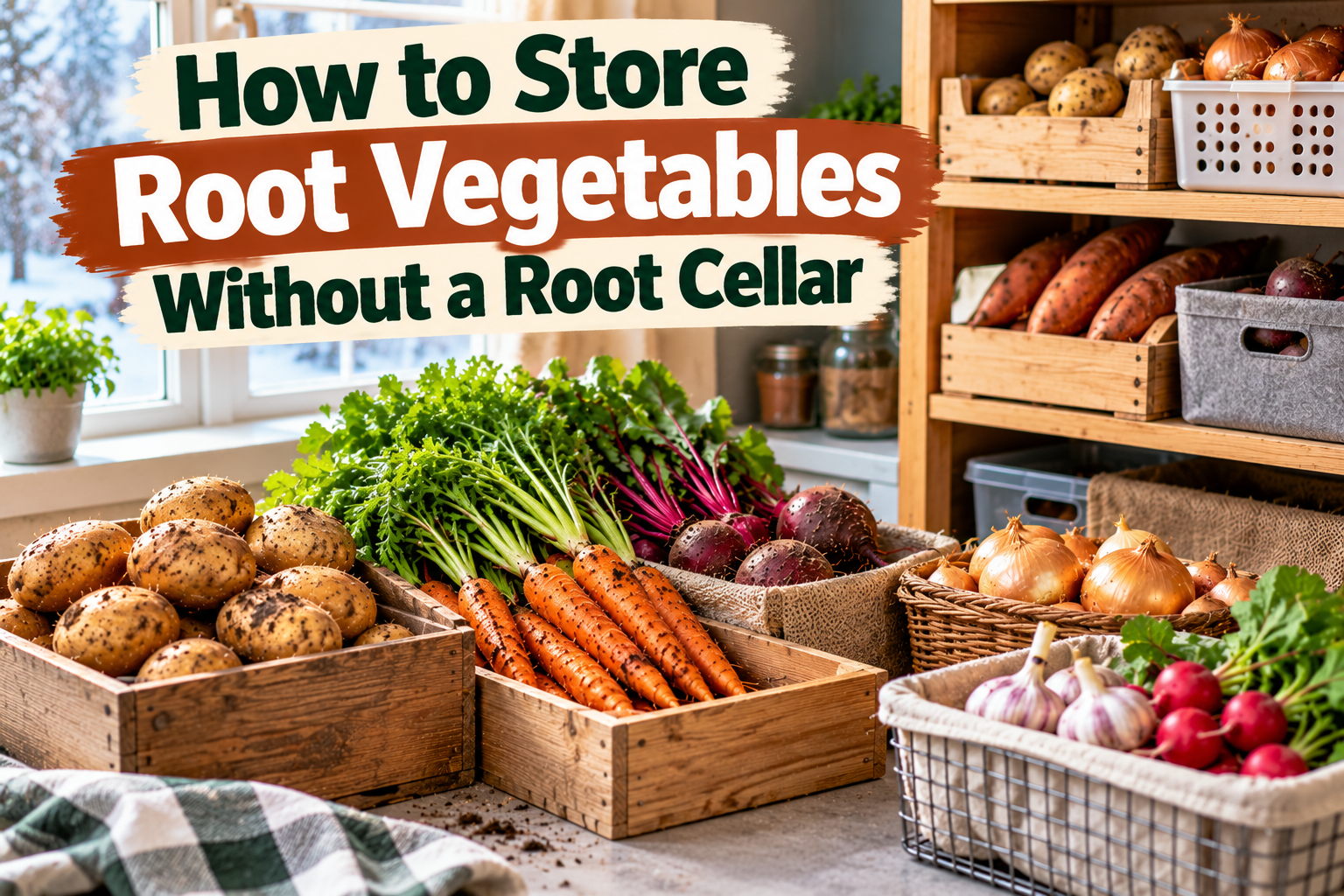
A root cellar can be useful for storing vegetables, but not every gardener has access to one. When I started thinking about how to store root vegetables without a root cellar, I realized that most home gardeners can create suitable storage conditions using simple areas and containers.
Carrots, beets, potatoes, turnips, and other root vegetables can often be stored successfully without having a traditional underground storage room.
The key is understanding what each vegetable needs and finding the closest suitable environment inside your home.
Use the Refrigerator
For smaller quantities, the refrigerator is one of the easiest options.
Carrots, beets, radishes, and several other vegetables can be stored in the vegetable drawer.
Before storing them, I remove green tops and excess soil.
I also avoid placing very wet vegetables into sealed containers.
The refrigerator works particularly well when I only have a small harvest that I expect to use within several weeks.
Use a Cool Pantry
A cool pantry can be useful for certain root vegetables.
If the pantry is dark, dry, and reasonably cool, it may be suitable for potatoes.
I avoid areas next to ovens, heaters, or appliances that produce heat.
The storage area should also have enough airflow to prevent moisture from becoming trapped.
Use a Basement
If you have a basement, it may provide a naturally cooler environment than the main living areas of the home.
I would first check the temperature, humidity, and ventilation before storing a large harvest.
A basement that is too warm or damp may not be suitable.
However, a stable and cool basement can work as a simple alternative to a traditional root cellar.
Store Carrots in Sand
One traditional method that can be adapted for home storage is storing carrots in slightly moist sand.
I would use a clean container and place the carrots between layers of sand.
The sand helps reduce moisture loss and protects the roots from excessive air exposure.
The storage container should remain in a cool location.
The sand should be slightly moist rather than wet.
Use Cardboard Boxes
Cardboard boxes can be surprisingly useful for home vegetable storage.
They are inexpensive, easy to find, and can block light.
For potatoes and some other root vegetables, a ventilated cardboard box placed in a suitable cool location can work well.
I avoid filling the box too heavily because excessive weight can bruise the vegetables.
Use Paper Bags
Paper bags can also be useful.
They provide some protection from light while allowing more airflow than sealed plastic.
For potatoes, onions, and certain dry stored vegetables, paper bags can be a convenient option.
I always make sure the storage area itself is appropriate because the container cannot compensate for extreme heat or moisture.
Keep Vegetables Off the Floor
If I am storing vegetables in a basement or storage room, I prefer keeping containers slightly raised from the floor when possible.
This can improve airflow and reduce exposure to cold surfaces or unexpected moisture.
It also makes it easier to inspect and organize the harvest.
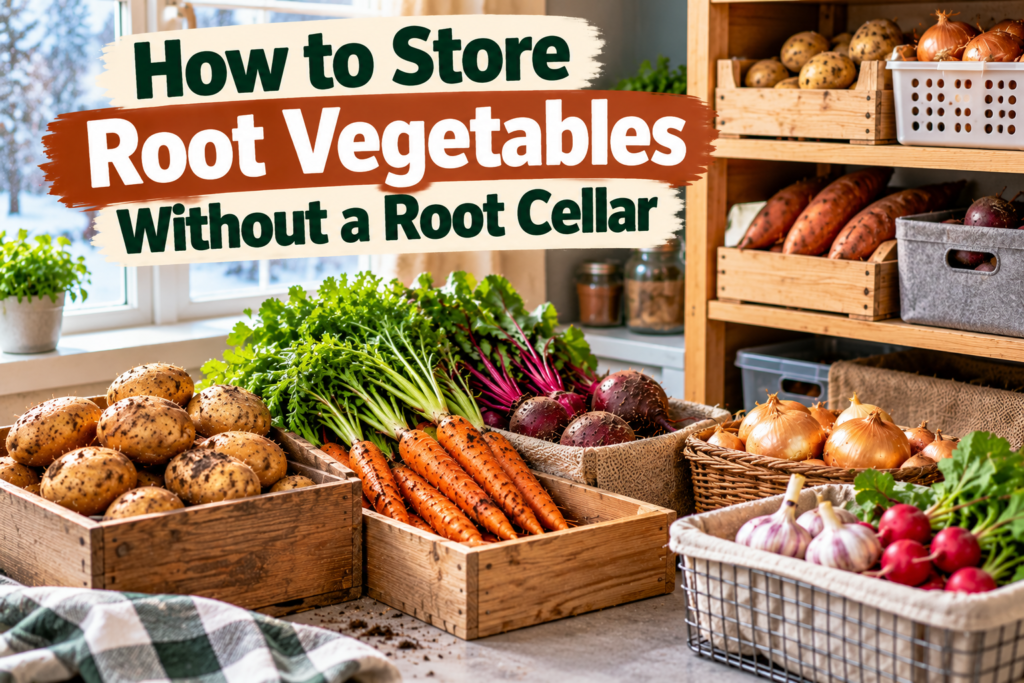
Separate Different Root Vegetables
I prefer storing different vegetables in separate containers.
This allows me to give each crop the conditions it needs.
For example, potatoes and sweet potatoes should not automatically be stored in exactly the same conditions.
Keeping them separate also makes checking for spoilage much easier.
Avoid Direct Sunlight
Even without a root cellar, darkness is easy to create.
I can use a dark pantry, closed cupboard, covered box, or another location away from windows.
This is especially important for potatoes.
Direct sunlight can heat vegetables and cause unwanted quality changes.
Check Your Storage Conditions
Without a root cellar, it is even more important to monitor the environment.
I periodically check whether the storage area feels too warm, damp, or dry.
I also check the vegetables themselves.
If they are sprouting rapidly, becoming soft, or developing mold, I know something needs to change.
Use Smaller Quantities
If your home does not have a suitable long term storage area, one practical approach is storing smaller amounts.
Instead of trying to keep a huge harvest for several months, I keep a manageable quantity and use it regularly.
This reduces the chance of losing a large amount of produce.
Final Thoughts
Learning how to store root vegetables without a root cellar is much easier than it may seem.
A refrigerator can handle smaller quantities of carrots, beets, and radishes. A cool pantry, basement, cardboard box, paper bag, or sand storage method can work for other vegetables when the conditions are suitable.
The most important thing is not having a special room. It is creating the right combination of temperature, darkness, humidity, ventilation, and cleanliness.
With a little creativity, many home gardeners can store their harvest successfully without building a traditional root cellar.