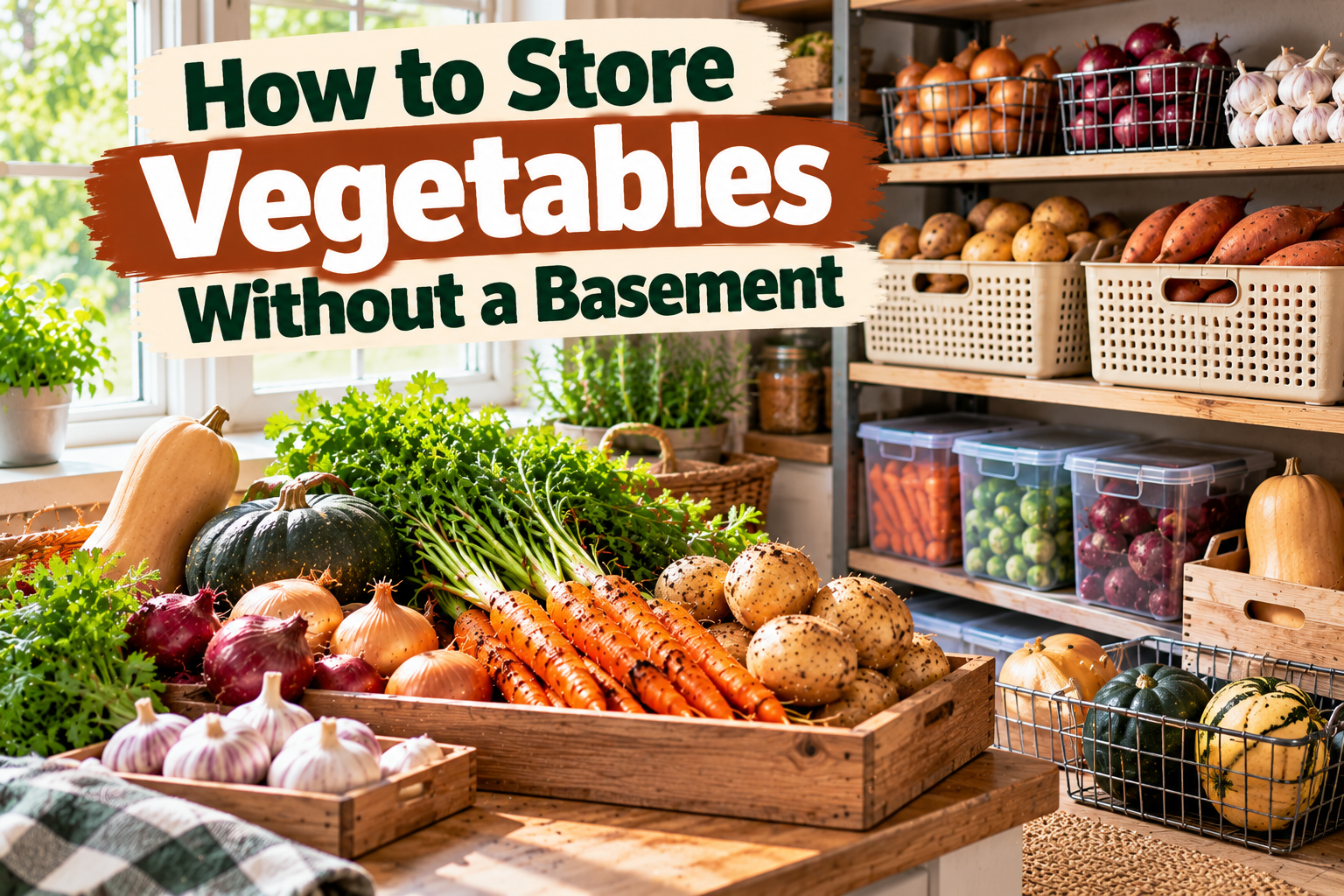
Not every home has a basement, cellar, or dedicated storage room. However, that does not mean I cannot store vegetables successfully. With some planning, it is possible to store vegetables without a basement by using refrigerators, pantries, cupboards, storage rooms, and suitable containers.
The most important thing is understanding what each vegetable needs.
Use the Refrigerator
For smaller harvests, the refrigerator is often the easiest option.
Carrots, beets, radishes, leafy greens, and several other vegetables can be kept in the refrigerator.
I remove unnecessary leaves and excess soil before storage.
The vegetable drawer is usually a convenient location because it helps maintain a suitable environment.
Use a Cool Pantry
A pantry can work for vegetables that prefer dry storage.
Potatoes, onions, garlic, and some winter squash can be stored in a suitable pantry if the area is cool, dark, dry, and ventilated.
I avoid placing these vegetables near heat producing appliances.
Use a Kitchen Cupboard
A dark cupboard can sometimes work for smaller quantities of dry stored vegetables.
The cupboard should have some airflow and should not become excessively warm.
I also make sure stored vegetables are not packed tightly together.
Use Cardboard Boxes
Cardboard boxes can provide a simple storage solution.
They block light and can provide some protection while still allowing ventilation if suitable openings are present.
I use them for crops that benefit from dark storage, such as potatoes.
Use Paper Bags
Paper bags are another inexpensive option.
They are breathable and can help protect vegetables from direct light.
I avoid using completely sealed plastic bags for vegetables that need airflow.
Use a Spare Room
If I have a room that stays relatively cool and dry, it may work as a vegetable storage area.
I can organize vegetables in separate containers and keep them away from windows, heaters, and moisture.
The room does not need to be a traditional cellar.
Store Vegetables Separately
Different vegetables have different requirements.
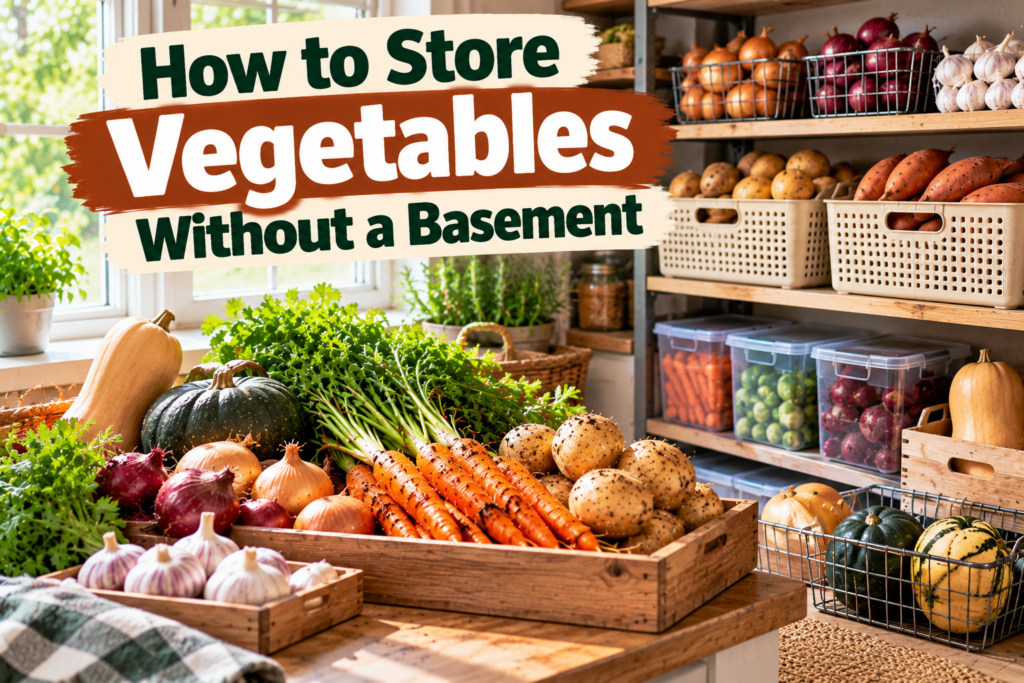
I prefer keeping potatoes, onions, garlic, sweet potatoes, carrots, and other vegetables in separate containers.
This makes it easier to manage their individual needs.
Check Storage Conditions
Without a basement, I need to pay attention to changes in temperature.
A storage area that is suitable during one part of the year may become too warm later.
I regularly check both the storage area and vegetables.
Use Preservation Methods
If natural storage is difficult, preservation can provide another solution.
Freezing, drying, pickling, and safe canning can help extend the life of extra garden vegetables.
This allows me to preserve food without needing a large storage room.
Final Thoughts
Learning how to store vegetables without a basement is mainly about using the space you already have wisely.
A refrigerator, pantry, cupboard, spare room, cardboard box, or breathable storage container can all be useful.
The most important thing is matching the storage environment to the vegetable.
With a little organization, even a home without a basement can provide plenty of options for storing a garden harvest.