Growing vegetables at home takes time, patience, and regular care. From preparing the soil and planting seeds to watering plants and protecting them from pests, there is a lot of work involved before the vegetables are finally ready to harvest. For me, one of the most important parts of gardening is making sure that the harvest does not go to waste after picking.
Many vegetables can stay fresh for a reasonable amount of time when they are stored correctly. However, simple storage mistakes can cause vegetables to become soft, dry, moldy, or spoiled much faster than expected. The good thing is that most vegetable storage mistakes are easy to avoid once you understand what causes them.
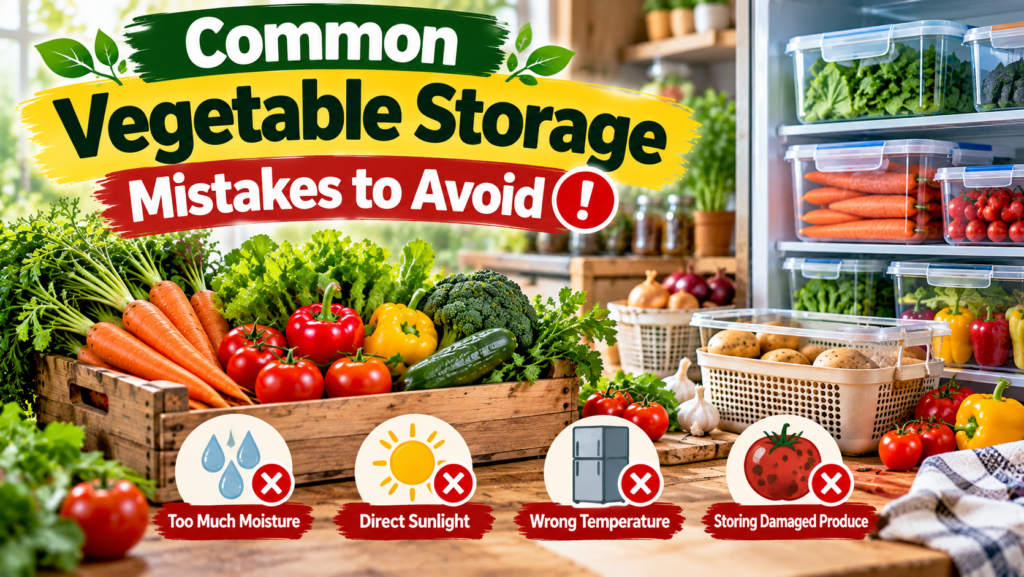
In this article, I will discuss some common vegetable storage mistakes to avoid and the simple habits I use to keep homegrown vegetables fresh for longer.
Washing All Vegetables Before Storage
One of the most common mistakes I see is washing every vegetable immediately after harvesting and then putting it straight into storage.
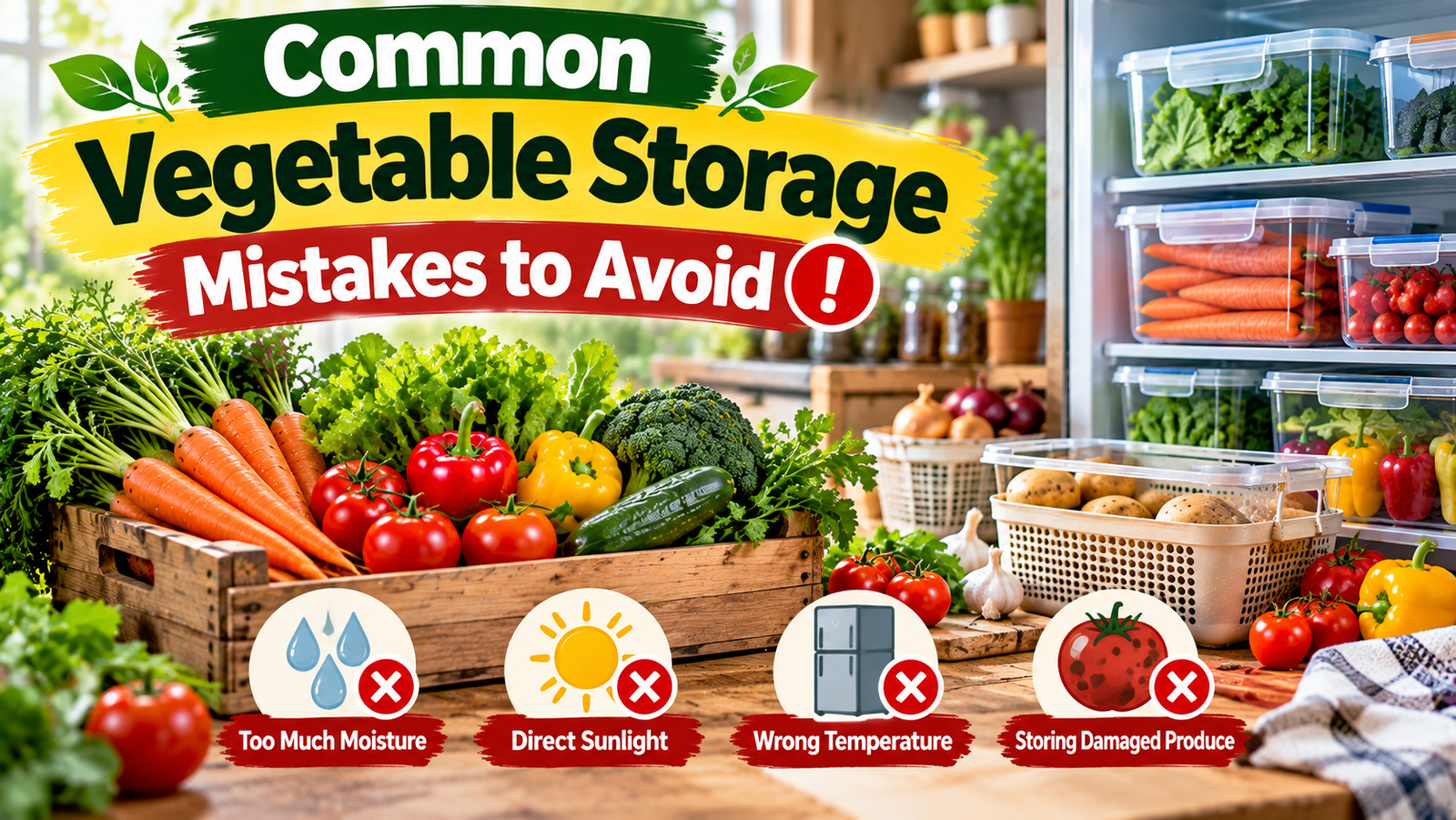
While washing vegetables is important for cleanliness, excess moisture can create problems during storage. When wet vegetables are placed inside sealed bags or containers, moisture can become trapped and encourage mold and decay.
For many vegetables, I prefer removing loose dirt and washing them shortly before I plan to use them.
If a vegetable needs to be washed before storage, I make sure it is properly dried first. This small step can make a noticeable difference in how long the vegetables remain fresh.
Storing Wet Vegetables
Another mistake is storing vegetables while they still have water on their surface.
Even a small amount of trapped moisture can create condensation inside a container or bag. Over time, this can encourage mold and make vegetables deteriorate faster.
I always try to dry vegetables properly before storing them. For leafy greens, I gently remove excess water with a clean towel and allow them to dry before putting them into a suitable container.
The goal is not to make every vegetable completely dry. The goal is to remove unnecessary surface moisture while maintaining the storage conditions that the vegetable needs.
Putting Every Vegetable in the Refrigerator
The refrigerator is extremely useful for vegetable storage, but I do not believe every vegetable should automatically go inside it.
Different vegetables have different storage requirements. Leafy greens and many root vegetables can benefit from refrigeration, while potatoes, onions, and garlic generally prefer a cool, dark, and dry environment.
Tomatoes are another example. Fully ripe tomatoes that will be eaten soon can often be kept at room temperature for better flavor and texture.
Before refrigerating a vegetable, I recommend checking what type of storage environment it actually prefers.
Storing Potatoes in Light
Potatoes should generally be stored in a dark location.
When potatoes are exposed to light, they can develop green areas. Because of this, I avoid leaving potatoes on open kitchen counters or in areas where sunlight reaches them.
I prefer a cool, dark, and dry storage location with good airflow.
It is also important to check stored potatoes regularly and remove any that are becoming heavily damaged or spoiled.
Keeping Onions and Potatoes Together
Another storage mistake is keeping onions and potatoes together simply because both are usually stored outside the refrigerator.
Although they may have similar general storage requirements, storing them together is not always ideal. Moisture and gases produced by stored produce can affect the storage life of nearby vegetables.
I prefer giving onions and potatoes their own storage spaces with good airflow.
Keeping them separated also makes it easier to check each type of vegetable regularly.
Using Airtight Containers for Everything
Airtight containers can be useful in some situations, but I would not use them for every type of vegetable.
Some vegetables need controlled humidity, while others benefit from ventilation. Completely sealing certain vegetables can trap moisture and encourage spoilage.
I prefer choosing containers based on the vegetable. Leafy greens may benefit from a suitable container with moisture control, while onions and garlic need better airflow.
The storage container should protect the vegetables without creating an environment that encourages condensation.
Overcrowding the Refrigerator
Another mistake is filling the refrigerator with too many vegetables at once.
When vegetables are packed tightly together, air circulation can become limited. This can also make it harder to notice vegetables that are beginning to spoil.
I try to leave enough space around stored vegetables whenever possible.
A well organized refrigerator also makes it easier to find older vegetables and use them before newer produce.
Ignoring Damaged Vegetables
Sometimes I find a vegetable with a small bruise or damaged area and simply put it into storage with everything else. This is something I try to avoid.
Damaged vegetables usually have a shorter storage life than healthy produce. Cuts and bruises can become areas where decay starts.
Before storage, I recommend checking vegetables carefully.
If a damaged vegetable is still safe to eat, I prefer using it first rather than keeping it for long term storage.
Storing Spoiled Vegetables With Healthy Ones
This mistake can quickly create a bigger problem.
If one vegetable has visible mold or serious decay, keeping it next to healthy vegetables can increase the chance of contamination or spoilage.
I recommend removing clearly spoiled produce as soon as you notice it.
Regularly checking stored vegetables is one of the easiest ways to prevent a small storage problem from becoming a large one.
Using Too Many Plastic Bags
Plastic bags can be helpful for certain vegetables, but using them incorrectly can cause moisture problems.
A tightly sealed plastic bag may trap condensation around vegetables. This is particularly problematic for produce that needs some airflow.
If I use a plastic storage bag, I consider the moisture requirements of the vegetable first. In some cases, a breathable produce bag or container can be a better choice.
The goal is to balance protection, humidity, and airflow.
Storing Vegetables Without Sorting Them
After a large harvest, it can be tempting to place everything together and deal with it later.
However, different vegetables have different storage needs.
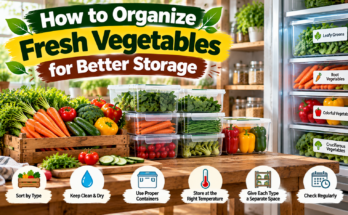
I prefer sorting vegetables by type immediately after harvesting. Leafy greens, root vegetables, tomatoes, potatoes, onions, and other produce can then be stored according to their individual requirements.
Sorting also helps me notice damaged vegetables before they are forgotten.
Forgetting About Harvest Dates
When I have a large harvest, it can be difficult to remember which vegetables were picked first.
This can lead to newer vegetables being used while older ones remain forgotten.
A simple solution is to keep track of harvest dates. You can write the date on a container, storage bag, or small label.
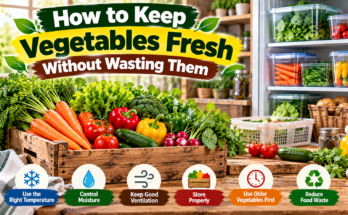
Using older vegetables first is a simple habit that can reduce food waste.
Not Checking Stored Vegetables
One of the easiest mistakes to make is storing vegetables and forgetting about them.
Even properly stored vegetables eventually lose quality.
I recommend checking your stored vegetables every few days. Look for changes in texture, color, smell, mold, or moisture.
If something needs to be used soon, move it toward the front of the refrigerator or storage area.
Storing Vegetables at the Wrong Temperature
Temperature has a major effect on vegetable storage.
Some vegetables remain fresh in cool conditions, while others can suffer from very low temperatures.
This is why I avoid assuming that colder always means better.
Before storing a particular vegetable, I consider whether it prefers room temperature, a cool storage area, or refrigeration.
Maintaining the right temperature can help protect flavor, texture, and overall quality.
Cutting Vegetables Too Early
Another mistake is cutting vegetables before they actually need to be used.
Once vegetables are cut, more of their surface is exposed to air and moisture. This can shorten their storage life.
When possible, I prefer storing vegetables whole and cutting them shortly before cooking or eating.
If a vegetable must be cut ahead of time, I use a clean container and appropriate refrigeration.
Ignoring Airflow
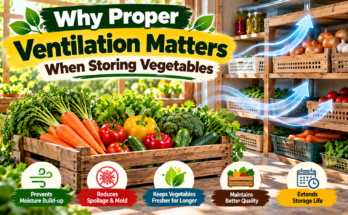
Good airflow is particularly important for vegetables stored outside the refrigerator.
Onions, garlic, and potatoes generally benefit from ventilation. Keeping them in a completely enclosed space can trap moisture and encourage spoilage.
I prefer breathable baskets or suitable storage containers for these vegetables.
Good airflow can help maintain a more stable storage environment.
Storing Too Much Produce at Once
Growing a productive garden is exciting, but harvesting more vegetables than you can use can create storage problems.
Instead of allowing a large amount of produce to spoil, I prefer planning meals around the harvest.
Extra vegetables can also be shared with family, friends, or neighbors.
For suitable vegetables, longer term preservation methods such as freezing, drying, pickling, or other safe preservation techniques can also be considered.
Final Thoughts
Avoiding common vegetable storage mistakes can make a big difference in how long your garden harvest stays fresh. In my experience, many storage problems happen because of simple habits such as storing vegetables while wet, overcrowding containers, using the refrigerator for everything, or ignoring damaged produce.
The best approach is to understand the individual needs of each vegetable. Keep leafy greens cool and manage their moisture carefully. Store potatoes in a dark place, keep onions and garlic dry with good airflow, and handle delicate vegetables gently.
I also recommend checking stored vegetables regularly and using older produce first. These small habits can help reduce food waste and allow you to enjoy more of the vegetables you worked hard to grow.
Good vegetable storage does not require complicated equipment. With careful preparation, suitable storage conditions, and a little regular attention, you can keep your homegrown vegetables fresh and useful for much longer.