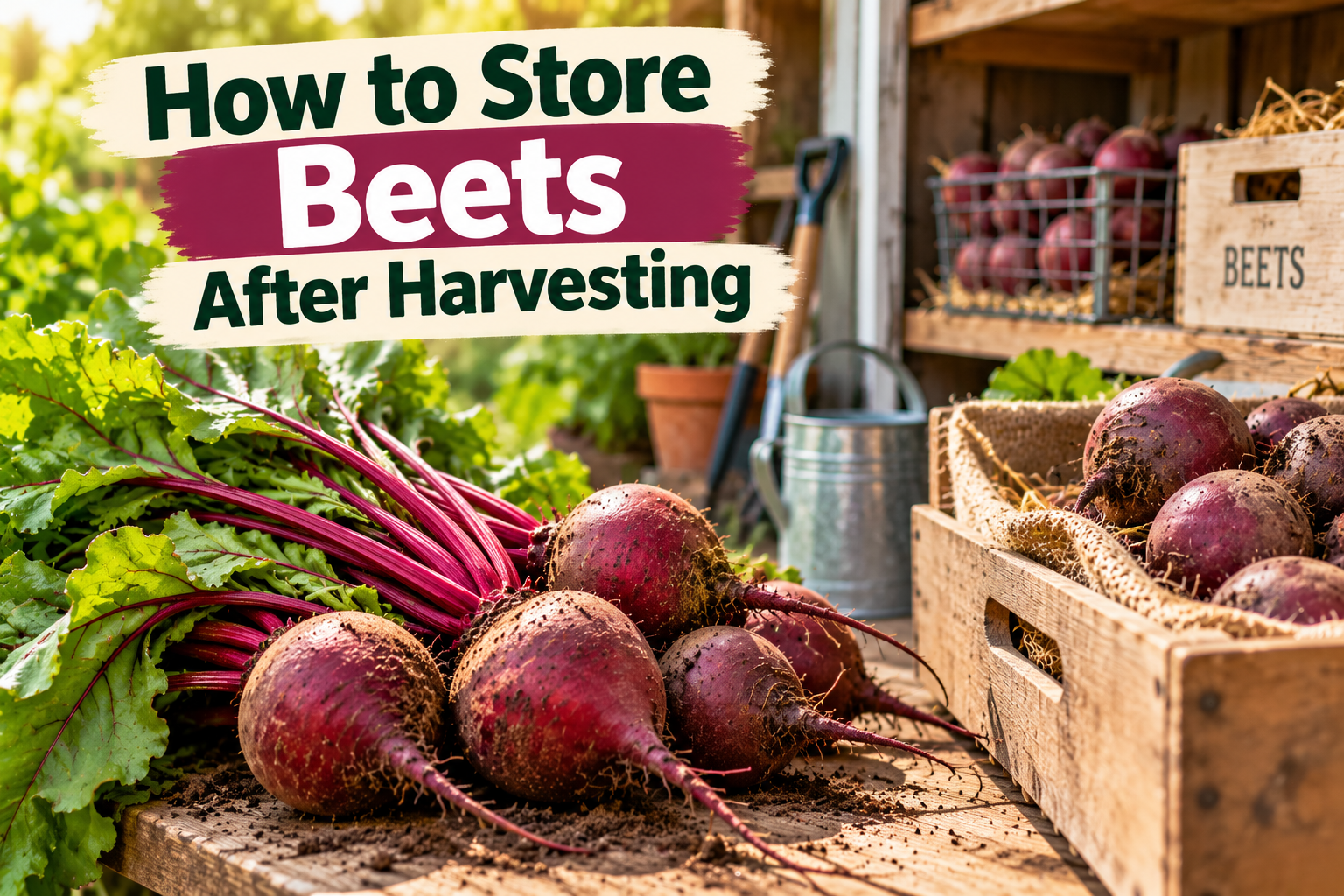
Growing beets at home is something I really enjoy because they are fairly easy to grow and can provide a useful harvest from a small garden. However, harvesting beets is only part of the process. If I have more beets than I can eat immediately, I always think about how to store beets after harvesting so they remain fresh and useful for as long as possible.
Beets are root vegetables, which means they can be stored for a good amount of time when they are handled correctly. The most important things are removing the leaves, keeping the roots dry, avoiding unnecessary damage, and providing a cool storage environment.
In this guide, I will explain the simple methods I would use to store freshly harvested beets at home.
Harvest Beets Carefully
The first step in proper beet storage is careful harvesting. When pulling beets from the garden, I try not to cut or bruise the roots.
If the soil is hard, loosening it around the beet first makes harvesting easier. Pulling too aggressively can damage the root or break part of it.
Damaged beets should be separated from healthy ones. I prefer using damaged roots first instead of placing them with beets that I want to store for several weeks.
Choose Mature Beets
Mature beets generally store better than very young beets. If I am growing beets specifically for storage, I allow them to reach a useful size before harvesting.
Very small beets can be tender and delicious, but they may not have the same storage potential as mature roots.
The variety also matters because some beet varieties naturally store better than others.
Remove the Beet Greens
One of the first things I do after harvesting beets is remove the green tops.
The leaves continue using moisture from the root after harvesting. If they remain attached for too long, the beet can lose moisture and become less firm.
I cut the leaves away while leaving a small amount of stem attached to the root. I avoid cutting deeply into the beet because unnecessary damage can reduce storage quality.
The fresh beet greens can be cooked separately, so they do not necessarily need to be wasted.
Do Not Wash Beets Before Long Term Storage
When beets come directly from the garden, they often have soil attached to them. My preference is to gently remove loose soil without washing the roots.
Washing introduces additional moisture, and excess moisture can contribute to mold and decay during storage.
If the beets are very dirty, I remove the larger pieces of soil carefully and allow the roots to dry naturally before storing them.
The beets can be washed properly when I am ready to use them.
Cure the Beets Before Storage
Beets do not require a complicated curing process, but giving them some time to dry after harvesting can be helpful.
I place freshly harvested beets in a shaded, cool, and well ventilated area for a short period. I avoid direct sunlight and excessive heat.
The purpose is mainly to remove surface moisture and prepare the roots for storage.
Once the beets are dry on the outside, I inspect them before putting them into their final storage container.
Store Beets in the Refrigerator
For a normal household harvest, the refrigerator is one of the easiest ways to store beets.
After removing the leaves and excess soil, I place the roots in a suitable storage bag or container.
The vegetable drawer is generally a good location because it provides a cooler and more humid environment than many other parts of the refrigerator.
I avoid storing beets completely uncovered because refrigerator air can gradually remove moisture and cause the roots to become soft.
Use a Suitable Storage Bag
A breathable or slightly ventilated storage bag can help maintain the right balance of moisture.
I do not want the beets sitting in water, but I also do not want them exposed to extremely dry air.
If condensation appears inside the bag, I check the roots and remove excess moisture.
The goal is to keep the beets cool and reasonably humid without creating a wet environment.
Store Beets in Sand
If you have a larger beet harvest, another traditional option is storing them in slightly moist sand.
The beets can be placed in a container with clean sand around them. The sand helps reduce moisture loss and protects the roots from excessive exposure to air.
The storage location should remain cool, dark, and protected from freezing temperatures.
The sand should be slightly moist rather than wet. Too much water can encourage decay.
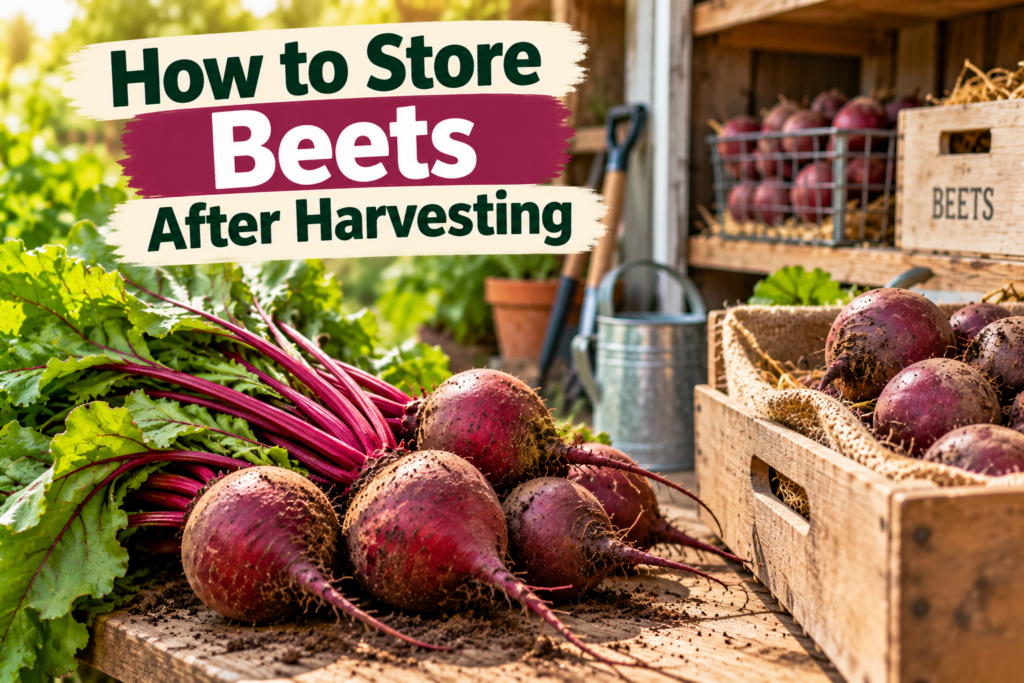
Keep Beets in a Cool, Dark Place
Beets generally benefit from cool storage conditions.
If you have a basement, cellar, or another suitable cool area, it may work well for storing larger quantities.
The storage area should not be exposed to direct sunlight or excessive heat.
I also make sure there is enough ventilation because trapped moisture can create storage problems.
Check Beets Regularly
Even properly stored beets should be checked from time to time.
I look for soft areas, mold, unpleasant smells, or signs of decay.
If I find one beet that is beginning to spoil, I remove it immediately. This helps protect the remaining harvest.
I also check the storage container for excess moisture.
Common Beet Storage Mistakes
One common mistake is leaving the green tops attached. The leaves continue pulling moisture from the roots.
Another mistake is washing beets and placing them into storage while they are still wet.
Storing damaged roots with healthy beets is another problem because damaged areas can spoil more quickly.
I also avoid storing beets in warm areas of the kitchen because higher temperatures can reduce their storage life.
Final Thoughts
Learning how to store beets after harvesting does not have to be complicated. The most important steps are harvesting carefully, removing the greens, avoiding unnecessary washing, keeping the roots dry on the outside, and storing them in a cool environment.
For small harvests, the refrigerator is usually the easiest option. For larger harvests, storing beets in suitable cool conditions with slightly moist sand can be useful.
With proper preparation, homegrown beets can remain firm and useful for much longer after harvest.