Fresh carrots are one of the easiest vegetables to grow at home, but keeping them fresh after harvesting requires a little care. When I grow or buy fresh carrots, I always try to store them properly because carrots can lose their crisp texture quickly if they are exposed to too much moisture, heat, or dry air.
Knowing how to store fresh carrots for several weeks can help reduce food waste and allow you to enjoy your harvest for much longer. The good thing is that you do not need expensive equipment to store carrots successfully. With the right preparation and a suitable storage location, fresh carrots can stay firm, crisp, and useful for several weeks.
In this article, I will explain the simple methods I use and recommend for storing fresh carrots at home.
Harvest Carrots at the Right Time
The first step in storing carrots successfully is harvesting them at the right stage. Carrots can be harvested when they reach a useful size, but mature carrots are generally better for longer storage.
When harvesting carrots from the garden, I loosen the soil around them before pulling them out. This reduces the chance of breaking or damaging the roots.
Damaged carrots should be used sooner rather than placed into long term storage. Cuts and bruises can create opportunities for moisture related problems and spoilage.
Remove the Carrot Tops
One of the most important steps after harvesting carrots is removing the green tops.
The leaves continue to draw moisture from the carrot root after harvesting. If you leave the tops attached, the carrots can become soft more quickly.
I usually cut the green tops off while leaving a small amount of stem attached. There is no need to remove a large amount of the carrot itself.
The carrot tops can also be used separately in some recipes or added to compost if you do not plan to eat them.
Do Not Wash Carrots Immediately
It can be tempting to wash freshly harvested carrots as soon as they come out of the soil. However, if I am preparing carrots for longer storage, I prefer to avoid washing them immediately.
Instead, I gently remove loose soil with my hands.
Extra moisture can increase the chance of mold and spoilage. Keeping the carrots relatively dry during storage preparation is a simple way to improve their storage life.
If you want to wash the carrots before eating them, you can do that later.
Let the Carrots Dry
After harvesting and removing the tops, allow the carrots to dry naturally for a short period if they are damp.
Place them somewhere cool, shaded, and well ventilated. Avoid direct sunlight because sunlight can heat the carrots and reduce their quality.
The purpose is not to completely dry the carrots. You simply want excess surface moisture to disappear before storage.
This is especially useful if the carrots were harvested from wet soil.
Store Carrots in the Refrigerator
For most home gardeners, the refrigerator is one of the easiest ways to store fresh carrots for several weeks.
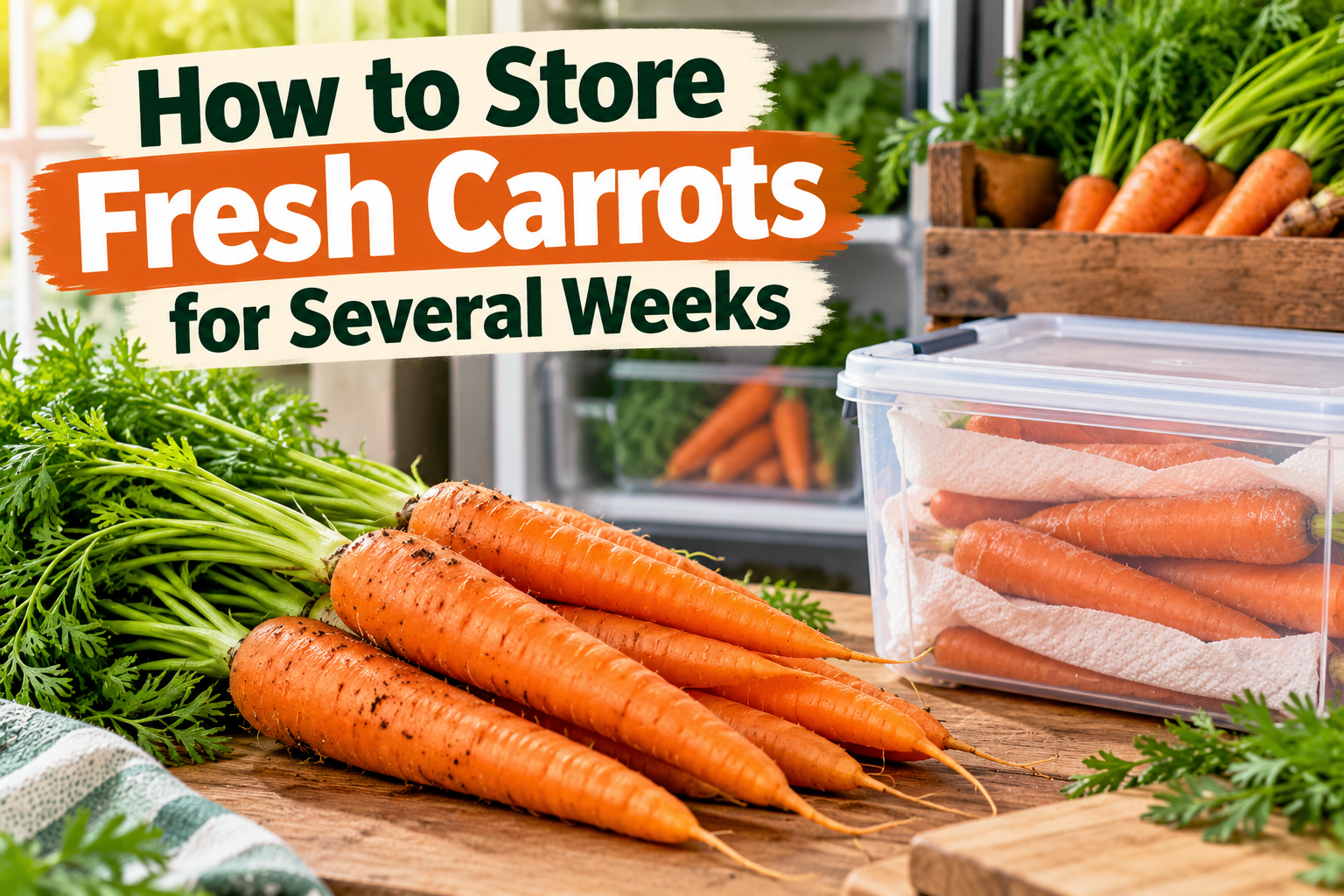
Before placing carrots in the refrigerator, remove the green tops. Then place the carrots in a suitable vegetable storage bag or container.
A bag that helps maintain humidity while allowing some airflow can work well.
I avoid leaving freshly harvested carrots completely exposed inside the refrigerator because the cold, dry air can cause them to lose moisture and become limp.
The vegetable drawer is usually one of the most suitable areas for carrot storage.
Keep Carrots Away From Excess Moisture
While carrots need some humidity to remain crisp, excessive moisture can cause problems.
If water collects inside the storage bag or container, check the carrots and remove excess moisture.
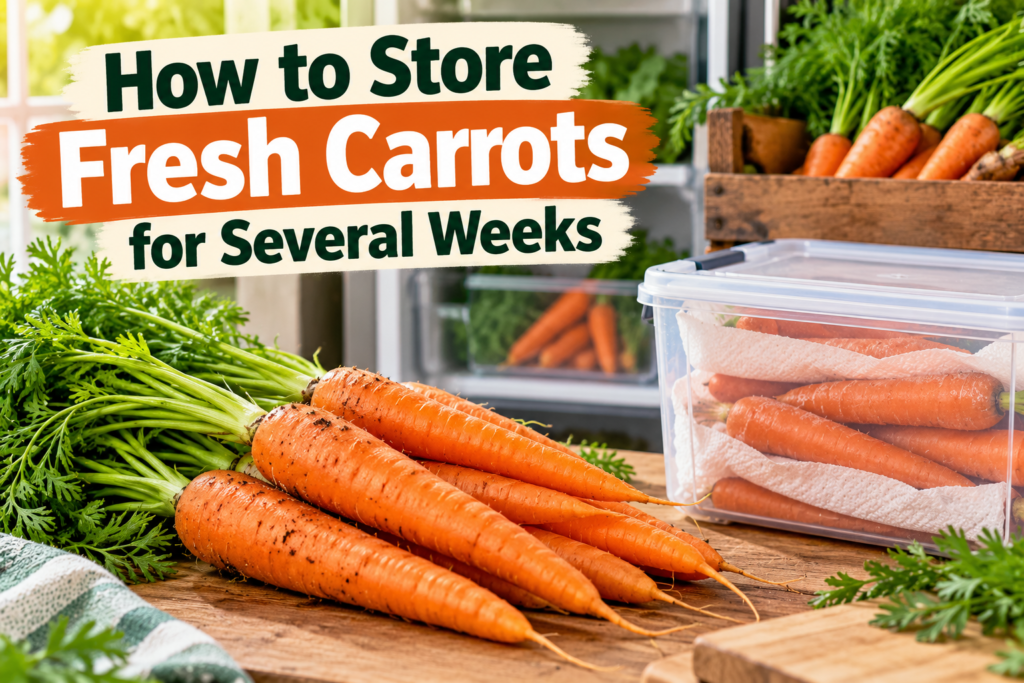
You can also use a clean paper towel inside the storage container to help absorb unwanted moisture. Replace it if it becomes noticeably wet.
The goal is to maintain a balanced environment where the carrots do not dry out but are not sitting in water either.
Use a Cool Storage Area
If you have a suitable cool storage space, carrots can also be stored outside the refrigerator.
A cool, dark, and humid environment can help maintain root vegetables for longer periods.
This method can be useful for gardeners who harvest a large quantity of carrots at once.
However, most homes do not have a traditional root cellar. In that case, refrigerator storage is usually the simplest option.
Store Carrots in Sand
Another traditional method for storing fresh carrots is using clean, slightly moist sand.
The carrots can be placed in a container and covered with sand so they do not touch each other too closely.
The sand helps maintain humidity around the roots and reduces moisture loss.
If you use this method, the storage area should remain cool. The sand should not be soaking wet because excessive moisture can encourage rot.
This method is particularly useful for gardeners who grow larger quantities of carrots.
Avoid Storing Carrots Near Certain Fruits
Carrots should not be stored carelessly alongside all fruits and vegetables.
Some fruits release ethylene gas as they mature, and this can affect the quality of nearby produce.
For this reason, I prefer keeping carrots in their own refrigerator drawer or separate storage container whenever possible.
Separating produce can also help prevent odors and moisture from moving between different foods.
Check Stored Carrots Regularly
Even with proper storage, I recommend checking carrots every few days.
Look for soft spots, mold, unpleasant smells, or signs of decay.
If one carrot begins to spoil, remove it from the storage container. This helps protect the other carrots.
I also check the storage bag or container for excess moisture. If condensation is building up, I make small adjustments to improve the storage environment.
Regular checking takes only a few minutes and can prevent a larger amount of food from being wasted.
How to Keep Carrots Crisp
The main goal when storing carrots is to prevent them from losing too much water.
Carrots become soft when they lose moisture. This is why refrigerator vegetable drawers and suitable storage bags are useful.
If your carrots are becoming limp, check whether they are being exposed to too much dry air.
At the same time, avoid creating a completely wet environment.
Good carrot storage is really about finding the right balance between moisture retention and ventilation.
What About Cut Carrots?
Cut carrots generally do not last as long as whole carrots.
If you have already peeled or cut your carrots, place them in a clean, covered container in the refrigerator.
You can keep them ready for cooking, but it is better to use them sooner rather than expecting them to last as long as whole carrots.
For the longest storage life, I prefer keeping carrots whole and preparing them shortly before use.
Common Mistakes When Storing Carrots
There are several mistakes that can shorten the storage life of fresh carrots.
Leaving the green tops attached is one common mistake because they continue drawing moisture from the roots.
Washing carrots and storing them while they are still very wet can also create problems.
Another mistake is leaving carrots uncovered in the refrigerator. Cold air can remove moisture and cause them to become soft.
Storing damaged carrots together with healthy carrots can also increase spoilage.
Finally, forgetting to check stored carrots can allow one spoiled carrot to affect others.
How Long Can Fresh Carrots Last?
The exact storage life of carrots depends on their freshness, variety, harvesting condition, and storage environment.
Fresh, healthy carrots stored under suitable conditions can remain useful for several weeks.
Carrots that are already soft or damaged when stored will naturally have a shorter life.
This is why I always sort carrots before storage and use damaged ones first.
My Simple Carrot Storage Method
If I had a fresh harvest of carrots today, my basic routine would be simple.
First, I would harvest them carefully.
Then I would remove the green tops and gently remove loose soil.
I would allow the carrots to dry if they were wet from harvesting.
After that, I would place them in a suitable storage bag or container and keep them in the refrigerator vegetable drawer.
I would check them regularly and remove any carrot showing signs of spoilage.
This method requires very little effort and works well for normal household quantities.
Final Thoughts
Learning how to store fresh carrots for several weeks is a useful skill for anyone who grows vegetables at home.
The key is to protect carrots from excessive moisture loss while also preventing them from sitting in water. Removing the green tops, avoiding unnecessary washing before storage, using the refrigerator vegetable drawer, and checking the carrots regularly can make a noticeable difference.
For larger harvests, traditional methods such as storing carrots in slightly moist sand can also be useful when you have a suitable cool storage area.
In my opinion, the most important thing is to start with healthy carrots. Handle them gently during harvesting, remove damaged roots, and create a cool storage environment.
With these simple steps, you can enjoy fresh and crisp carrots for much longer instead of having to use the entire harvest immediately.