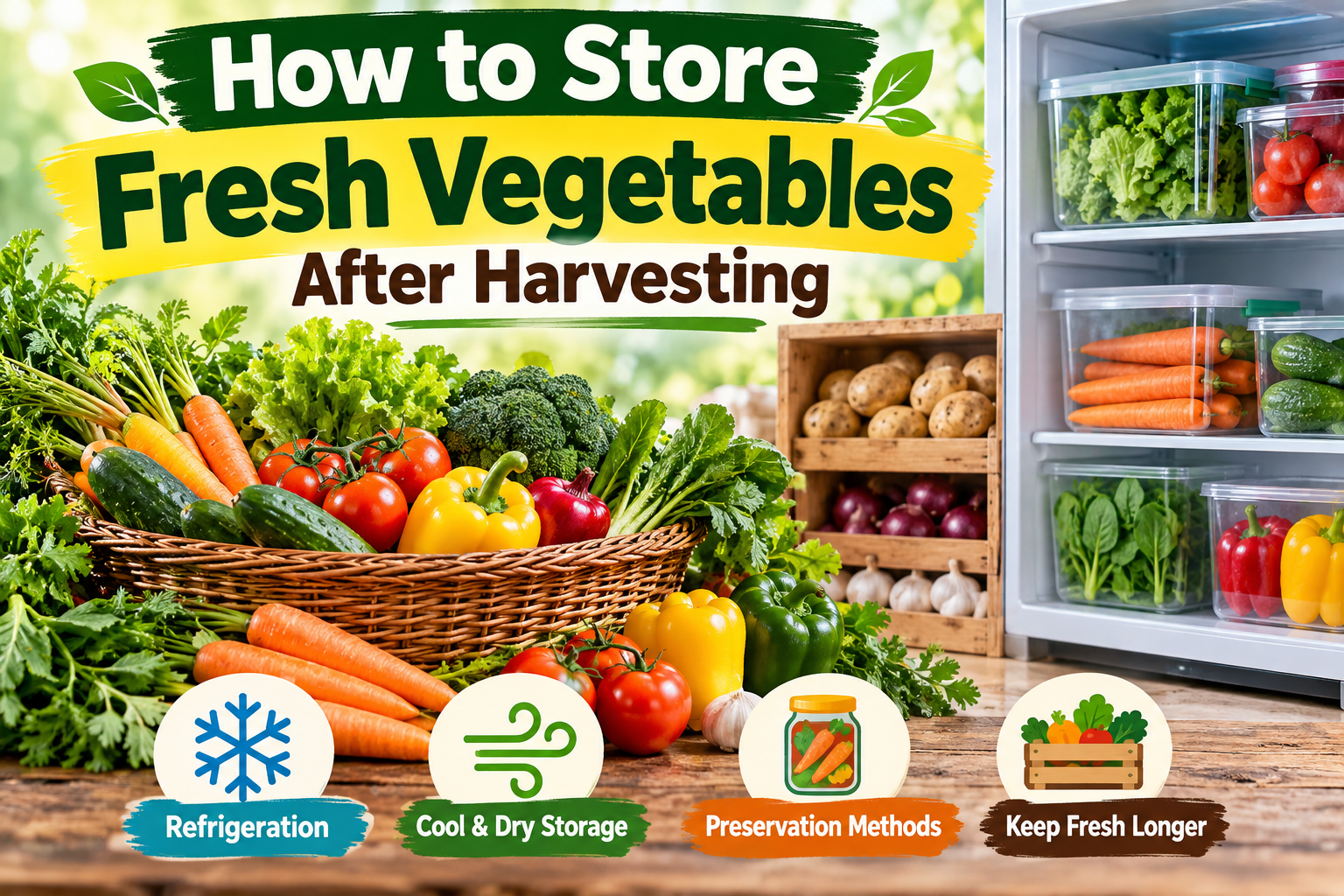
Harvesting fresh vegetables from a home garden is one of the most satisfying parts of gardening. After spending weeks or months caring for plants, seeing healthy vegetables ready to pick feels rewarding. However, harvesting is only the first step. Knowing how to store fresh vegetables after harvesting is equally important because proper storage can help vegetables stay fresh, tasty, and useful for a longer time.
In my experience, many vegetables lose their quality because they are stored without considering their individual needs. Some vegetables prefer a cool and humid environment, while others stay better in a dry place. A few vegetables can be stored in the refrigerator, while others may lose their flavor or texture when kept there.
In this guide, I will explain the simple methods I use and recommend for storing fresh vegetables after harvesting. These methods can help reduce food waste and allow you to enjoy your garden produce for several days or even weeks.
Harvest Vegetables at the Right Time
The first step in vegetable storage begins before the vegetables even leave the garden. I believe harvesting vegetables at the right stage makes a noticeable difference in how long they remain fresh.
Most vegetables should be harvested when they have reached their ideal size and maturity. Vegetables that are overripe may spoil faster, while vegetables picked too early may not develop their best flavor.
I prefer harvesting vegetables during the cooler part of the day, especially in the morning. At this time, many vegetables naturally contain more moisture and have not been exposed to the heat of the day.
Handle freshly harvested vegetables gently. Bruises, cuts, and damaged areas can become weak points where decay begins.
Clean Vegetables Carefully
After harvesting, it can be tempting to wash everything immediately. However, this is not always the best approach for long term storage.
For vegetables that will be stored for several days, I usually remove loose soil and dirt gently without soaking them in water. Excess moisture can encourage mold and decay.
If vegetables are very dirty and need washing, I make sure they are completely dry before putting them into storage. A clean kitchen towel or paper towel can help remove surface moisture.
Some vegetables, such as leafy greens, may benefit from careful washing before refrigeration. The important thing is to avoid storing wet vegetables in sealed containers because trapped moisture can cause them to deteriorate quickly.
Sort Vegetables Before Storage
Before storing fresh vegetables, I recommend checking each one carefully. Separate healthy vegetables from those that have bruises, cracks, insect damage, or signs of disease.
A damaged vegetable should not be stored together with perfect vegetables for a long period. I usually use damaged produce first because it is more likely to spoil quickly.
Sorting vegetables also makes storage easier because different vegetables need different conditions.
For example, potatoes, onions, and garlic usually prefer a cool and dry location, while leafy vegetables generally need cooler and more humid conditions.
Store Leafy Vegetables Properly
Leafy vegetables such as lettuce, spinach, coriander, and other greens can lose freshness quickly after harvesting.
I find that keeping leafy vegetables cool is one of the best ways to maintain their quality. After removing damaged leaves, I gently wash the greens when necessary and dry them thoroughly.
I then place them in a container or storage bag with a paper towel. The paper towel can absorb excess moisture and help reduce the chance of slimy or rotten leaves.
Avoid crushing leafy vegetables under heavy items in the refrigerator. Giving them enough space helps protect their texture.
How to Store Root Vegetables
Root vegetables such as carrots, beets, radishes, and turnips can often last much longer when stored correctly.
One thing I always recommend is removing the leafy tops from root vegetables before storage. The leaves can continue taking moisture from the roots, which may cause the vegetables to become soft.
After removing the tops, I gently clean away excess soil. Depending on the vegetable, refrigeration can be a good option.
Carrots, for example, can stay fresh for quite a while when placed in the refrigerator in a suitable container or bag. The goal is to maintain moisture without allowing the vegetables to sit in standing water.
Storing Tomatoes
Tomatoes are a little different from many other vegetables. Fresh tomatoes can lose some of their flavor and texture when stored in a very cold refrigerator.
When tomatoes are fully ripe, I prefer keeping them at room temperature if I plan to eat them soon. I place them away from direct sunlight and avoid stacking them heavily.
If tomatoes are already very ripe and need to be kept for a little longer, refrigeration can slow further ripening. However, allowing refrigerated tomatoes to return to room temperature before eating can improve their flavor.
How to Store Cucumbers
Cucumbers contain a lot of water, so keeping them fresh requires careful storage.
I usually keep fresh cucumbers in a cool location and protect them from excessive moisture. If storing them in the refrigerator, I avoid placing them in the coldest part because very low temperatures can affect their texture.
Wrapping cucumbers loosely or keeping them in a suitable produce bag can help protect them while allowing some airflow.
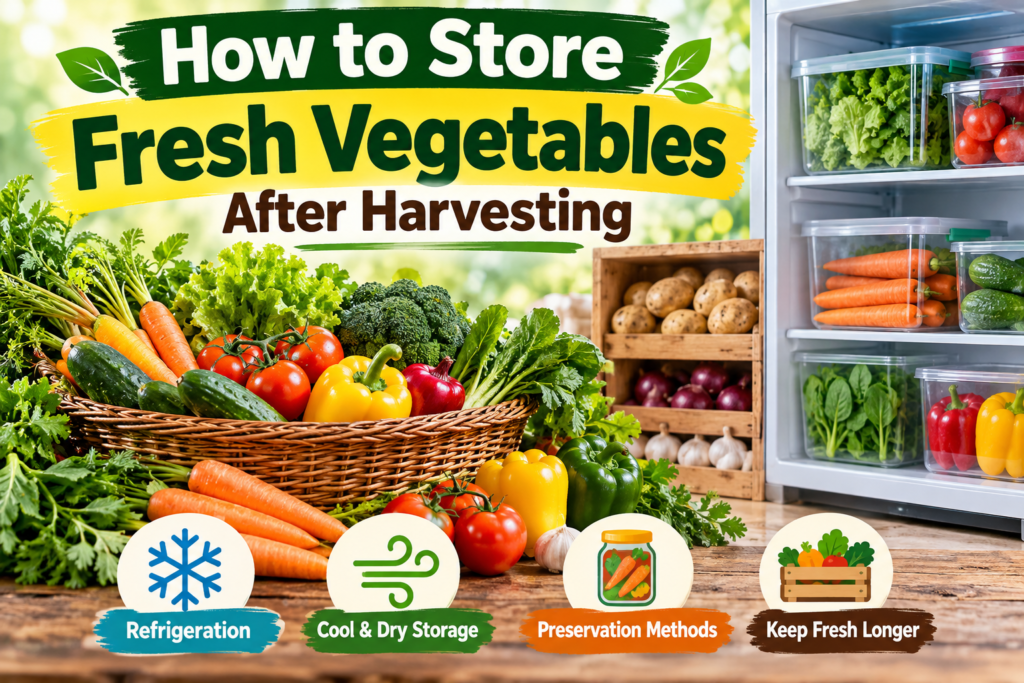
Storing Potatoes, Onions, and Garlic
Potatoes, onions, and garlic are among the easiest vegetables to store when the conditions are right.
I keep these vegetables in a cool, dark, and dry area with good airflow. I avoid sealed plastic bags because trapped moisture can encourage mold.
Potatoes should be kept away from strong light because exposure to light can cause them to develop green areas.
Onions and garlic also benefit from good ventilation. I avoid storing onions directly beside vegetables that require high humidity because different storage conditions can affect their quality.
Use the Refrigerator Correctly
The refrigerator is one of the most useful tools for keeping fresh vegetables longer. However, simply putting every vegetable into the refrigerator is not always the best method.
I recommend learning which vegetables prefer refrigeration and which ones are better at room temperature.
Use suitable containers, produce bags, or storage drawers when possible. Avoid overcrowding the refrigerator because vegetables need enough space for proper air circulation.
It is also useful to check stored vegetables regularly. If one vegetable begins to spoil, removing it quickly can prevent the problem from spreading to nearby produce.
Keep Vegetables Dry When Necessary
Moisture is one of the most important factors in vegetable storage. Too little moisture can make vegetables dry and limp, while too much moisture can encourage mold and bacterial growth.
This is why I pay attention to condensation inside storage containers. If vegetables appear wet, I remove excess moisture and replace damp paper towels.
For vegetables that prefer dry storage, such as onions and garlic, I avoid washing them before storage unless necessary.
Use Storage Containers Wisely
Good storage containers can make a big difference. I prefer containers that protect vegetables without trapping excessive moisture.
For leafy greens, a container lined with paper towels can work well. For other vegetables, breathable produce bags may be more suitable.
The important thing is to avoid creating a completely wet environment. Vegetables should be protected while still having appropriate airflow.
Do Not Store Everything Together
One common mistake is placing every harvested vegetable in the same container. Different vegetables release and respond to natural gases differently, which can influence how quickly produce ripens or deteriorates.
For this reason, I prefer separating vegetables according to their storage requirements.
Keeping vegetables organized also makes it easier to check their condition and use older produce first.
Check Stored Vegetables Regularly
Vegetable storage is not something I recommend doing once and forgetting about. I like checking stored produce every few days.
Look for soft spots, unpleasant smells, mold, excessive moisture, or changes in color. Remove vegetables that have clearly spoiled.
For vegetables that are still usable but beginning to lose quality, I try to use them in soups, salads, cooked meals, sauces, or other recipes rather than allowing them to go to waste.
Avoid Unnecessary Food Waste
One of my main reasons for learning how to store fresh vegetables properly is reducing food waste.
Growing vegetables requires time, water, effort, and care. Allowing fresh produce to spoil because of poor storage can waste all that effort.
Planning meals around recently harvested vegetables is one simple way to reduce waste. I also recommend harvesting only what you can reasonably use when possible.
If your garden produces more vegetables than your family can eat, consider sharing the extra produce with friends, relatives, or neighbors.
Consider Longer Term Storage Methods
If you have a large harvest, refrigeration may not be enough. Some vegetables can be preserved through methods such as freezing, drying, pickling, or canning.
Freezing can work well for many vegetables when they are prepared correctly. Drying can be useful for certain produce and herbs, while pickling provides another way to preserve vegetables for later use.
Before using any preservation method, it is important to follow reliable food safety instructions. Proper preparation, clean equipment, and suitable storage conditions are essential.
Final Thoughts
Learning how to store fresh vegetables after harvesting is an important part of successful home gardening. A good harvest is not only about growing healthy plants. It is also about keeping the vegetables fresh after they are picked.
From my point of view, the simplest approach is to understand what each vegetable needs. Harvest at the right time, handle produce gently, remove damaged vegetables, control moisture, and choose the right storage location.
Leafy vegetables usually need cool and humid conditions, while potatoes, onions, and garlic generally prefer a cool, dark, and dry place. Tomatoes and cucumbers also have their own storage preferences.
With a little planning and regular checking, you can keep your garden vegetables fresh for longer and reduce unnecessary food waste. Good vegetable storage does not have to be complicated. Once you understand the basic needs of your harvest, it becomes a simple part of your regular gardening routine.