Leafy greens are some of the most useful vegetables we can grow at home, but keeping them fresh after harvesting can sometimes be difficult. Spinach, lettuce, kale, Swiss chard, mustard greens, and other leafy vegetables can lose their freshness quickly if they are stored incorrectly.
In my experience, the key to storing leafy greens successfully is controlling moisture without allowing the leaves to become completely dry. Too much moisture can encourage decay, while too little moisture can leave the leaves wilted and limp.
When I bring fresh leafy greens from the garden, I try to handle them carefully from the beginning. A few simple storage habits can help maintain their texture, color, and freshness for longer.
In this guide, I will explain how I store leafy greens in the refrigerator, how I prepare them before storage, what mistakes I avoid, and how I keep them fresh for everyday use.
Why Do Leafy Greens Wilt So Quickly?
Leafy greens contain a lot of water, which is one reason they can lose their freshness relatively quickly.
After harvesting, leaves continue to lose moisture. If they lose moisture too quickly, they can become soft and wilted. On the other hand, if excess water remains trapped around the leaves, the greens may deteriorate more quickly.
This is why I believe refrigerator storage needs a balance between moisture and airflow.
The refrigerator can provide a cooler environment, but simply placing wet greens inside a plastic bag is not always the best solution.
Start With Fresh Leafy Greens
Good storage starts with good quality vegetables.
Before storing leafy greens, I carefully inspect them. I remove leaves that are badly damaged, slimy, severely wilted, or showing obvious signs of decay.
I do not like putting damaged leaves together with healthy ones because one deteriorating leaf can make the surrounding greens messy and difficult to manage.
If the majority of the leaves are fresh and healthy, I prepare them for refrigerator storage.
Remove Damaged Leaves
The first thing I usually do is sort through the greens.
I look for yellow leaves, brown areas, holes, crushed sections, and any leaves that feel unusually soft.
Small imperfections do not necessarily mean the entire bunch is unusable. However, I prefer to remove seriously damaged parts before storage.
This makes the storage container cleaner and helps me identify the vegetables that should be used first.
Should You Wash Leafy Greens Before Storing?
This depends on the type of leafy greens and how you plan to use them.
Washing can remove soil and dirt, which is useful when preparing vegetables for meals. However, storing greens while they are covered in excess water can create problems.
If I wash leafy greens before storage, I make sure they are handled in a way that removes excess water before they go into the refrigerator.
If the greens are already clean, I may avoid unnecessary washing until I am ready to use them.
The important point is to avoid storing leafy greens while they are unnecessarily wet.
Dry the Leaves Carefully
Drying leafy greens is one of the most important steps.
After washing, I gently remove excess water rather than rubbing or squeezing the leaves. Delicate leaves can bruise easily, and rough handling can damage them.
A salad spinner can be useful for removing excess water from some leafy vegetables. Clean kitchen towels or suitable drying methods can also help.
I do not try to make the leaves completely dry. My goal is to remove excess surface water while keeping the leaves in good condition.
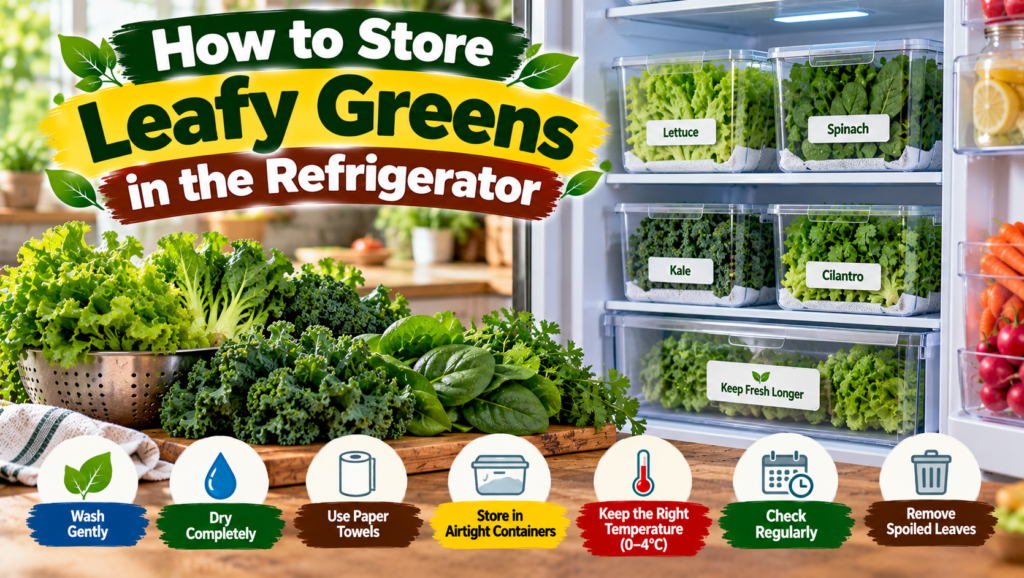
Use Paper Towels to Manage Moisture
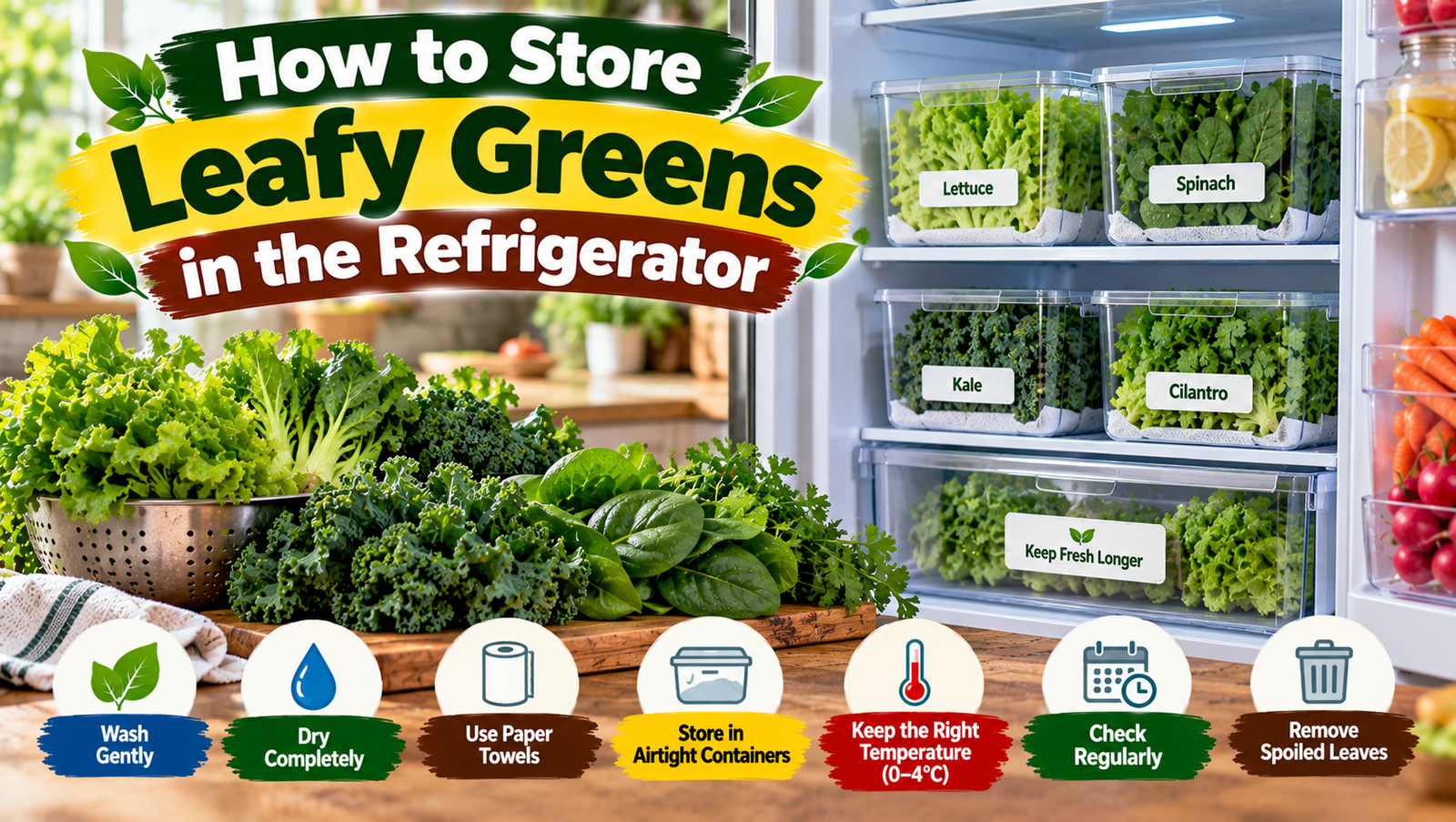
One simple method I find useful is placing a clean paper towel around or alongside the leafy greens.
The paper towel can help absorb some excess moisture inside the storage container.
If the towel becomes noticeably damp, I replace it with a fresh one.
This is especially useful when storing greens that tend to release moisture inside a closed container.
The exact amount of moisture needed depends on the vegetable, so I always check the greens regularly rather than relying on one method permanently.
Choose the Right Storage Container
The container you use can affect how well leafy greens stay fresh.
I prefer a clean container that gives the greens enough protection without trapping excessive moisture.
A container with suitable airflow can be useful, while a completely sealed container may sometimes allow condensation to build up.
For some leafy greens, a breathable storage bag can also work well.
I avoid packing the leaves too tightly because crushed leaves can deteriorate more quickly.
Avoid Crushing the Leaves
Leafy greens are delicate, so I handle them gently when placing them in the refrigerator.
I avoid pushing too many greens into a small container. If the leaves are compressed under heavy vegetables or containers, they can become damaged.
I also try to keep heavier food items away from delicate leafy vegetables.
A little extra space can make a noticeable difference when it comes to keeping leaves in better condition.
Store Greens in the Right Part of the Refrigerator
Many refrigerators have a crisper drawer designed for storing fruits and vegetables.
I usually consider the crisper drawer a useful place for leafy greens because it can provide a suitable environment compared with leaving delicate vegetables exposed on an open refrigerator shelf.
However, I still check the greens regularly.
The exact refrigerator settings can vary between models, so I focus on keeping the greens cool and preventing unnecessary moisture buildup.
Keep Leafy Greens Away From Excess Moisture
One of the biggest mistakes I try to avoid is allowing water to collect around the leaves.
If I notice condensation inside the storage container, I check the greens and adjust the storage setup.
A damp paper towel may need to be replaced. The container may need better airflow. The greens may also need to be handled differently.
The goal is not to remove all moisture but to prevent excessive water from sitting directly on the leaves.
Do Not Store Greens With Damaged Produce
I prefer to keep leafy greens separate from vegetables that are already showing signs of deterioration.
If another vegetable has mold, decay, or excessive moisture, I do not place it directly beside my fresh leafy greens.
Keeping vegetables organized makes it easier to monitor them and maintain a cleaner refrigerator.
It also helps me use older vegetables before newer ones.
Check Your Leafy Greens Regularly
Even when leafy greens are stored correctly, I still check them regularly.
I look for wilting, yellowing, dark spots, slimy areas, unpleasant odors, or excessive moisture.
If I find one damaged leaf, I remove it and inspect the surrounding greens.
Regular checking is much easier than waiting until the entire container has deteriorated.
I also try to use the greens while they are still at their best instead of expecting them to remain fresh indefinitely.
How to Keep Leafy Greens Crisp
If leafy greens begin to look slightly wilted, the cause may be moisture loss.
For some types of greens, proper hydration and suitable preparation before eating may help improve their texture. However, greens showing clear signs of spoilage should not be treated simply as wilted vegetables.
This is another reason I prefer to check my vegetables regularly.
Keeping leafy greens properly protected in the refrigerator from the beginning is usually easier than trying to restore them after they have lost significant quality.
Common Mistakes When Storing Leafy Greens
There are several mistakes I try to avoid.
The first is storing greens while they are soaking wet. Excess water can create an environment where deterioration happens more quickly.
Another mistake is crushing too many leaves into a small container.
I also avoid leaving damaged leaves mixed with healthy ones.
Another common problem is forgetting about the greens after putting them into the refrigerator. Even good storage methods cannot keep leafy vegetables fresh forever.
Regular inspection and timely use are important.
Different Leafy Greens May Need Different Care
Not all leafy vegetables behave exactly the same way.
Spinach, lettuce, kale, Swiss chard, mustard greens, and other leafy vegetables can have different textures and storage characteristics.
For this reason, I do not assume that one storage method will work perfectly for every green.
I pay attention to how each type responds to moisture, temperature, airflow, and handling.
Over time, this makes it much easier to develop a storage routine that works well for the vegetables I grow most often.
Plan Your Refrigerator Space
If you grow a lot of vegetables at home, refrigerator space can become limited quickly.
I try to organize leafy greens so they are easy to see and reach.
I avoid placing them underneath heavy containers and keep them in a location where I can check them regularly.
When I know that I have fresh greens available, I am also more likely to use them instead of allowing them to sit forgotten in the refrigerator.
Use Older Greens First
One of my favorite simple storage habits is using older vegetables before newer ones.
When I harvest fresh greens, I do not automatically put them in front of the older batch.
Instead, I organize the refrigerator so that the greens that need to be used first are easy to access.
This simple first in, first out approach can reduce food waste and help me get more value from my garden harvest.
Final Thoughts
Learning how to store leafy greens in the refrigerator does not require complicated equipment. In my experience, the most important things are careful handling, moisture control, proper organization, and regular inspection.
I start by checking the leaves and removing seriously damaged parts. If I wash them, I remove excess water before storage. I then place the greens in a suitable container with enough protection and reasonable airflow.
I also check them regularly and use older greens first.
Every refrigerator and every type of leafy vegetable can behave a little differently, so I believe the best approach is to observe your own vegetables and adjust your storage routine when necessary.
With a little care, fresh leafy greens can stay in better condition and remain ready for salads, cooking, smoothies, and other meals. For home gardeners, these simple storage habits can also help reduce waste and make the most of every harvest.